


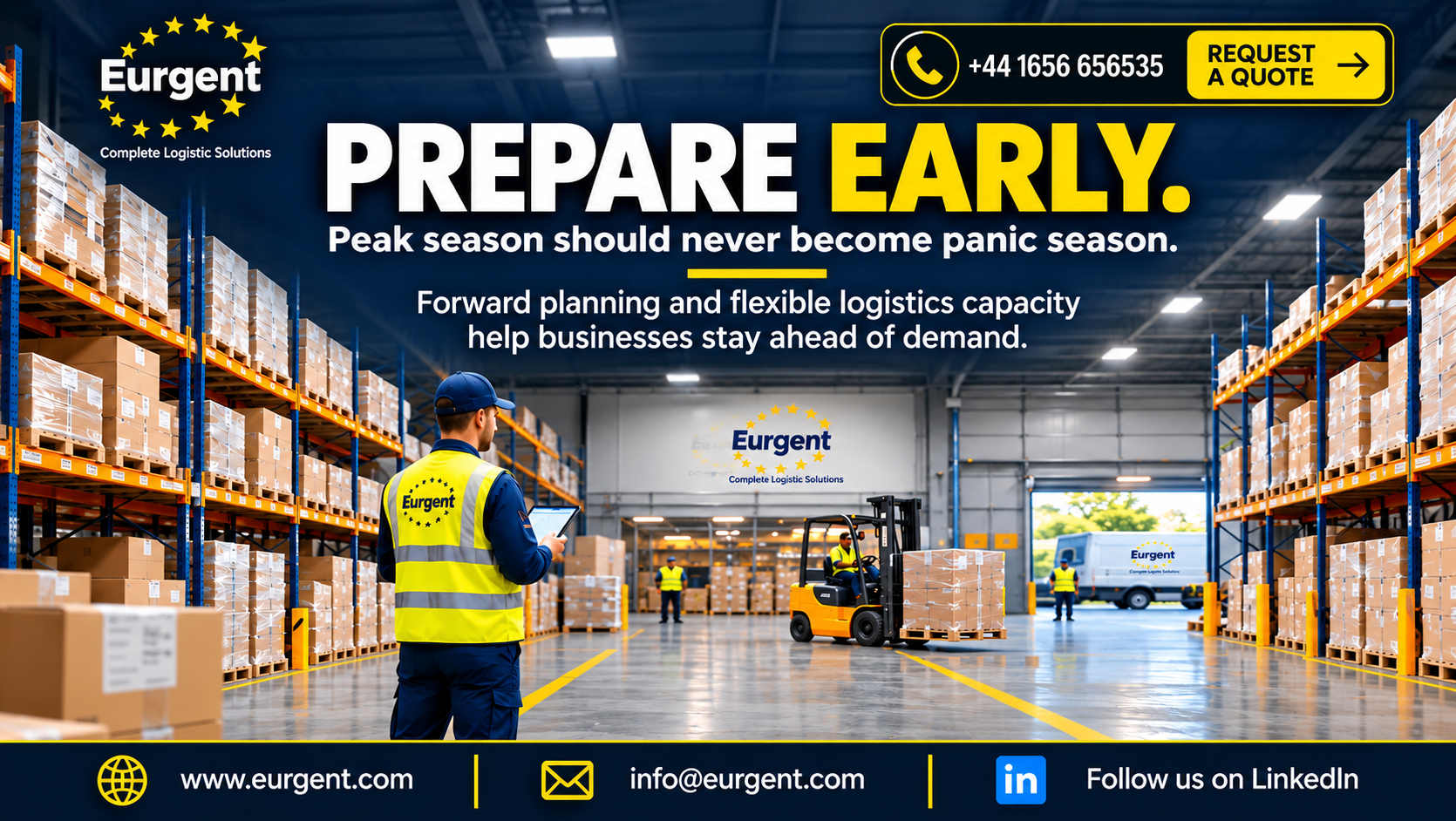
Peak season can bring exciting opportunities for businesses. Increased customer demand, higher order volumes and busy supply chains can all contribute to business growth. However, without proper preparation, these opportunities can quickly turn into operational challenges.
From limited transport availability to unexpected delivery delays, businesses often face additional pressure when logistics networks become busier.
The key to managing these challenges is simple: prepare early.
Forward planning, reliable logistics partners and flexible transport solutions can help businesses maintain efficient operations, meet customer expectations and stay ahead of seasonal demand.
Why Peak Season Creates Logistics Challenges
During peak trading periods, businesses across multiple industries experience increased demand for goods and transport services.
Retailers may need additional stock, manufacturers may face tighter production schedules, and distributors may need to coordinate more frequent deliveries.
As demand increases, logistics providers must manage greater pressure on transport networks, warehouse capacity and delivery schedules.
Common peak season challenges include:
- Limited transport availability during high-demand periods.
- Increased competition for delivery slots and logistics resources.
- Longer lead times caused by congestion and operational pressure.
- Unexpected changes to shipment schedules.
- Greater pressure to meet customer delivery expectations.
Businesses that wait until the last minute to arrange transportation may find themselves facing fewer options and additional costs.
Early preparation can help reduce these risks.
1. Forecast Demand Before It Increases
Effective logistics planning begins with understanding expected demand.
Businesses should review previous sales patterns, seasonal trends and upcoming promotional activities to estimate how much stock they may need during busier periods.
Although forecasts cannot eliminate uncertainty, they provide valuable information for planning transport requirements and delivery schedules.
Consider reviewing:
- Previous peak season sales and shipment volumes.
- Expected increases in customer orders.
- Upcoming promotions or seasonal campaigns.
- Supplier lead times and stock availability.
- Potential changes in delivery requirements.
Understanding these factors allows businesses to make more informed decisions before demand places additional pressure on operations.
2. Secure Transport Capacity in Advance
Transport availability can become increasingly limited during busy periods, particularly when multiple businesses require urgent deliveries at the same time.
Planning shipments in advance gives logistics providers more time to arrange suitable vehicles, coordinate routes and manage delivery schedules.
Early bookings may also provide businesses with greater flexibility when selecting transport solutions.
For businesses moving goods across the UK and Europe, coordinating road transport requirements ahead of time can help reduce unnecessary delays and improve delivery reliability.
Rather than waiting until shipments become urgent, businesses should communicate anticipated transport needs as early as possible.
3. Build Flexibility into Your Logistics Strategy
Even with careful preparation, unexpected circumstances can affect supply chains.
Changes in customer demand, supplier delays, traffic disruptions and operational challenges may require businesses to adjust their plans.
A flexible logistics strategy helps organisations respond more effectively when circumstances change.
Businesses can improve flexibility by:
- Allowing reasonable time buffers in delivery schedules.
- Identifying alternative transport arrangements where possible.
- Maintaining regular communication with suppliers and logistics providers.
- Reviewing shipment priorities when demand changes.
- Preparing contingency plans for critical deliveries.
Flexibility does not mean operating without a plan. It means having a plan that can adapt when necessary.
4. Maintain Clear Communication Across the Supply Chain
Successful peak season logistics depends on effective coordination between businesses, suppliers, transport providers and customers.
When communication is inconsistent, even minor disruptions can create confusion and unnecessary delays.
Businesses should ensure that everyone involved understands delivery expectations, shipment requirements and relevant deadlines.
Regular communication can help teams identify potential problems earlier and make adjustments before they affect customers.
Providing accurate shipment information and communicating changes promptly can also support smoother transport operations.
5. Work with a Reliable Logistics Partner
Choosing the right logistics partner is particularly important when demand increases.
An experienced logistics provider can help businesses coordinate transport requirements, assess available solutions and manage shipments more efficiently.
Reliable logistics support allows businesses to focus on their core operations while maintaining greater visibility over transport arrangements.
When evaluating a logistics partner, businesses should consider factors such as communication, responsiveness, transport capabilities and experience handling time-sensitive shipments.
Establishing these relationships before peak season can make coordination easier when demand increases.
Why Early Preparation Makes a Difference
Peak season should be an opportunity for growth rather than a period of unnecessary pressure.
Businesses that plan ahead are better positioned to manage increased shipment volumes, respond to unexpected challenges and maintain consistent service levels.
Early logistics planning can help organisations:
- Reduce the risk of last-minute transport difficulties.
- Improve coordination between suppliers and delivery partners.
- Maintain more predictable shipment schedules.
- Respond more effectively to changing customer demand.
- Protect customer relationships through reliable deliveries.
While no logistics strategy can eliminate every disruption, preparation provides a stronger foundation for managing uncertainty.
Stay Ahead of Demand with Eurgent Logistics
At Eurgent Logistics, we understand that reliable transport and effective coordination are essential to keeping businesses moving.
Whether you’re preparing for increased seasonal demand or managing time-sensitive deliveries, planning ahead can make a significant difference to your logistics operations.
Our logistics solutions are designed to support businesses with their transport requirements across the UK and Europe.
Peak season should never become panic season.
Prepare early, communicate clearly and work with a logistics partner that understands the importance of dependable transport.
Need help planning your upcoming shipments?
Contact Eurgent Logistics to discuss your transport requirements and request a quote.
Website: www.eurgent.com
Email: info@eurgent.com
Telephone: +44 1656 656535