


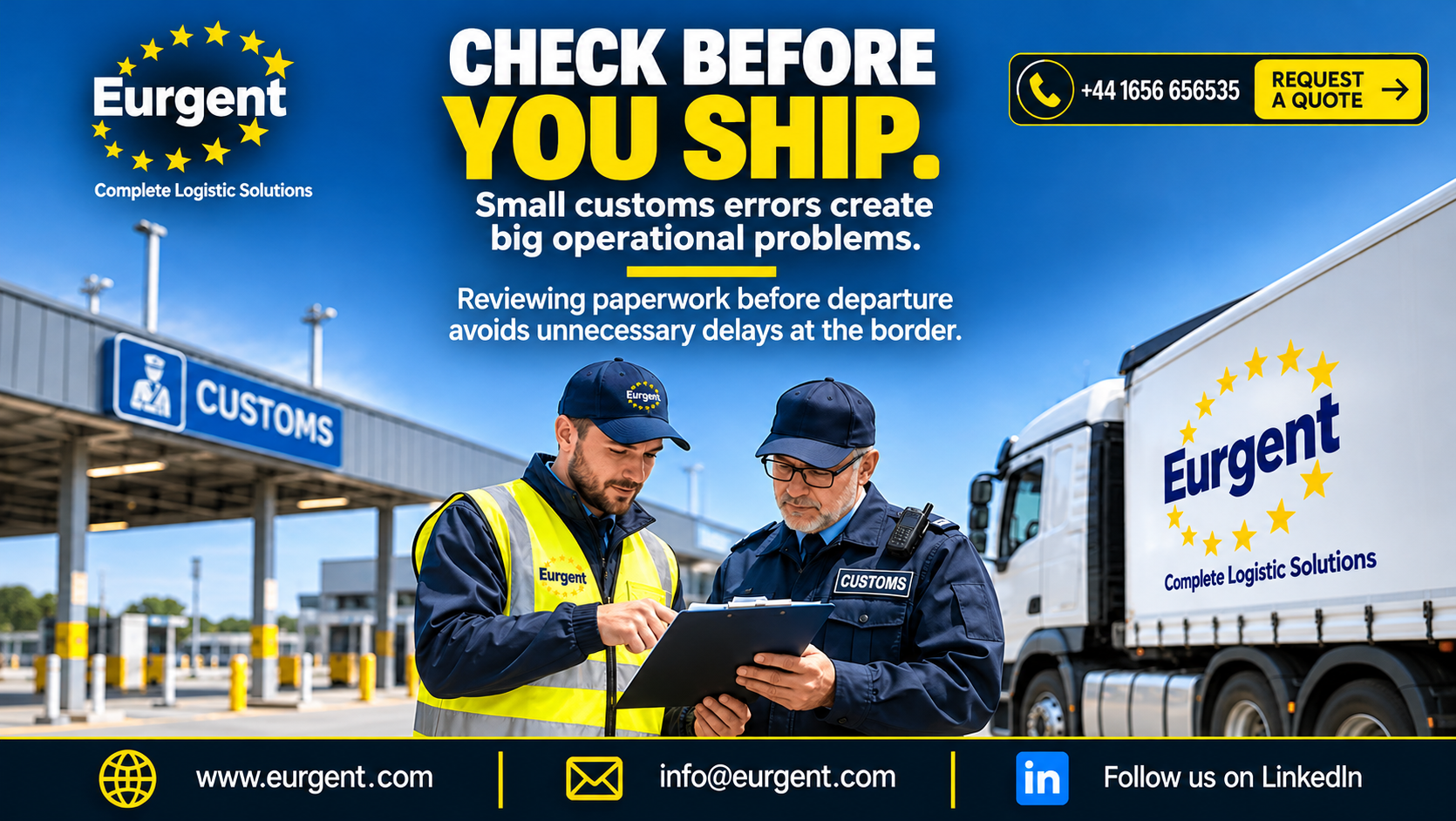
International shipping involves more than moving goods from one location to another. Behind every successful shipment is a process of documentation, regulatory compliance, and careful coordination.
Even a small mistake in customs paperwork can create significant operational challenges. Incorrect information, missing documents, or incomplete declarations may result in unexpected delays, additional costs, and disruptions to delivery schedules.
For businesses that depend on international trade, preparing shipments correctly before departure is essential to maintaining efficient and reliable logistics operations.
At Eurgent Logistics, we understand the importance of careful planning and effective coordination in keeping goods moving across borders.
Why Customs Documentation Matters
Customs authorities rely on accurate documentation to determine whether goods comply with applicable import and export regulations.
These documents provide essential information about the shipment, including its contents, value, origin, destination, and intended use.
When information is incomplete or inconsistent, customs authorities may require additional clarification or inspections before allowing goods to proceed.
For businesses, these interruptions can affect delivery schedules, increase administrative work, and create unexpected expenses.
Reviewing documentation before shipping helps identify potential problems early and reduces the likelihood of avoidable complications.
1. Ensure Commercial Invoices Are Accurate
A commercial invoice is one of the most important documents used in international shipping.
It typically provides details about the goods being transported, including their description, quantity, value, and the parties involved in the transaction.
Errors in commercial invoices can create discrepancies during customs clearance and may lead to requests for additional information.
Before dispatching goods, businesses should confirm that invoices contain accurate product descriptions, quantities, values, and relevant transaction details.
Information should also be consistent with other shipping documents to minimise confusion during the clearance process.
2. Check Commodity Codes and Goods Classification
Goods transported internationally must generally be classified using the appropriate commodity codes.
These classifications help customs authorities determine applicable duties, taxes, restrictions, and regulatory requirements.
Incorrect classification may result in inaccurate duty calculations, additional inspections, or compliance issues.
Businesses should review the classification of their products before shipment and seek professional guidance when necessary.
Accurate classification is particularly important when transporting specialised products or goods subject to additional regulatory controls.
3. Confirm Import and Export Requirements
Different countries have different customs procedures and regulatory requirements.
Depending on the goods and destination, shipments may require licences, certificates, declarations, or other supporting documentation.
Businesses should identify these requirements before arranging transportation.
For example, certain products may be subject to safety standards, sanitary controls, or additional restrictions.
Understanding the relevant requirements early allows businesses to prepare the necessary documentation and avoid last-minute complications.
4. Review Shipping Documents for Consistency
International shipments often involve several documents that must contain matching information.
These may include commercial invoices, packing lists, transport documents, and customs declarations.
Discrepancies between documents can create uncertainty and lead to additional checks.
Businesses should verify that shipment descriptions, quantities, weights, addresses, and other relevant details are consistent across their documentation.
Establishing a standard document review process can help teams identify errors before goods leave the warehouse.
5. Prepare for Border Procedures in Advance
Customs clearance requirements should be considered during the planning stage rather than immediately before departure.
Early preparation allows businesses to identify potential documentation gaps, confirm responsibilities, and coordinate with relevant logistics providers.
For shipments involving the United Kingdom and European countries, businesses must account for applicable customs procedures and border requirements.
Requirements may vary depending on the shipment’s origin, destination, customs procedure, and type of goods.
Planning ahead helps businesses allocate sufficient time for documentation, declarations, and any necessary checks.
6. Work With Experienced Logistics Professionals
International shipping can involve multiple parties, including transport providers, customs representatives, suppliers, and receiving businesses.
Effective coordination between these parties is important for ensuring that shipments move through each stage of the logistics process efficiently.
Experienced logistics professionals can help businesses understand transportation requirements, coordinate shipments, and identify potential operational challenges.
Clear communication also ensures that relevant information reaches the appropriate parties before goods arrive at the border.
By working with knowledgeable logistics partners, businesses can strengthen their shipping processes and reduce avoidable disruptions.
The Business Impact of Customs Delays
Customs delays can affect more than the shipment itself.
When goods are held at the border, businesses may experience disruptions to inventory availability, production schedules, and customer deliveries.
Depending on the circumstances, delays may also result in storage charges, additional transportation expenses, or administrative costs.
For businesses operating with tight delivery schedules, these disruptions can affect customer satisfaction and overall operational performance.
Preventing avoidable documentation errors is therefore an important part of effective supply chain management.
A Practical Pre-Shipment Checklist
Before dispatching an international shipment, businesses should review the following:
- Commercial invoices: Confirm that product descriptions, quantities, and declared values are accurate.
- Commodity codes: Verify that goods are classified correctly for the relevant customs procedures.
- Import and export requirements: Check whether licences, certificates, or additional documentation are required.
- Shipping documents: Ensure that information is consistent across invoices, packing lists, and transport documents.
- Customs declarations: Confirm that the appropriate declarations have been prepared and submitted when required.
- Transport arrangements: Verify collection details, delivery instructions, and relevant border procedures.
- Communication: Ensure that suppliers, transport providers, and customs representatives have the information they need.
A structured checklist can help businesses reduce administrative errors and improve shipment readiness.
Final Thoughts: Check Before You Ship
Successful international shipping begins long before goods reach the border.
Accurate documentation, careful preparation, and effective coordination are essential to reducing avoidable customs delays.
While businesses cannot eliminate every potential disruption, they can take practical steps to minimise unnecessary complications and strengthen their logistics operations.
By reviewing paperwork before departure, confirming regulatory requirements, and working with experienced logistics professionals, organisations can approach international shipping with greater confidence.
At Eurgent Logistics, we believe that effective logistics starts with preparation, clear communication, and reliable coordination.
Need support with your next shipment? Contact Eurgent Logistics to discuss your transportation requirements and request a quote.
Website: www.eurgent.com
Email: info@eurgent.com
Telephone: +44 1656 656535