


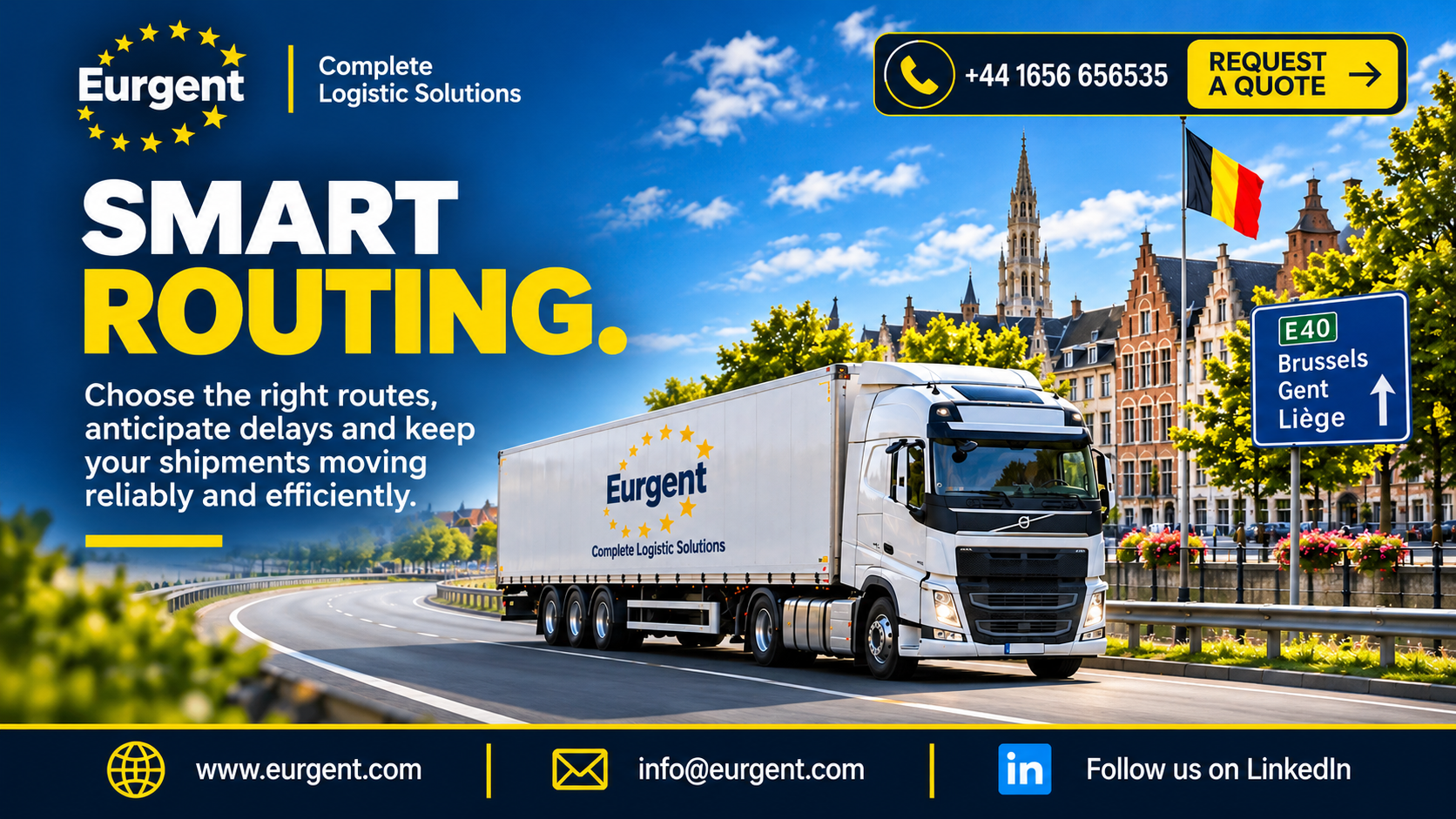
In the logistics industry, every journey matters. From transporting goods across cities to coordinating international shipments, the routes businesses choose can significantly influence delivery times, operational costs, and customer satisfaction.
Efficient logistics is not simply about moving goods from one location to another. It requires careful planning, informed decision-making, and the ability to anticipate potential disruptions before they affect deliveries.
At Eurgent Logistics, we recognise the importance of smart routing in keeping shipments moving reliably and efficiently.
What Is Smart Routing in Logistics?
Smart routing is the strategic process of selecting and managing transportation routes to improve delivery efficiency, minimise unnecessary delays, and optimise available resources.
Rather than relying solely on the shortest distance between two destinations, effective route planning considers several factors, including traffic conditions, road restrictions, delivery schedules, fuel consumption, and potential disruptions.
For businesses operating across multiple regions or international borders, these considerations become particularly important.
A well-planned route can help logistics providers maintain consistent delivery schedules while reducing avoidable operational challenges.
1. Reducing Delivery Delays Through Better Planning
Unexpected delays are among the most common challenges in transportation and logistics.
Traffic congestion, roadworks, adverse weather conditions, and border procedures can disrupt even carefully organised delivery schedules.
Smart routing helps businesses anticipate potential obstacles and identify alternative transportation options before disruptions escalate.
By considering possible delays during the planning process, logistics teams can make more informed decisions and maintain greater control over delivery timelines.
Proactive planning helps transform potential disruptions into manageable operational challenges.
2. Improving Fuel Efficiency and Managing Transport Costs
Transportation expenses represent a significant component of logistics operations, with fuel consumption playing an important role in overall operating costs.
Inefficient routes can result in unnecessary mileage, extended travel times, and increased fuel expenditure.
Strategic route planning helps businesses identify more efficient journeys by considering distance, traffic patterns, vehicle requirements, and delivery priorities.
Reducing unnecessary travel can contribute to better resource utilisation and more predictable transportation costs.
Over time, these improvements can support stronger operational efficiency and more sustainable logistics practices.
3. Strengthening Supply Chain Reliability
Reliable transportation is essential to maintaining an effective supply chain.
When shipments arrive late, the consequences can extend beyond a single delivery. Delays may affect inventory availability, production schedules, customer commitments, and subsequent distribution activities.
Smart routing supports supply chain reliability by helping logistics teams coordinate deliveries more effectively.
Careful planning allows businesses to establish realistic transportation schedules, allocate resources appropriately, and prepare for potential disruptions.
This approach helps create greater consistency throughout the movement of goods.
4. Supporting Efficient Cross-Border Transportation
International logistics introduces additional complexities that require careful coordination.
Businesses transporting goods across European markets, including Belgium and neighbouring countries, must consider factors such as border requirements, road regulations, vehicle restrictions, and delivery deadlines.
Effective route planning helps logistics providers account for these requirements when organising international shipments.
For example, selecting suitable transport corridors between major commercial destinations such as Brussels, Ghent, and Liège requires an understanding of regional road networks and operational conditions.
By considering these factors in advance, businesses can improve shipment coordination and reduce the likelihood of avoidable complications.
5. Enhancing Customer Satisfaction Through Reliable Deliveries
Customers expect more than the successful transportation of their goods. They value reliability, clear communication, and confidence in delivery commitments.
When businesses consistently meet agreed delivery timelines, they strengthen customer relationships and establish greater trust.
Smart routing contributes to this reliability by supporting realistic scheduling and more efficient transportation planning.
It also helps logistics teams communicate more accurately about expected delivery times and potential disruptions.
Reliable deliveries are not only an operational achievement; they are an important part of building lasting customer confidence.
6. Using Technology to Support Smarter Route Decisions
Modern logistics operations increasingly benefit from digital tools that support transportation planning and coordination.
Route optimisation software, GPS navigation, traffic monitoring systems, and shipment tracking technologies can provide valuable information for logistics decision-making.
These tools can help transportation teams:
- Identify efficient routes based on delivery requirements.
- Monitor traffic conditions and potential disruptions.
- Adjust transportation plans when circumstances change.
- Improve coordination between drivers and logistics teams.
- Support more accurate delivery estimates.
However, technology is most effective when combined with experienced planning and sound operational judgement.
Successful smart routing requires both reliable information and the ability to respond appropriately to changing transportation conditions.
7. Building a More Sustainable Logistics Operation
As businesses place greater emphasis on environmental responsibility, transportation efficiency has become an important consideration.
Unnecessary mileage, prolonged vehicle idling, and inefficient delivery schedules can increase fuel consumption and associated emissions.
Smarter route planning can help reduce these inefficiencies by supporting more direct journeys, better vehicle utilisation, and improved delivery coordination.
Although route optimisation alone cannot eliminate the environmental impact of transportation, it can contribute to broader sustainability objectives.
For logistics providers, operational efficiency and environmental responsibility can often support one another.
Smart Routing Starts With Smart Planning
Successful logistics depends on more than the ability to transport goods. It requires strategic planning, effective coordination, and a commitment to reliable service.
By choosing appropriate routes, anticipating delays, and making informed transportation decisions, businesses can improve efficiency while strengthening the reliability of their supply chains.
Whether managing local deliveries or coordinating international shipments, smart routing provides an important foundation for effective logistics operations.
At Eurgent Logistics, we understand that every shipment represents a commitment to our customers.
Choose the right routes. Anticipate delays. Keep your shipments moving.
Plan Your Next Shipment With Eurgent Logistics
Looking for reliable logistics solutions to support your transportation requirements?
Connect with Eurgent Logistics to discuss your shipping needs and request a quotation.
Website: www.eurgent.com
Email: info@eurgent.com
Phone: +44 1656 656535
Eurgent Logistics – Complete Logistic Solutions.