


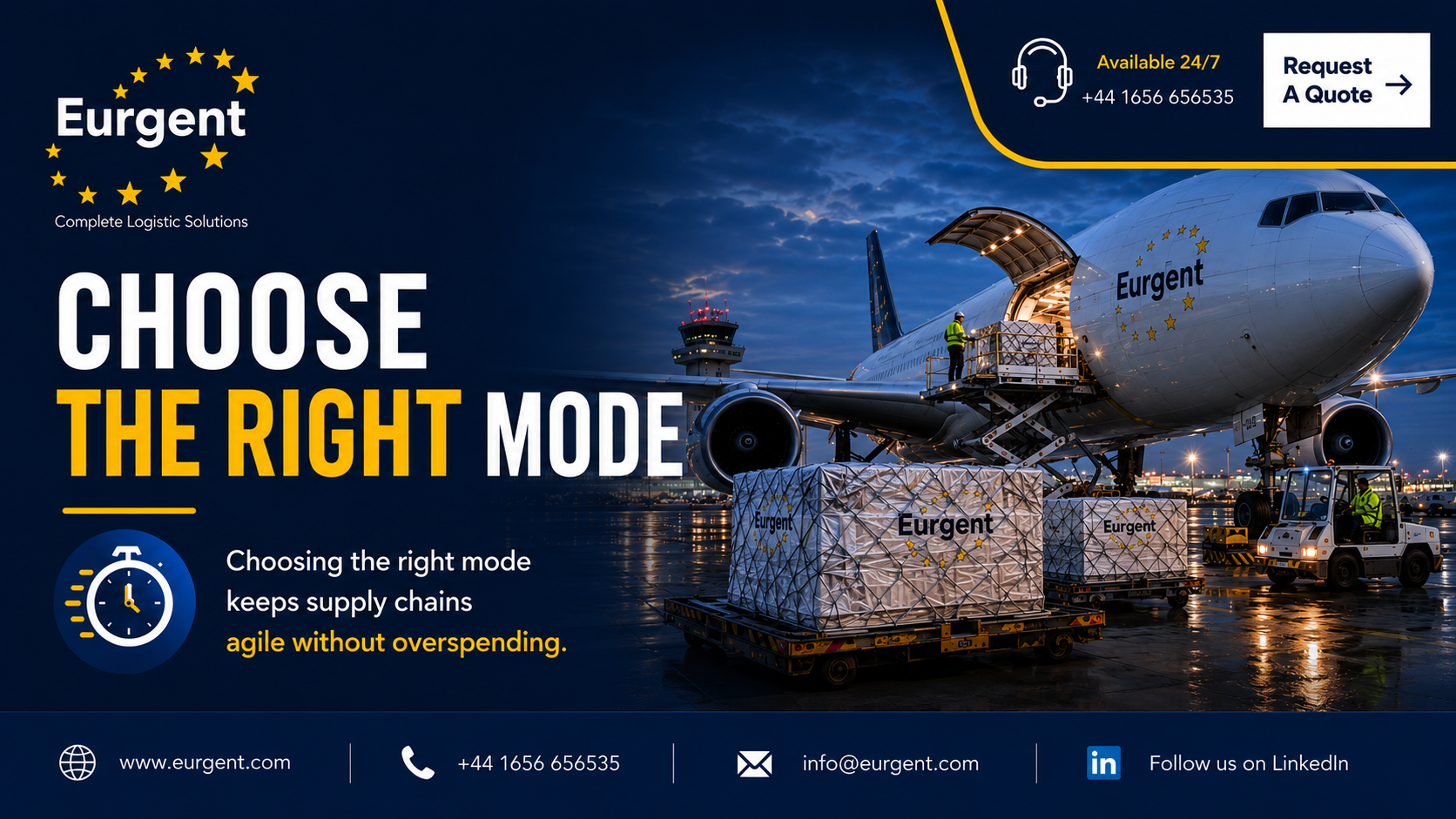
In logistics, choosing the right transport mode can make the difference between smooth delivery and costly disruption. Air, road, and sea freight each have their place, but the best option depends on urgency, cargo type, budget, destination, and supply chain requirements.
Choosing the right mode is not just a transport decision — it is a business decision. The right freight solution keeps goods moving efficiently while helping businesses avoid unnecessary delays and overspending.
Why Transport Mode Matters
Every shipment has different priorities. Some goods need to move quickly. Some need specialist handling. Some need cost-effective long-distance movement. Others require secure, time-critical coordination.
When the wrong mode is selected, businesses may face higher costs, slower delivery, missed deadlines, or operational disruption.
- Air freight supports urgent and time-critical shipments.
- Road freight offers flexibility for regional and European movement.
- Sea freight is suitable for larger volumes and longer lead times.
- Dedicated transport provides control and reliability for specialist freight.
- Multi-modal solutions can combine speed, efficiency, and cost control.
The Risk of Choosing Based on Price Alone
The cheapest option is not always the best option. A lower freight cost can become expensive if it leads to delays, missed delivery windows, storage charges, or customer dissatisfaction.
True value comes from matching the mode to the requirement.
Key Factors When Choosing a Freight Mode
1. Urgency
Time-sensitive goods often require faster transport options such as air freight, express road transport, or dedicated courier solutions.
2. Cargo Type
Fragile, hazardous, temperature-sensitive, oversized, or high-value goods may need specialist handling and careful route planning.
3. Distance and Destination
Domestic, European, and international shipments all require different planning. Border requirements, customs, and transit times must be considered.
4. Budget
Cost matters, but it should be balanced with reliability, speed, and service quality.
5. Supply Chain Impact
Freight decisions affect production schedules, customer commitments, stock availability, and operational flow.
Air Freight: When Speed Is Critical
Air freight is ideal when delivery speed is the top priority. It supports urgent movement across long distances and is often used for time-critical, high-value, or production-sensitive shipments.
While air freight can cost more than other modes, it can protect businesses from larger losses caused by delays.
Road Freight: Flexible and Reliable
Road freight is one of the most flexible logistics solutions. It can support scheduled freight, express transport, dedicated vehicles, and European distribution.
For many businesses, road freight provides the right balance between speed, control, and cost.
Sea Freight: Efficient for Larger Volumes
Sea freight is often the right choice for larger shipments where cost efficiency is important and lead times allow for longer transit.
It is especially useful for international supply chains, bulk cargo, and planned inventory movement.
Why Expert Freight Planning Matters
The right logistics partner helps businesses assess the best mode based on real operational needs. This includes timing, cargo requirements, route options, risk, and total cost.
Good planning keeps supply chains agile without overspending.
Need Help Choosing the Right Freight Mode?
Eurgent supports businesses with practical logistics solutions across road, air, sea, and specialist freight requirements.
Right mode. Better delivery. Smarter logistics.