


Retail logistics is built around timing. Products need to arrive at the right store, distribution point or business location at the right moment, and even a relatively small delay can affect stock availability, store operations, customer expectations and the wider supply chain.
For retailers operating across multiple locations, the challenge becomes even greater. Deliveries must be coordinated around receiving windows, store opening hours, stock requirements and changing demand. That is why reliable retail logistics is about much more than simply transporting boxes from one location to another.
At Eurgent, our focus is straightforward: provide dependable, flexible logistics solutions that help businesses keep goods moving and meet critical delivery requirements. From time-sensitive consignments to store-ready deliveries, effective planning and responsive transport support can make the difference between disruption and a smooth retail operation.
Why Delivery Slots Matter in Retail Logistics
A retail delivery slot is not simply a suggested arrival time. In many operations, it forms part of a carefully coordinated schedule involving store teams, warehouse staff, loading areas, inventory systems and other suppliers.
When a vehicle arrives within the required window, goods can move smoothly into the next stage of the operation. When a delivery misses that window, the consequences can extend beyond the shipment itself.
Depending on the operation, a missed or delayed delivery may contribute to rescheduling, additional handling, unavailable stock or disruption to staff planning. For businesses managing multiple deliveries each day, maintaining dependable schedules is therefore an important part of supply chain performance.
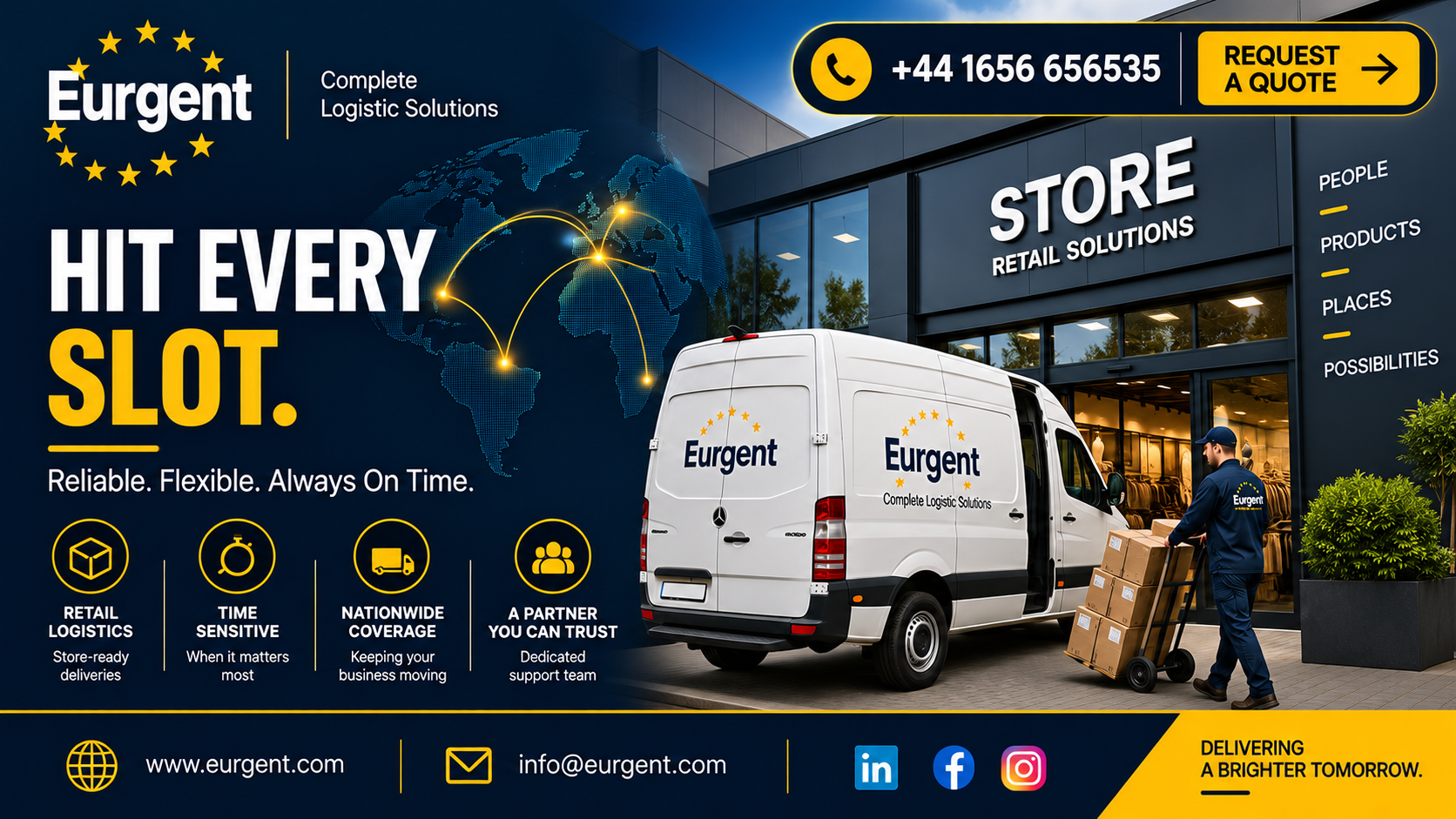
HIT EVERY SLOT.
Retail logistics works best when planning, transportation and delivery requirements come together. The objective is simple: get the right goods to the right place at the right time.
The Growing Complexity of Retail Supply Chains
Modern retail supply chains have become increasingly interconnected. Stock may move between manufacturers, warehouses, fulfilment centres, distribution hubs and individual retail locations before finally reaching the customer.
At the same time, businesses are managing changing purchasing patterns, seasonal demand, promotions, product launches and tighter expectations around availability.
This creates a logistics environment where flexibility matters.
A retailer may have planned deliveries for regular replenishment while simultaneously needing an urgent movement to replace missing stock. Another business may require products to reach several locations within defined receiving windows. A promotional campaign may create an unexpected increase in demand that requires additional transportation at short notice.
These situations demonstrate why retail logistics requires both planning and the ability to respond when circumstances change.
Store-Ready Deliveries
The final stage of a retail shipment is particularly important because this is where transportation meets day-to-day store operations.
Deliveries need to arrive at an appropriate location and within the agreed schedule so receiving teams can process goods efficiently. Clear communication between the logistics provider and the customer can help ensure that delivery requirements are understood before the journey begins.
Important considerations can include:
- Required delivery date and time window
- Store or site access requirements
- Shipment size and characteristics
- Suitable vehicle requirements
- Loading and unloading arrangements
- Multiple-location delivery schedules
- Urgent or priority consignments
- Communication throughout the movement
Understanding these details early allows transportation to be planned around the real requirements of the delivery rather than treating every movement in exactly the same way.
Time-Sensitive Retail Deliveries
There are situations where standard delivery schedules may not provide the flexibility a business needs. A critical item might be required urgently. Replacement stock may need to reach a location quickly. A scheduled delivery may have been disrupted elsewhere in the supply chain, creating a need for a responsive alternative.
Time-sensitive logistics is designed around these circumstances.
The priority is not simply speed. It is coordinating the movement around the deadline and the customer’s operational requirements. That involves understanding when the goods need to arrive, where they need to go and what transportation arrangement is appropriate for the shipment.
For retail businesses, having access to responsive logistics support can provide valuable additional flexibility when unexpected requirements appear.
Why Reliability Matters
Retail operations depend on consistency. Businesses plan staffing, stock management and customer activity around expected deliveries, which makes dependable logistics an important part of wider operational planning.
Reliability begins before a vehicle starts moving. It depends on accurate information, realistic planning and clear communication between everyone involved.
Understanding the collection location, destination, timing requirements and shipment details allows potential challenges to be considered earlier in the process. Good logistics planning therefore combines transportation with communication and coordination.
Flexibility When Plans Change
Even carefully organised supply chains can face unexpected changes. Customer demand can increase, schedules can move, stock can become urgently required and businesses may need transportation at shorter notice than originally expected.
This is where flexibility becomes one of the most valuable characteristics of a logistics partner.
A flexible approach starts by understanding what has changed and identifying the practical transportation options available. The solution may involve adjusting collection timing, selecting an appropriate vehicle, coordinating a priority movement or reviewing the wider delivery plan.
For retailers, this responsiveness can help keep operations moving when the original plan is no longer suitable.
Reliable. Flexible. Focused on the Delivery.
Successful retail logistics combines dependable transportation with the flexibility to respond to changing business requirements. Every movement should be planned around the shipment, destination and required delivery window.
Nationwide Logistics Support
Businesses with locations across different regions need logistics arrangements capable of supporting a geographically distributed operation.
A wider transport network can help connect warehouses, distribution centres, stores, suppliers and other business locations while providing a consistent approach to logistics planning.
This becomes especially useful for organisations managing multiple sites. Instead of considering each delivery completely independently, businesses can develop a broader strategy for how stock moves through their network.
Whether the requirement involves an individual urgent delivery or ongoing movements between locations, the objective remains the same: keep the supply chain connected and maintain clear communication throughout the journey.
Supporting Product Launches and Promotions
Retail campaigns often create logistics deadlines that cannot easily be moved.
A new product may need to be available across multiple locations on a specific date. Promotional materials may need to arrive before a campaign begins. Displays, equipment or stock may need to reach stores before teams can prepare for an event.
In these circumstances, logistics becomes part of the launch strategy.
Transportation should therefore be considered early rather than after every other part of the campaign has been arranged. Understanding delivery locations, quantities, schedules and priorities can help create a more practical distribution plan.
Retail Replenishment and Stock Availability
Keeping appropriate stock available is one of the central challenges of retail operations. Too little stock can create missed sales opportunities, while excessive stock can introduce different operational and financial pressures.
Transportation supports this balance by connecting inventory with the locations where it is required.
Planned replenishment can help maintain regular stock movements, while responsive logistics provides additional options when unexpected demand or shortages occur.
The combination of scheduled and flexible transportation can therefore give businesses a more adaptable approach to stock movement.
Communication Throughout the Delivery
Strong logistics is not only about what happens on the road. Communication is equally important.
Retailers need confidence that delivery requirements have been understood. When circumstances change, the relevant people need clear information so they can make appropriate decisions.
Good communication can help customers coordinate receiving teams, manage expectations and understand how a shipment is progressing through its journey.
This human element remains essential even as logistics technology continues to develop. Systems can improve visibility, but effective service still depends on people understanding requirements and responding appropriately.
A Logistics Partner, Not Just a Vehicle
Transportation capacity is important, but businesses can gain greater value from a logistics provider that takes time to understand their operational requirements.
A logistics partner should consider the wider context surrounding a movement. Is the shipment supporting a store opening? Is it replacing critical stock? Does it have a fixed receiving window? Is it part of a larger multi-location distribution programme?
These details influence how the delivery should be approached.
At Eurgent, the focus is on understanding what the customer needs to achieve and identifying an appropriate logistics solution around that requirement.
Retail Logistics for Multiple Locations
Managing deliveries to one location is very different from coordinating transportation across dozens of sites. Multi-location retail networks require careful planning because every destination may have different schedules, access arrangements and stock requirements.
A structured approach can help businesses organise these movements more effectively.
| Retail Requirement | Logistics Priority | Key Consideration |
|---|---|---|
| Store Replenishment | Consistency | Planned delivery schedules |
| Urgent Stock | Responsiveness | Time-sensitive transportation |
| Product Launch | Coordination | Multiple locations and deadlines |
| Store Opening | Planning | Goods arriving in the required sequence |
| Unexpected Requirement | Flexibility | Adapting transportation to changing circumstances |
Reducing Disruption Through Better Planning
Not every logistics challenge can be predicted, but better preparation can make supply chains more resilient when disruption occurs.
Retail businesses can improve transportation planning by maintaining accurate delivery information, communicating requirements early, identifying critical shipments and understanding where flexibility may be needed.
Working closely with logistics partners also helps ensure that operational requirements are understood before urgent situations arise.
The objective is not to assume that every delivery will always follow an identical plan. Instead, businesses can create logistics processes capable of adapting while maintaining focus on the required outcome.
Connecting People, Products and Places
At its core, retail logistics connects three essential elements: people, products and places.
Products need to move between suppliers, warehouses and stores. People need information so they can coordinate each stage. Locations need transportation solutions that reflect their individual operational requirements.
When these elements are connected effectively, logistics becomes more than transportation. It becomes part of the infrastructure that enables retailers to serve customers and operate across multiple locations.
Choosing a Retail Logistics Partner
When evaluating logistics support, businesses should consider more than the availability of vehicles. The provider should be able to understand the operational context surrounding each movement and communicate clearly about the available options.
Important considerations include:
- Ability to support time-sensitive requirements
- Understanding of delivery windows
- Flexible transportation options
- Clear communication
- Support for multiple destinations
- Appropriate planning around individual shipment requirements
- Ability to respond when circumstances change
The right logistics relationship should ultimately make transportation easier to manage rather than adding another layer of complexity.
Frequently Asked Questions
What is retail logistics?
Retail logistics covers the planning and movement of products through the supply chain towards retail locations or related facilities. It can include transportation between warehouses, distribution centres, stores and other business locations.
What is a time-sensitive delivery?
A time-sensitive delivery is a shipment where arrival timing is particularly important to the customer’s operation. The specific transportation solution depends on factors such as the goods, distance, destination and required delivery window.
Why are retail delivery slots important?
Retail locations often coordinate deliveries with staffing, receiving capacity and wider store operations. Meeting the agreed delivery window can therefore help goods move through the receiving process more efficiently.
Can logistics support product launches?
Yes. Transportation planning can form an important part of product launches, particularly when products, promotional materials or equipment need to reach several locations according to a defined schedule.
Why is flexibility important in retail logistics?
Retail requirements can change because of demand, stock shortages, schedule changes or unexpected operational circumstances. Flexible logistics gives businesses additional transportation options when the original plan needs to change.
What information helps plan a retail delivery?
Useful information includes the collection and delivery locations, shipment details, required delivery date or time window, site access requirements and any special operational considerations associated with the movement.
Hit Every Slot with Eurgent
Retail never stands still, and the logistics supporting it needs to keep moving too.
From planned store deliveries and stock replenishment to urgent movements and changing requirements, effective retail logistics combines preparation, communication, flexibility and dependable transportation.
The goal is not simply to move a consignment. It is to understand where that consignment fits within the customer’s operation and help it reach the required destination at the right time.
That is the thinking behind Eurgent Complete Logistic Solutions: practical logistics support designed around real business requirements.
Need a Retail Delivery Solution?
Whether you are planning regular retail movements or dealing with a time-sensitive requirement, speak with Eurgent about a logistics solution tailored around your shipment, destination and delivery schedule.
+44 1656 656535
info@eurgent.com
www.eurgent.com
Eurgent — Complete Logistic Solutions