


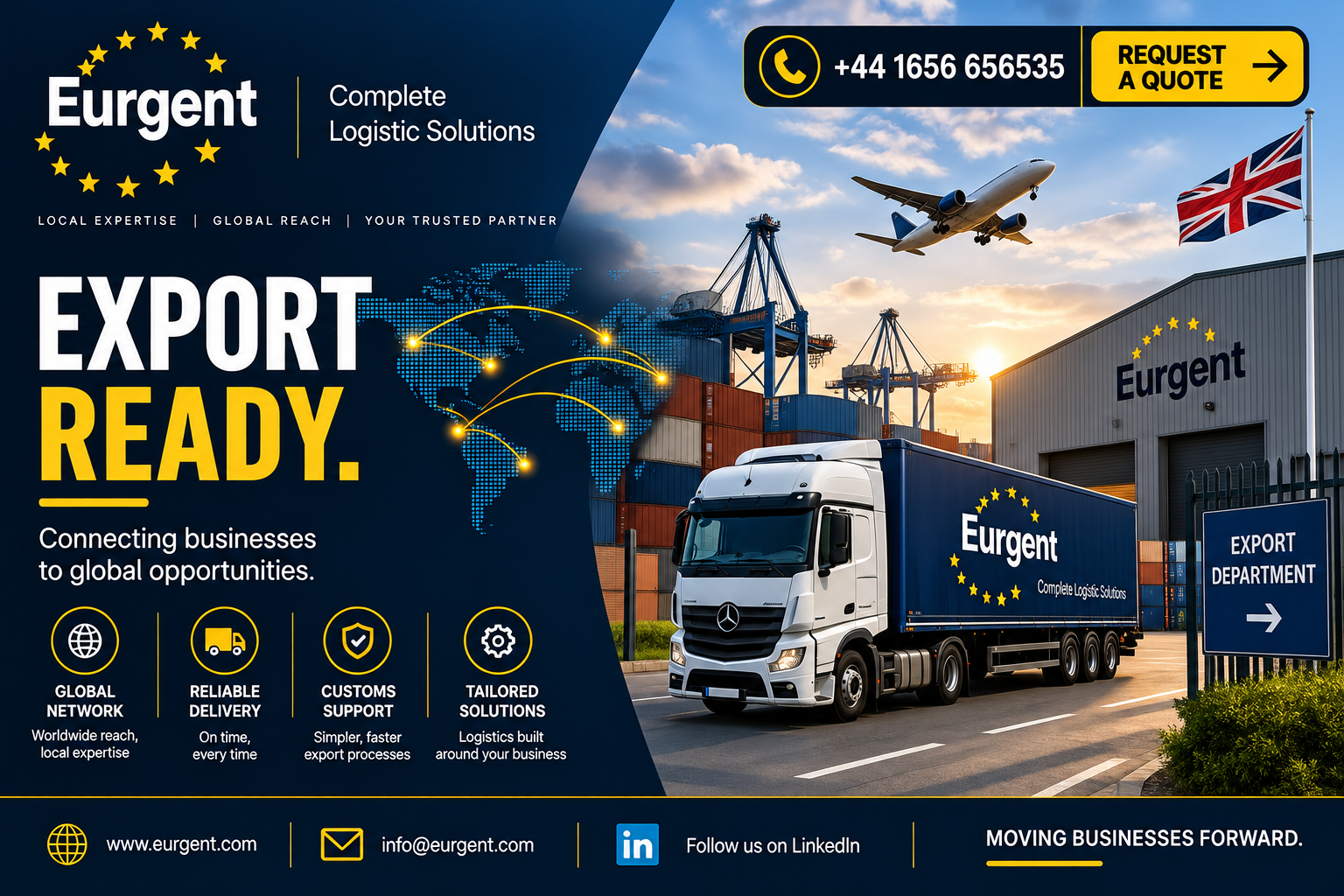
Expanding into international markets creates exciting opportunities, but successful exporting depends on more than simply moving goods from one country to another. Businesses need reliable transport, customs support, strong coordination and a logistics strategy designed around their individual requirements.
Being export ready means being logistics ready. The right combination of planning, transport and expertise can turn international complexity into commercial opportunity.
What Does It Mean to Be Export Ready?
Export readiness is about having the processes, resources and logistics network required to move products confidently across borders. International shipments can involve multiple transport stages, documentation requirements, customs procedures, delivery schedules and different parties working across several locations.
A strong logistics strategy brings these elements together. Instead of treating transport as the final step in a sale, businesses can make logistics part of their wider export planning from the beginning.
Four Foundations of Successful Export Logistics
Global Network
International reach and dependable logistics connections help businesses move goods between markets efficiently.
Reliable Delivery
Consistent planning and coordination help shipments stay aligned with customer expectations and business schedules.
Customs Support
Clear processes and experienced support can make cross-border movements easier to manage and reduce unnecessary complications.
Tailored Solutions
Every shipment is different. Logistics should reflect the cargo, destination, timescale and commercial priorities involved.
Choosing the Right Freight Solution
International trade rarely has a single transport solution that works for every shipment. The right option depends on factors such as urgency, shipment size, destination, budget and handling requirements.
- Road freight provides flexible connections between suppliers, warehouses, ports, airports and customers.
- Air freight can support urgent and time-sensitive international shipments.
- Sea freight offers an important solution for larger-volume international cargo.
- Multimodal logistics combines different transport methods to create a connected end-to-end journey.
Why Customs Planning Matters
Crossing international borders introduces requirements that domestic transportation does not normally involve. Documentation, shipment information and customs procedures all need to be considered as part of the logistics process.
Preparing these elements early can help businesses avoid preventable complications. Good communication between exporters, logistics providers and other parties involved in the shipment also helps create a smoother movement from collection through to final delivery.
Export Planning Checklist
- Understand the shipment and destination requirements.
- Select the appropriate transport mode.
- Prepare the required shipment documentation.
- Plan customs processes before dispatch.
- Build realistic collection and delivery timescales.
- Maintain clear communication throughout the journey.
Turning Logistics Into a Competitive Advantage
Logistics should do more than deliver a shipment. When managed effectively, it can support stronger customer relationships, improve operational confidence and make it easier for businesses to pursue opportunities in new markets.
A company that can reliably serve international customers is better positioned to expand its reach. This makes logistics an important part of the wider growth strategy rather than simply an operational expense.
Planning for Change
International supply chains operate in changing environments. Customer requirements, transport capacity, regulations and market conditions can evolve, sometimes quickly. Export strategies therefore need enough flexibility to respond when circumstances change.
Working with an experienced logistics partner can give businesses access to different freight options and practical support when routes, priorities or shipment requirements need to be adjusted.
Local Expertise. Global Reach.
Successful international logistics combines global capability with practical understanding of individual shipments. Businesses need solutions that consider where goods are coming from, where they are going, how quickly they need to arrive and what needs to happen along the way.
This tailored approach helps create supply chains that are not only capable of reaching international destinations but are also aligned with the company’s broader commercial objectives.
Ready to Move Your Business Forward?
At Eurgent, logistics solutions are built around the needs of each business. From road, air and sea freight to wider logistics and customs support, the goal is to help businesses move goods with greater confidence across the UK and international markets.
Complete Logistic Solutions — built around your business.
Frequently Asked Questions
What is export logistics?
Export logistics covers the planning and movement of goods from their origin to customers or destinations in another country, including transportation, documentation, coordination and relevant border processes.
Which freight method is best for exports?
It depends on the shipment. Air freight may suit urgent cargo, sea freight can work well for larger international volumes, and road freight provides important connections across domestic and European networks.
Why is customs preparation important?
International shipments can require specific documentation and customs procedures. Preparing these requirements before dispatch can help reduce avoidable complications during the shipment journey.
Can different freight methods be combined?
Yes. A multimodal logistics strategy can combine road, air and sea transport where appropriate to create a more practical end-to-end solution.
How can Eurgent support growing exporters?
Eurgent can support businesses with tailored logistics solutions designed around shipment requirements, destinations, timescales and wider supply-chain needs.