


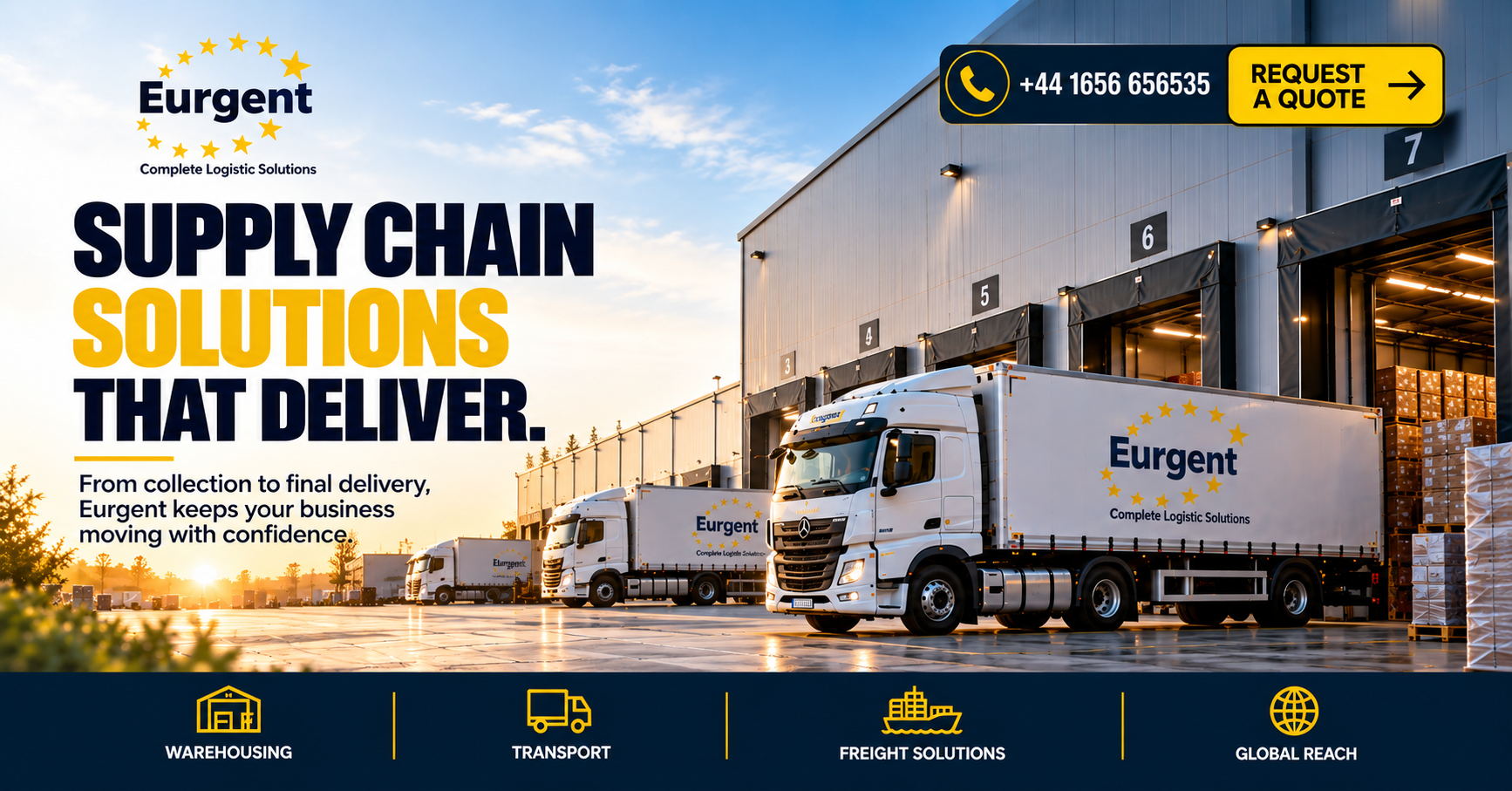
A reliable supply chain does far more than move goods from one location to another. It connects suppliers, warehouses, transport operations and customers through a coordinated process designed to keep products moving efficiently and businesses operating with confidence.
When any part of that process becomes disconnected, the effects can spread quickly. Delayed collections can affect warehouse schedules, poor transport coordination can disrupt deliveries, and limited visibility can make it harder for businesses to respond when circumstances change.
Effective supply chain solutions bring these activities together. From collection and warehousing to transport, freight management and final delivery, an integrated approach can create a more dependable flow of goods throughout the logistics journey.
For businesses managing regular shipments or complex distribution requirements, the goal is simple: goods should reach the right destination through a logistics process that is organised, responsive and dependable.
What Are Supply Chain Solutions?
Supply chain solutions are the services, processes and logistics capabilities used to manage the movement of goods between different stages of a supply chain. Depending on the requirements of the business, this can include collection, storage, inventory handling, transportation, freight coordination, distribution and final delivery.
Rather than treating each stage as an isolated activity, an effective supply chain strategy considers how those stages interact. A transport schedule, for example, needs to work with warehouse availability. Warehouse operations need to support dispatch requirements, while delivery planning needs to account for customer expectations and destination requirements.
The stronger the coordination between these activities, the easier it becomes to maintain a consistent movement of goods.
Why an Integrated Supply Chain Matters
Businesses often depend on multiple logistics activities at the same time. Products may need to be collected from a supplier, transported to a warehouse, stored temporarily, prepared for onward movement and then delivered to another facility or final destination.
If every stage is managed separately without sufficient coordination, unnecessary complexity can develop. Communication may become fragmented, responsibilities can become unclear and disruptions may take longer to resolve.
An integrated supply chain approach helps create continuity between the different stages. It allows logistics decisions to be made with the wider journey in mind rather than focusing only on one individual movement.
This can support businesses by providing:
- Better coordination between collection, storage and delivery.
- Clearer responsibility throughout the logistics process.
- More efficient movement of goods between locations.
- Greater flexibility when requirements change.
- Improved communication across different supply chain stages.
- A more dependable logistics operation.
Collection: Where Reliable Logistics Begins
A successful delivery begins long before a vehicle reaches the final destination. Collection is one of the first operational stages and establishes the foundation for everything that follows.
Collection planning needs to consider where the goods are located, when they will be ready, what type of transport is appropriate and where they need to move next. Timing is particularly important because a delayed collection can affect warehouse bookings, onward transport and delivery schedules.
Good collection management therefore depends on preparation and communication. Relevant information should be available before the movement begins so that the appropriate logistics arrangements can be made.
Warehousing as Part of the Supply Chain
Warehousing is not simply about finding somewhere to store goods. In an integrated supply chain, a warehouse acts as an important connection point between incoming and outgoing movements.
Goods may arrive for short-term storage before being dispatched, consolidated with other shipments or prepared for the next stage of transportation. The efficiency of these processes can influence the wider performance of the supply chain.
Well-coordinated warehousing can help businesses manage the timing difference between supply and demand. Instead of every shipment needing to move immediately from origin to final destination, appropriate storage creates additional flexibility within the logistics process.
Connecting Warehousing and Transport
The relationship between warehousing and transport is particularly important. A vehicle arriving before goods are ready can create unnecessary waiting, while goods prepared without suitable transport arrangements may remain in storage longer than intended.
Coordination helps ensure that warehouse and transport activities support each other. When information flows effectively between both stages, goods can move through the supply chain more smoothly.
Transport That Keeps Businesses Moving
Transport is one of the most visible parts of logistics, but effective transportation requires considerably more than placing goods on a vehicle.
Every movement needs to consider the characteristics of the shipment, collection and delivery requirements, route planning, timing and the wider supply chain schedule.
Reliable transport supports operational continuity. Businesses need confidence that their goods can move between suppliers, warehouses, distribution facilities and customers according to their requirements.
Transport planning should therefore focus not only on completing an individual journey but also on how that journey fits into the complete logistics process.
Freight Solutions for Different Logistics Requirements
Supply chains are rarely identical. A logistics solution that works for one business may not suit another because shipment volumes, destinations, schedules and operational priorities can vary significantly.
That is why freight solutions should be based on the actual requirements of the movement rather than forcing every shipment into the same approach.
Businesses should consider factors such as:
- The origin and destination of the goods.
- The nature and volume of the shipment.
- Collection and delivery timeframes.
- Storage requirements during transit.
- Connections with other logistics activities.
- The level of flexibility required.
Understanding these factors allows a logistics provider to plan a solution around the journey as a whole.
Supporting Supply Chains With Global Reach
Modern supply chains can extend well beyond a single town, region or country. Businesses may source products from one market, store them in another and distribute them across multiple destinations.
As the geographical scope of a supply chain expands, coordination becomes increasingly important. More stages may be involved, communication needs can increase and different freight movements may need to connect successfully.
A well-managed logistics process helps businesses maintain continuity as goods move through these different stages. The objective remains the same regardless of distance: creating a clear and dependable journey from origin to destination.
From Collection to Final Delivery
The phrase “from collection to final delivery” reflects an important principle in supply chain management: logistics should be considered as one connected journey.
A typical movement may involve several stages:
- Collection: Goods are collected from the supplier, manufacturer or agreed origin.
- Initial transport: The shipment moves to a warehouse, distribution point or another transport connection.
- Warehousing: Goods may be stored, organised or prepared for onward movement.
- Freight coordination: The appropriate onward logistics arrangements are managed according to the destination and requirements.
- Distribution: Goods move closer to their intended market or recipient.
- Final delivery: The shipment reaches its designated destination.
Each stage affects the next. Treating them as part of a connected process can help reduce avoidable gaps and create greater operational consistency.
Why Supply Chain Visibility Is Important
Businesses need to understand what is happening within their logistics operations. Without sufficient visibility, it becomes harder to answer basic operational questions: Has the collection taken place? Where are the goods in the process? Is the next stage prepared? Is anything affecting the planned delivery?
Visibility supports better communication and decision-making. When businesses have clearer information about the movement of goods, they are better positioned to plan their own operations and respond when circumstances change.
This is particularly valuable when multiple logistics stages are involved. A delay at one point may require adjustments elsewhere, making timely communication an essential part of effective supply chain management.
Building Flexibility Into Logistics Operations
Supply chains operate in environments where circumstances can change. Customer requirements may shift, shipment volumes can vary and operational schedules may need adjustment.
A rigid logistics process can make these situations more difficult to manage. By contrast, a flexible supply chain is designed with the understanding that plans may sometimes need to change.
Flexibility does not mean operating without structure. It means creating a strong enough logistics framework that adjustments can be made without losing control of the wider process.
Common Supply Chain Challenges
Many logistics problems are not caused by one major failure. Instead, they develop through smaller gaps between different stages of the supply chain.
Poor Communication
When important information is not shared between suppliers, warehouses, transport providers and customers, even straightforward movements can become unnecessarily complicated.
Disconnected Logistics Services
Managing multiple providers without effective coordination can create uncertainty about responsibilities and make the complete logistics journey harder to oversee.
Insufficient Planning
Last-minute arrangements can limit available options. Planning collections, transport and warehousing together can create a more organised supply chain.
Limited Flexibility
Unexpected changes are easier to manage when the logistics operation has enough flexibility to respond without disrupting every subsequent stage.
Lack of End-to-End Thinking
Optimising one stage while ignoring the rest of the journey can simply move a problem elsewhere. Effective supply chain management considers the impact of decisions across the entire process.
How to Choose the Right Supply Chain Solutions
Choosing logistics support should begin with understanding what your business actually needs. Rather than selecting individual services in isolation, consider the complete journey your goods need to make.
Useful questions include:
- Where are the goods being collected?
- Where is the final destination?
- Will warehousing be required?
- How frequently will shipments move?
- What transport requirements are involved?
- Are multiple freight stages required?
- How important is flexibility to the operation?
- Who will coordinate the different stages?
These questions help establish whether a proposed logistics solution addresses the complete requirement rather than only one part of it.
The Value of a Complete Logistics Approach
Working with a logistics provider capable of supporting multiple stages of the supply chain can simplify coordination. Instead of viewing warehousing, transport and freight as unrelated services, they can be considered components of one wider solution.
This approach can be particularly useful for businesses that want greater continuity across their logistics operations. Fewer gaps between services can mean clearer communication and a better understanding of how individual movements contribute to the overall supply chain.
The result should be a logistics process built around practical business requirements: getting goods collected, stored where necessary, transported effectively and delivered to their intended destination.
How Eurgent Supports Complete Logistic Solutions
Eurgent focuses on Complete Logistic Solutions, bringing together key areas including warehousing, transport and freight solutions to support the movement of goods through the supply chain.
The objective is straightforward: help businesses keep their goods moving from collection through to final delivery with a coordinated logistics approach.
By looking at the wider journey rather than treating every stage independently, businesses can build supply chains that are better organised, more responsive and easier to manage.
Conclusion: Supply Chain Solutions That Keep Business Moving
A strong supply chain connects every stage of the logistics journey. Collection needs to support transport, transport needs to connect effectively with warehousing and freight operations, and every stage ultimately needs to contribute to successful final delivery.
For businesses, the value of an integrated approach is greater confidence in how goods move through that process. Good logistics is not simply about completing individual journeys; it is about making sure those journeys work together.
If your business needs dependable support from collection through to final delivery, Eurgent can help with complete logistic solutions designed to keep your business moving with confidence.