


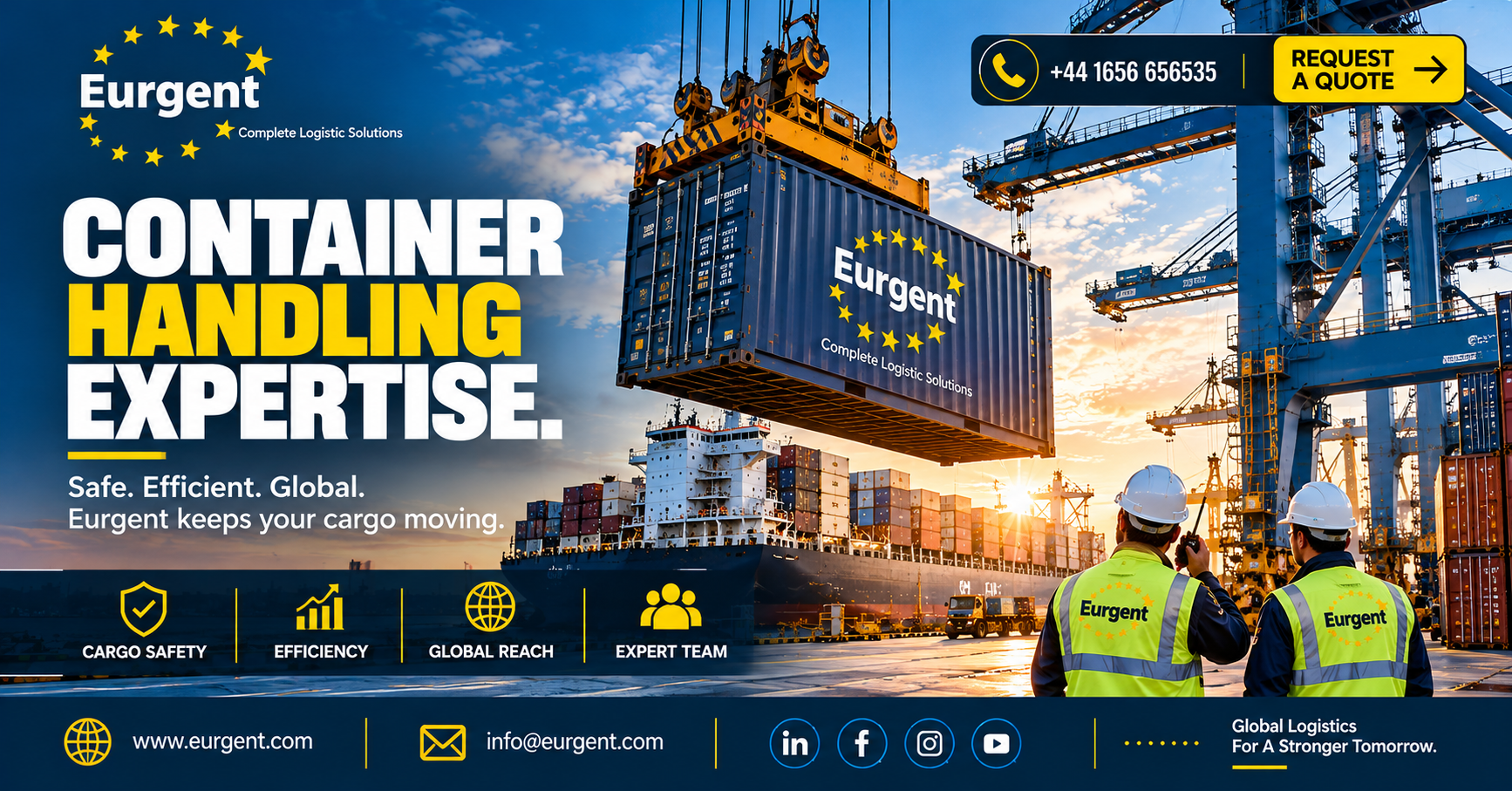
Containers are at the heart of modern global trade. Every day, they move products, materials and equipment between businesses, ports and international markets. But successful container logistics involves much more than simply transporting a container from one location to another.
Professional container handling services require careful coordination, appropriate equipment, experienced teams and a strong focus on cargo safety. From receiving and positioning containers to loading, unloading and coordinating onward transport, each stage needs to work efficiently with the wider supply chain.
At Eurgent, the focus is on delivering complete logistic solutions that help keep cargo moving safely and efficiently. With the right people, processes and logistics support, container movements can become a dependable part of a business’s global supply chain.
What Is Container Handling?
Container handling refers to the processes involved in moving, positioning and managing freight containers throughout their logistics journey.
Depending on the shipment and operation, this can include activities associated with:
- Container collection and delivery.
- Loading and unloading.
- Movement within ports, terminals or logistics facilities.
- Positioning containers for onward transportation.
- Coordinating container movements with vessels and road transport.
- Managing connections between different stages of the supply chain.
The exact process varies according to the cargo, container type, location and transport requirements. What remains consistent is the need for safe and coordinated handling.
Why Professional Container Handling Matters
Containers can carry significant quantities of cargo, making their handling an important operational responsibility.
Poor coordination can create delays, unnecessary movements and disruption further along the supply chain. Professional container handling helps ensure that containers are moved through each stage in a controlled and organised way.
Four areas are particularly important:
Cargo Safety. Appropriate handling procedures help protect containers and their contents throughout the movement.
Efficiency. Coordinated processes help containers move between transport stages without unnecessary complications.
Global Reach. Containers connect businesses with international transport networks and markets.
Expert Teams. Experienced logistics professionals help coordinate the people, equipment and transport involved.
Cargo Safety Comes First
Safety is fundamental to container logistics. Containers can be large and heavy, and their movement requires suitable equipment and established operating procedures.
Safe handling is important not only for protecting the goods inside the container but also for supporting the people and infrastructure involved in the operation.
Depending on the circumstances, effective cargo handling may involve checking that containers are appropriately positioned, coordinating movements with relevant operators and ensuring that the next stage of transportation is ready.
Protecting Cargo Throughout the Journey
Cargo protection does not begin or end at the port. Businesses should think about the complete logistics journey.
A container may move through several stages before reaching its final destination. Each transition should be managed with the same focus on careful handling and coordination.
Efficiency Keeps Supply Chains Moving
Efficiency in container logistics is about more than speed. A fast operation is not necessarily an effective operation if it creates unnecessary risks or problems elsewhere in the supply chain.
True efficiency comes from coordinating resources, people and transport so that each stage supports the next.
This can involve:
- Planning container movements in advance.
- Coordinating appropriate transport.
- Reducing unnecessary handling.
- Maintaining clear communication.
- Preparing for the next stage of the journey.
- Responding appropriately when requirements change.
A well-managed container operation helps create a smoother flow of cargo through the wider logistics network.
The Role of Ports and Terminals
Ports and container terminals are important connection points in international supply chains. They bring together vessels, containers, handling equipment and inland transport networks.
When a container arrives at or departs from a port, multiple activities may need to happen within a coordinated timeframe.
Containers need to move between vessels and terminal areas before continuing through the next stage of their journey. This makes coordination particularly important.
The port movement should therefore be considered part of the complete supply chain rather than as an isolated activity.
Connecting Sea Freight With Road Transport
Although containers are closely associated with sea freight, their journeys frequently begin and end on land.
Road transport can provide the essential connection between ports and warehouses, distribution centres, production facilities or other business locations.
This means container logistics requires coordination between different transport environments.
A typical movement might involve:
- Preparing the shipment and container.
- Transporting the container to the appropriate port.
- Handling and positioning it within the terminal.
- Loading the container onto a vessel.
- Completing the sea freight journey.
- Unloading at the destination port.
- Coordinating onward transport.
- Delivering the container to its required destination.
Each stage is connected, which is why end-to-end planning can be so valuable.
Container Logistics and Global Trade
Containerisation has become a fundamental part of international freight movement because standardised containers can move between different parts of the transport network.
For businesses operating internationally, this creates an effective way to connect suppliers, manufacturing locations, warehouses and customers across different markets.
However, international reach also introduces additional coordination requirements. Cargo may pass through multiple facilities and transport stages before reaching its destination.
A connected logistics approach helps businesses manage these movements as one journey rather than a collection of unrelated activities.
Expert Teams Make the Difference
Container handling involves equipment and infrastructure, but people remain central to successful logistics operations.
Experienced logistics professionals help understand shipment requirements, coordinate movements and communicate with the relevant parties throughout the process.
The human element becomes especially important when requirements change. Delays, schedule adjustments or operational issues can require decisions that consider the complete logistics journey.
Experienced teams can help keep those decisions focused on the shipment’s wider requirements.
Planning Container Movements Effectively
Good container logistics starts before the container physically moves.
Businesses and logistics teams should understand key requirements such as:
- Where the container needs to be collected.
- Where the cargo is travelling.
- Which transport stages are required.
- Relevant shipment timings.
- The nature and requirements of the cargo.
- What needs to happen after arrival.
Planning these elements together helps reduce uncertainty and creates a clearer logistics process.
Communication Throughout the Container Journey
Container movements can involve multiple organisations and operational teams. Clear communication helps ensure that each party understands the relevant requirements and timing.
This can become particularly important when one stage depends directly on another.
For example, onward transport needs to connect appropriately with the availability of the container. Likewise, changes earlier in the journey may affect later activities.
Effective communication helps the supply chain respond to these dependencies.
Reducing Unnecessary Supply Chain Disruption
Logistics cannot eliminate every external disruption, but strong planning and coordination can help businesses respond more effectively.
Potential challenges can include changing schedules, congestion, transport availability and operational constraints.
When logistics teams understand the complete shipment, they are better positioned to assess available options when circumstances change.
This is another reason businesses benefit from viewing container handling as part of a complete logistics strategy.
Common Container Logistics Challenges
Poor Coordination
If transport, handling and onward delivery are planned independently, gaps can develop between different stages.
Limited Communication
Missing or delayed information can make it harder to coordinate the next movement effectively.
Insufficient Planning
Container movements often involve several interconnected activities. Leaving arrangements until the last moment can reduce available options.
Focusing Only on the Sea Journey
The vessel movement may represent a significant part of the journey, but businesses also need to consider how the container reaches and leaves the port.
Ignoring the Wider Supply Chain
Every container movement ultimately supports a wider business requirement. Logistics planning should reflect that objective.
Building a Better Container Logistics Strategy
Businesses with regular container movements can benefit from reviewing the entire process rather than focusing only on individual shipments.
Useful questions include:
- Where do delays commonly occur?
- Are responsibilities clear at each stage?
- Is communication effective between different parties?
- Are road and sea movements properly coordinated?
- Are unnecessary handling stages creating complexity?
- Can the logistics process respond when requirements change?
- Does the current solution support wider business objectives?
Answering these questions can highlight opportunities to improve efficiency and coordination.
From Container Handling to Complete Logistic Solutions
Container handling is most effective when it forms part of a wider logistics solution.
A container does not exist independently from the cargo inside it or the business waiting for that cargo. Every movement ultimately contributes to a larger supply chain objective.
Connecting container handling with transportation, distribution and other relevant logistics activities can create a more coordinated journey from origin to destination.
This broader approach helps businesses focus on the final outcome rather than managing every logistics stage separately.
How Eurgent Supports Container Logistics
Eurgent provides complete logistic solutions focused on helping businesses keep cargo moving through safe, efficient and coordinated logistics operations.
Container movements require more than equipment. They require people who understand the requirements, processes that connect different stages and practical logistics coordination from collection through to onward delivery.
By focusing on cargo safety, efficiency, global reach and experienced logistics support, Eurgent helps businesses manage container movements as part of their wider supply chain.
Conclusion: Safe. Efficient. Global.
Professional container handling is an essential part of successful freight logistics. Every movement needs to connect safely and efficiently with the next stage of the journey.
Strong container logistics combines careful planning, appropriate handling, clear communication and experienced people with a complete understanding of the supply chain.
For businesses moving cargo across domestic and international networks, this connected approach can provide greater confidence throughout the logistics journey.
Safe. Efficient. Global. Eurgent keeps your cargo moving.