


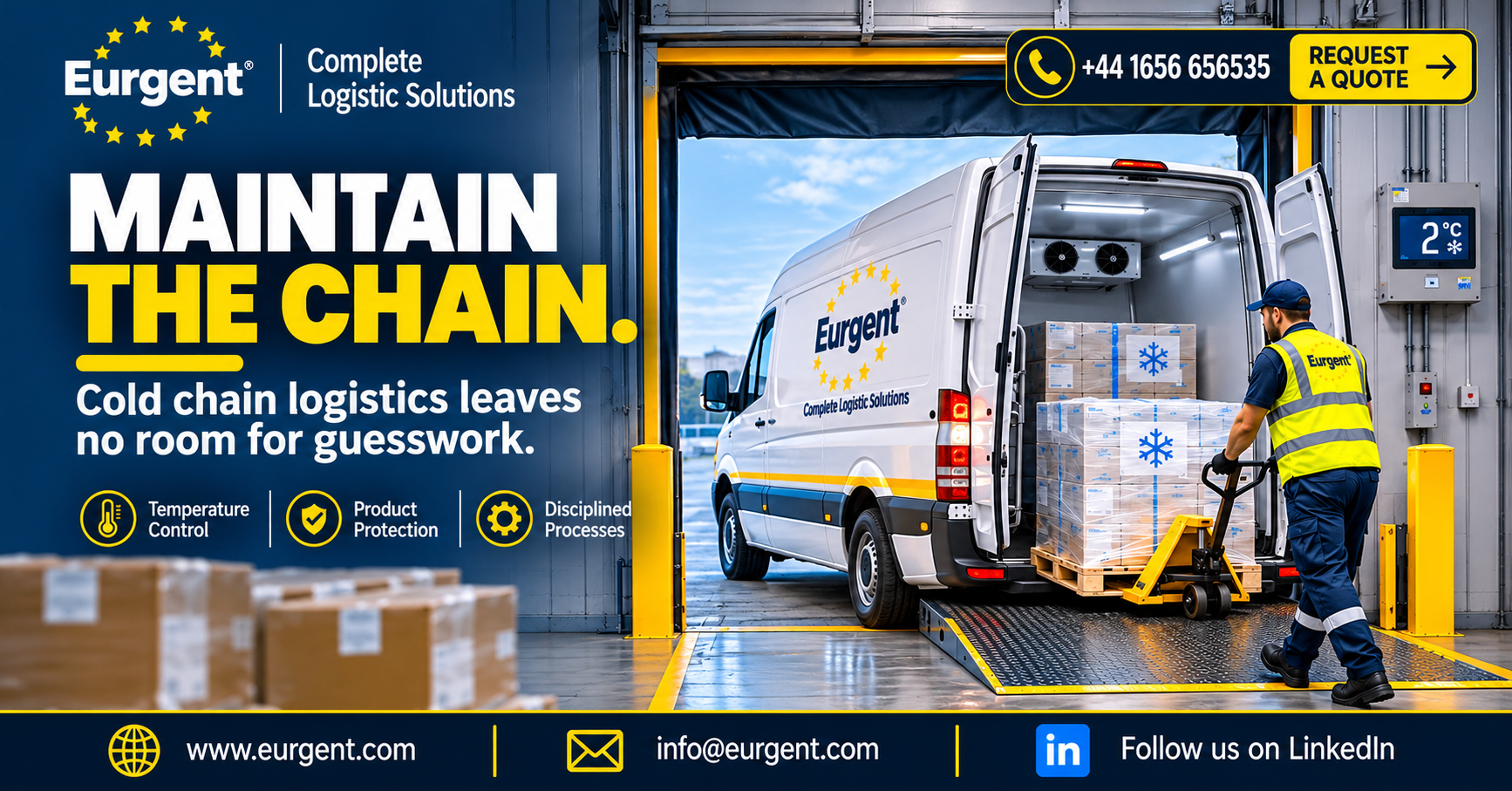
Transporting temperature-sensitive products requires more than moving goods from one location to another. It demands careful planning, appropriate equipment, continuous temperature management and disciplined handling procedures throughout the supply chain.
For businesses transporting pharmaceuticals, food products, healthcare supplies and other sensitive goods, even a temporary temperature deviation can create significant challenges. Product quality may deteriorate, shelf life may be affected and, depending on the goods involved, safety or regulatory requirements may be compromised.
This is why cold chain logistics plays such an important role in modern supply chain management.
The principle is straightforward: products that require controlled temperatures must remain within their specified conditions throughout storage, handling, transportation and delivery.
Eurgent’s message, “Maintain the Chain”, highlights an essential logistics principle: cold chain operations leave no room for guesswork.
In this guide, we explore how cold chain logistics works, why temperature control matters, the challenges businesses face and the practices that support reliable transportation of temperature-sensitive products.
What Is Cold Chain Logistics?
Cold chain logistics is the management and transportation of products that must remain within defined temperature conditions throughout their journey.
It involves a coordinated system of temperature-controlled storage, specialised transport equipment, monitoring processes and handling procedures.
Unlike conventional freight transportation, where ambient temperature may not be a major concern, cold chain operations require additional controls to protect product integrity.
The required temperature depends on the characteristics of the goods and the manufacturer’s specifications.
For example, certain chilled products may require storage between 2°C and 8°C, while frozen products may require substantially lower temperatures.
However, there is no single temperature range suitable for every cold chain shipment. Each consignment must be managed according to its specific requirements.
Key Components of a Cold Chain
An effective cold chain typically includes:
- Temperature-controlled storage facilities.
- Refrigerated vehicles or suitable insulated transport systems.
- Appropriate packaging and thermal protection.
- Temperature monitoring and recording equipment.
- Trained warehouse and transport personnel.
- Documented loading and unloading procedures.
- Clear communication between supply chain partners.
- Contingency arrangements for equipment failures or delays.
These components must work together to maintain the required conditions from the point of origin to the final destination.
Why Cold Chain Logistics Is Important
Temperature-sensitive products can be vulnerable to environmental changes during transportation.
If the required conditions are not maintained, the consequences may extend beyond a delayed shipment.
1. Protecting Product Quality
Many products undergo physical, chemical or biological changes when exposed to unsuitable temperatures.
Food products may experience changes in freshness, texture or microbiological stability.
Certain pharmaceutical products may lose stability or effectiveness when stored outside their specified conditions.
Maintaining appropriate temperatures helps reduce these risks.
2. Supporting Product Safety
Temperature control is particularly important for goods where inappropriate storage conditions can introduce safety concerns.
For example, poor temperature management may encourage microbial growth in some perishable food products.
Controlled conditions are therefore an important part of wider product safety management.
3. Reducing Product Waste
Temperature excursions can lead to damaged, rejected or unusable goods.
This creates financial losses and may also increase environmental waste.
Effective cold chain management helps reduce avoidable deterioration.
4. Supporting Regulatory Compliance
Temperature-sensitive products may be subject to industry-specific regulations, standards and contractual requirements.
These obligations vary according to the product category, destination and relevant jurisdiction.
Documented temperature management can help businesses demonstrate that appropriate handling procedures have been followed.
5. Maintaining Customer Confidence
Customers depend on logistics providers and supply chain partners to handle their goods responsibly.
Reliable temperature management supports product quality, service consistency and stronger commercial relationships.
How Cold Chain Logistics Works
Cold chain logistics involves several interconnected stages.
Each stage presents different operational risks that must be managed.
Stage 1: Product Preparation
Before transportation begins, the product’s temperature requirements must be clearly identified.
This includes reviewing:
- Required temperature range.
- Maximum permitted exposure conditions.
- Packaging requirements.
- Product sensitivity.
- Expected transit duration.
- Handling instructions.
- Monitoring and documentation requirements.
Some goods may also require pre-conditioning or specialised preparation before dispatch.
Stage 2: Temperature-Controlled Storage
Products may need to remain in refrigerated or frozen storage before collection.
Storage facilities should be suitable for the required temperature range and equipped with appropriate monitoring arrangements.
Warehouse teams should also consider stock rotation, airflow, product separation and handling procedures.
Stage 3: Loading and Dispatch
Loading is a particularly important stage because goods may be exposed to external temperatures while moving between the warehouse and transport vehicle.
Where appropriate, refrigerated vehicles should be brought to their required operating conditions before loading.
Loading procedures should minimise unnecessary exposure and avoid obstructing refrigeration airflow.
Stage 4: Temperature-Controlled Transportation
During transit, the transport system must maintain the specified conditions.
Refrigeration equipment, insulation, airflow and temperature monitoring all contribute to this process.
Drivers and operational teams should understand the shipment’s requirements and know how to respond to unexpected situations.
Stage 5: Unloading and Delivery
Temperature control remains important at the destination.
Unloading delays, unsuitable receiving facilities or poor handling procedures can create risks even when transportation itself has been managed correctly.
A successful cold chain delivery therefore requires coordination between the sender, logistics provider and receiving organisation.
Temperature Control: The Foundation of Cold Chain Logistics
Temperature control is central to the protection of sensitive products.
However, maintaining a set temperature involves more than operating refrigeration equipment.
Understanding Product Temperature Requirements
Different products respond differently to temperature exposure.
Some require chilled conditions, others must remain frozen and certain specialist products may need tightly controlled temperature ranges.
The correct conditions should always be established using reliable product specifications.
Maintaining Consistent Conditions
Temperature fluctuations may occur because of:
- Frequent vehicle door openings.
- Inadequate insulation.
- Refrigeration equipment problems.
- Extended loading or unloading times.
- Incorrect vehicle settings.
- Poor airflow around products.
- Exposure to extreme external weather.
Operational procedures should aim to reduce these risks.
Monitoring Temperature During Transit
Temperature monitoring systems can provide valuable information about conditions throughout transportation.
Depending on the system, monitoring may involve data loggers, electronic sensors or remote temperature reporting.
Monitoring is especially useful when combined with clear procedures for responding to deviations.
Understanding Temperature Excursions
A temperature excursion occurs when conditions move outside the specified acceptable range.
Not every excursion automatically means that a product is unusable.
The appropriate response depends on the product, the extent and duration of the deviation, and applicable quality requirements.
Affected goods may need to be isolated and assessed by an authorised person before release or further distribution.
Temperature records provide evidence for decisions, but they do not replace proper product-specific quality assessments.
The Role of Refrigerated Transport in Cold Chain Logistics
Refrigerated vehicles are an important part of many temperature-controlled supply chains.
These vehicles are designed to support the transportation of goods under controlled thermal conditions.
Refrigeration Systems
Refrigeration equipment helps maintain the required environment inside the vehicle’s load compartment.
The suitability of the system depends on the goods, vehicle configuration and operating conditions.
Insulated Vehicle Bodies
Insulation helps reduce heat transfer between the external environment and the cargo compartment.
Effective insulation can support temperature stability and reduce unnecessary refrigeration demand.
Airflow Management
Air circulation is essential for maintaining consistent conditions.
Poorly positioned pallets or excessive loading can restrict airflow and create uneven temperatures.
Equipment Maintenance
Refrigeration units, door seals, sensors and associated components require appropriate inspection and maintenance.
Preventative maintenance can help identify problems before they disrupt deliveries.
Vehicle Suitability
Not every refrigerated vehicle is suitable for every type of temperature-sensitive product.
Transport planning should consider payload, compartment configuration, temperature range, monitoring capabilities and the nature of the shipment.
Why Disciplined Processes Matter in Cold Chain Operations
Technology is important, but reliable cold chain logistics also depends on people and procedures.
A well-equipped vehicle cannot compensate for consistently poor handling practices.
Standard Operating Procedures
Documented procedures help teams follow consistent methods for preparing, loading, transporting and delivering sensitive goods.
Employee Training
Warehouse personnel, drivers and operational staff should understand the temperature requirements relevant to their responsibilities.
Training may include equipment operation, product handling, monitoring procedures and incident reporting.
Clear Responsibilities
Every stage of the cold chain should have defined responsibilities.
This helps reduce confusion when goods move between different organisations or operational teams.
Accurate Documentation
Records may include temperature readings, collection details, delivery information and relevant incident reports.
Appropriate documentation supports traceability and quality management.
Exception Management
Businesses should establish procedures for responding to unexpected events such as refrigeration failures, vehicle breakdowns and delivery delays.
These processes should explain when to escalate an issue and who is authorised to make decisions about affected products.
The objective is to make cold chain management consistent, repeatable and accountable.
Industries That Depend on Cold Chain Logistics
Temperature-controlled logistics supports a wide range of industries.
Each sector has different requirements and operational challenges.
Food and Beverage
Perishable food products often require controlled temperatures to maintain freshness and safety.
Examples include chilled meat, seafood, dairy products, fresh produce and frozen foods.
The appropriate handling conditions depend on the product and applicable food safety requirements.
Pharmaceuticals
Certain medicines and healthcare products require temperature-controlled storage and transportation.
Some pharmaceutical products are sensitive to both excessive heat and freezing.
Their handling may be governed by product-specific requirements and applicable Good Distribution Practice principles.
Healthcare and Life Sciences
Some diagnostic materials, laboratory reagents and biological samples require controlled transport conditions.
These shipments may also involve additional packaging, documentation or handling requirements.
Agriculture and Fresh Produce
Temperature management can help preserve the quality of harvested produce and reduce deterioration during distribution.
Specialist Manufacturing
Some chemicals, industrial materials and manufacturing inputs may require controlled environmental conditions to preserve their properties.
In every sector, logistics arrangements should be based on the characteristics and requirements of the specific goods.
Common Challenges in Cold Chain Logistics
Cold chain operations face several challenges that can affect reliability and cost.
Understanding these risks is essential for effective planning.
1. Temperature Fluctuations
Unexpected changes in temperature can occur during storage, loading, transportation or unloading.
Recommended approach: Use suitable equipment, appropriate monitoring and clearly defined handling procedures.
2. Equipment Failure
Refrigeration systems and monitoring devices may malfunction.
Recommended approach: Maintain equipment regularly and establish contingency procedures.
3. Loading and Unloading Delays
Extended handling periods can increase exposure to unsuitable temperatures.
Recommended approach: Coordinate collection and delivery schedules, and minimise unnecessary door-opening time.
4. Inadequate Packaging
Unsuitable packaging can reduce thermal protection.
Recommended approach: Select packaging based on the product’s sensitivity and transport conditions.
5. Poor Communication
Miscommunication between suppliers, transport teams and receiving facilities can lead to operational errors.
Recommended approach: Establish clear instructions and escalation channels.
6. Incomplete Temperature Records
Missing information may make it difficult to investigate a potential temperature excursion.
Recommended approach: Use appropriate recording systems and maintain reliable documentation.
7. Unexpected Transport Disruption
Traffic, adverse weather and mechanical issues can affect delivery schedules.
Recommended approach: Include realistic journey planning and contingency arrangements.
How to Reduce Cold Chain Risks During Transportation
Risk reduction requires attention to the entire shipment journey.
Businesses can improve cold chain planning by following several practical measures.
Confirm Requirements Before Dispatch
Verify the product’s acceptable temperature range and handling instructions.
Choose Appropriate Transport Equipment
Select vehicles and packaging that are suitable for the intended shipment.
Prepare the Loading Environment
Where possible, reduce the time products spend outside their required storage conditions.
Monitor Conditions
Use suitable temperature monitoring equipment where required by the product, customer or applicable standards.
Train Operational Teams
Ensure personnel understand handling procedures and the importance of temperature control.
Establish Incident Procedures
Define how temperature deviations, delays and equipment failures should be managed.
Review Delivery Performance
Evaluate incidents, delivery records and operational performance to identify opportunities for improvement.
A systematic approach helps businesses manage risks before they become serious disruptions.
The Importance of Temperature Monitoring and Traceability
Visibility is increasingly important in supply chain management.
For temperature-sensitive goods, knowing where a shipment is located may not be enough.
Businesses may also need reliable information about the conditions experienced during transportation.
Temperature Data Logging
Data loggers can record temperature readings over time.
These records can help businesses investigate deviations and review transport performance.
Remote Monitoring
Some monitoring systems can transmit temperature information during transit.
This may allow operational teams to identify issues earlier, depending on the system and communications coverage.
Shipment Traceability
Traceability involves maintaining information that links goods to relevant movements, handling events and delivery records.
Reporting and Review
Temperature records and operational reports can support continuous improvement.
However, monitoring technology must be appropriately configured, maintained and used.
Reliable cold chain management depends on both accurate information and timely operational decisions.
Cold Chain Logistics and Supply Chain Efficiency
Temperature-controlled logistics is often associated with additional equipment, energy consumption and handling requirements.
Nevertheless, effective planning can improve operational efficiency.
Reducing Avoidable Waste
Better handling and temperature management can reduce the likelihood of product deterioration.
Improving Route Planning
Appropriate route planning can help reduce unnecessary journey time and delivery disruption.
Supporting Inventory Management
Coordination between storage, transportation and receiving operations can reduce delays.
Improving Delivery Coordination
Clear communication helps facilities prepare for incoming shipments.
Reducing Operational Errors
Consistent procedures can reduce handling mistakes and improve accountability.
The objective is to balance product protection, service reliability and operational efficiency.
Choosing a Cold Chain Logistics Provider
Selecting a logistics provider for temperature-sensitive goods requires careful evaluation.
Businesses should assess whether the provider’s capabilities match their specific shipment requirements.
Temperature Capabilities
Can the provider support the required temperature range?
Equipment Suitability
Are the available vehicles and handling systems appropriate for the goods?
Monitoring Arrangements
What temperature monitoring and recording options are available?
Operational Procedures
How are loading, unloading, delays and unexpected incidents managed?
Staff Knowledge
Do the relevant personnel understand the handling requirements of sensitive products?
Documentation
Can the provider supply the records required for the shipment?
Geographic Coverage
Does the provider operate across the required collection and delivery locations?
Regulatory Requirements
Can the provider demonstrate any specific authorisations, procedures or compliance arrangements required for the goods?
These questions help businesses make informed decisions rather than selecting transport arrangements based on price alone.
The Future of Cold Chain Logistics
Cold chain logistics continues to develop as businesses seek greater visibility, operational efficiency and product protection.
Several areas are influencing the sector.
Improved Monitoring Technology
Developments in sensors, connectivity and data systems are creating additional options for monitoring temperature-sensitive shipments.
Data-Driven Planning
Historical operational data can help businesses identify recurring problems and improve planning.
Greater Supply Chain Visibility
Digital information-sharing can support coordination between different supply chain participants.
Energy Efficiency
Transport operators are increasingly considering ways to manage refrigeration energy consumption while maintaining required product conditions.
Stronger Quality Management
Businesses handling sensitive products continue to focus on documented procedures, traceability and effective incident management.
Technology can support these developments, but it must be combined with suitable equipment and disciplined operating practices.
Eurgent: Maintain the Chain
Eurgent’s “Maintain the Chain” campaign communicates an important principle for businesses transporting temperature-sensitive goods.
Cold chain logistics leaves no room for guesswork.
Temperature control and disciplined processes are essential for safeguarding sensitive products throughout the supply chain.
The campaign highlights three closely connected priorities.
Temperature Control
Products must remain within the conditions appropriate to their individual requirements.
Product Protection
Packaging, handling and transportation arrangements should help preserve product integrity.
Disciplined Processes
Clear procedures, monitoring and operational accountability support consistent handling.
Together, these principles demonstrate why cold chain logistics requires careful coordination from collection through to delivery.
Businesses evaluating temperature-controlled transport arrangements should consider the full journey, rather than focusing exclusively on the vehicle used.
Conclusion: Reliable Cold Chain Logistics Starts With Consistent Control
Cold chain logistics is an essential part of transporting products that depend on controlled temperatures.
From food and pharmaceutical goods to specialist industrial materials, temperature-sensitive shipments require careful preparation, appropriate equipment and reliable handling procedures.
A successful cold chain involves more than refrigeration.
It requires coordination between storage facilities, transport teams, monitoring systems and receiving organisations.
Businesses can strengthen their approach by defining product requirements, selecting suitable equipment, training personnel, maintaining accurate records and preparing for unexpected disruptions.
Most importantly, they should recognise that every stage of the journey contributes to the protection of sensitive goods.
Eurgent’s message is clear: Maintain the Chain.
For businesses considering their logistics requirements, understanding temperature control and disciplined handling is an important starting point for protecting products and maintaining supply chain reliability.
Discuss Your Logistics Requirements With Eurgent
Looking for information about logistics arrangements for your business?
Contact Eurgent — Complete Logistic Solutions to discuss your shipment requirements and enquire about suitable transport options.
Website: https://www.eurgent.com
Email: info@eurgent.com
Telephone: +44 1656 656535
Maintain the chain. Protect the product. Keep logistics moving.