


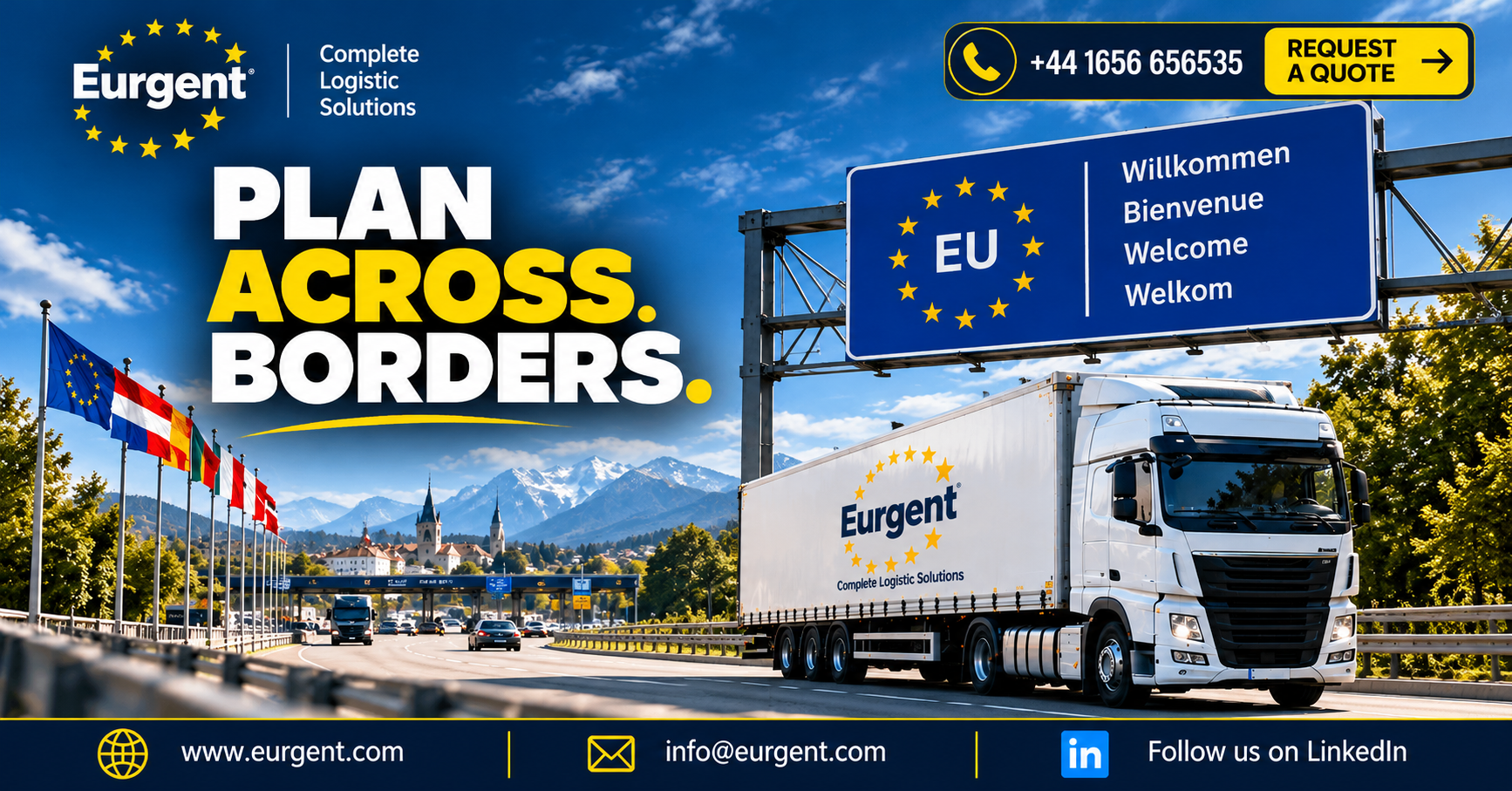
Moving goods across international borders requires much more than arranging a vehicle and selecting a delivery destination. Successful cross-border logistics depends on careful planning, accurate documentation, reliable transport coordination and a clear understanding of the regulations that apply to each shipment.
For businesses trading across Europe, international road freight plays an important role in connecting suppliers, manufacturers, distributors and customers. Whether goods are travelling between European Union member states or moving between the UK and the EU, effective logistics planning helps businesses manage delivery schedules, reduce avoidable disruption and maintain supply chain efficiency.
However, international freight movements can involve different customs requirements, transport regulations, border procedures and documentation obligations.
Without proper preparation, businesses may face unexpected delays, additional costs or administrative complications.
This is why cross-border logistics planning is essential for organisations involved in European trade.
At Eurgent – Complete Logistic Solutions, the message is clear: Plan Across Borders. Understanding the requirements of international transport and preparing shipments carefully can help businesses build more reliable and efficient logistics operations.
In this guide, we explore the essential elements of European cross-border freight planning, the challenges businesses may encounter and practical strategies for managing international shipments.
What Is Cross-Border Logistics?
Cross-border logistics refers to the planning, transportation, coordination and management of goods moving between different countries.
It includes the operational and administrative activities required to move shipments from their origin to their destination while meeting applicable transport, customs and trade requirements.
Depending on the route and type of goods, cross-border logistics may involve:
- International road freight transportation.
- Customs declarations and clearance procedures.
- Import and export documentation.
- Freight collection and delivery scheduling.
- Cargo handling and packaging.
- Transport compliance and safety requirements.
- Shipment monitoring and communication.
- Coordination between carriers, customers and other supply chain partners.
The complexity of these activities varies according to the countries involved, the nature of the goods and the transport arrangements.
Cross-Border Logistics Within the European Union
Goods moving between EU member states generally benefit from the EU’s internal market and customs union arrangements.
For Union goods moving within the EU customs territory, routine customs import and export declarations are generally not required solely because the goods cross an internal EU border.
However, businesses must still consider applicable VAT rules, product regulations, transport requirements and any special controls affecting particular goods.
Certain territories and categories of goods may be subject to additional procedures.
Cross-Border Logistics Between the UK and EU
Goods moving between Great Britain and the EU generally involve customs formalities because Great Britain is outside the EU customs union.
Businesses may need to prepare customs declarations, identify the correct commodity codes, establish customs values and provide supporting documentation.
Specific arrangements may differ for Northern Ireland, transit movements and particular goods.
Understanding these distinctions is important when planning international freight routes.
Why Cross-Border Logistics Planning Matters
International transport involves several interconnected activities.
A delay or error at one stage can affect the wider delivery schedule.
Effective planning helps businesses anticipate requirements before a shipment begins its journey.
1. Reducing Avoidable Border Delays
Incomplete documents, incorrect declarations or missing approvals can interrupt freight movements.
Checking shipment requirements in advance can reduce the likelihood of preventable problems.
However, even well-prepared shipments may encounter delays caused by inspections, congestion, weather or operational disruption.
2. Improving Transport Efficiency
Route selection, vehicle availability, loading schedules and delivery arrangements all influence transport performance.
Coordinated planning helps businesses use available resources more effectively.
3. Managing International Freight Costs
Cross-border transport costs may include freight charges, fuel, tolls, customs-related fees, handling costs and additional services.
Understanding these expenses supports more accurate budgeting.
4. Supporting Regulatory Compliance
International freight movements must meet the relevant requirements of the countries and territories involved.
Planning helps businesses identify which documents, permissions and procedures apply.
5. Strengthening Customer Confidence
Clear communication and realistic delivery expectations help businesses maintain productive customer relationships.
Customers benefit from knowing when goods are expected and receiving timely information if circumstances change.
1. Understand Customs Requirements Before Shipping
Customs planning is one of the most important aspects of international freight transport when goods cross a customs border.
Requirements depend on the shipment’s origin, destination, customs status, commodity classification and applicable trade arrangements.
Import and Export Declarations
Businesses may need to submit customs declarations when goods enter or leave a customs territory.
These declarations provide information about the goods, their value, classification and relevant parties.
The precise responsibilities depend on the transaction and customs arrangements.
Commodity Codes
Commodity codes classify goods for customs purposes.
They help determine applicable tariffs, trade measures and regulatory requirements.
Using an incorrect classification can create compliance problems and affect duty calculations.
Businesses should verify the appropriate classification for their products rather than relying on assumptions.
Customs Valuation
Customs value is used in determining duties where applicable.
The calculation may involve the transaction value and relevant adjustments under the applicable customs rules.
Accurate commercial information is essential.
Rules of Origin
The country from which goods are dispatched is not necessarily their customs origin.
Rules of origin determine whether products qualify as originating goods under relevant trade arrangements.
For example, preferential tariff treatment under the UK–EU Trade and Cooperation Agreement depends on meeting applicable origin requirements and satisfying the relevant conditions.
Businesses should not assume that goods automatically qualify for duty-free treatment simply because they move between the UK and EU.
2. Prepare Accurate International Freight Documentation
Documentation is central to successful cross-border logistics.
The required documents depend on the route, type of goods and applicable customs procedures.
Commercial Invoice
A commercial invoice commonly provides information about the seller, buyer, goods, prices and transaction.
It may be required to support customs declarations and other trade processes.
Packing List
A packing list describes the shipment’s contents and packaging arrangements.
It may include quantities, weights, dimensions and package identification.
This information helps with cargo handling, verification and transport planning.
CMR Consignment Note
The CMR consignment note is commonly used in international road freight movements covered by the CMR Convention.
It records important transport information, including details of the consignor, consignee, carrier and goods.
The convention establishes a legal framework for qualifying international carriage of goods by road.
Customs and Transit Documentation
Depending on the route, businesses may need customs declarations, transit references or other supporting records.
Transit procedures can allow goods to move under customs control between designated locations before the relevant customs formalities are completed.
Additional Product Documentation
Certain goods may require licences, certificates, permits or other documentation.
Examples can include regulated food products, plants, animals, chemicals or controlled goods.
Requirements should be checked before transport is arranged.
3. Choose the Right International Road Freight Solution
Selecting a suitable transport arrangement is essential for balancing delivery requirements, shipment size and cost.
Two commonly used road freight approaches are full truckload and less-than-truckload transport.
Full Truckload Transport
Full truckload, or FTL, generally involves using a vehicle or trailer for one customer’s shipment.
It may be suitable for large consignments, substantial pallet quantities or goods requiring dedicated capacity.
Potential advantages include fewer cargo handling stages and greater control over transport arrangements.
However, dedicated transport may not be cost-effective for smaller shipments.
Less-Than-Truckload Transport
Less-than-truckload, or LTL, involves combining smaller consignments from different customers within a shared transport arrangement.
This approach may offer a practical option when a shipment does not require an entire vehicle.
However, consolidation, handling and delivery schedules can affect transit times.
Groupage Freight
Groupage is another commonly used term for consolidating multiple smaller shipments.
It can help businesses transport lower volumes without purchasing dedicated vehicle capacity.
The most appropriate solution depends on shipment dimensions, handling requirements, delivery urgency and available services.
4. Plan Efficient Freight Routes Across Europe
Route planning influences transport cost, delivery reliability and operational efficiency.
European road freight networks connect major industrial areas, distribution centres, ports and commercial markets.
However, the shortest route is not always the most practical.
Factors That Influence Route Selection
Transport planners may consider:
- Distance between collection and delivery locations.
- Road conditions and infrastructure.
- Border crossing requirements.
- Traffic restrictions.
- Vehicle weight and dimension limits.
- Toll charges.
- Driver hours and rest requirements.
- Ferry or tunnel connections.
- Weather conditions.
- Customer delivery windows.
Consider Border Crossing Arrangements
For routes involving customs borders, the chosen crossing point may affect the required procedures and operational planning.
Businesses should ensure that relevant customs arrangements are understood before departure.
Build Flexibility Into Delivery Schedules
International freight transport can be affected by circumstances outside the carrier’s control.
Allowing appropriate time for border procedures, congestion and operational changes can help create more realistic delivery expectations.
5. Understand the Role of Incoterms in International Trade
Incoterms are internationally recognised trade rules published by the International Chamber of Commerce.
They help buyers and sellers define certain responsibilities relating to delivery, costs and risk.
The current widely used edition is Incoterms 2020.
Why Incoterms Matter
The selected Incoterms rule can affect responsibilities for transport arrangements, delivery costs and customs formalities.
Common examples include:
EXW – Ex Works
The seller makes the goods available at the named place, with relatively limited delivery obligations.
FCA – Free Carrier
The seller delivers the goods to the carrier or another nominated party at the agreed location, according to the rule’s requirements.
DAP – Delivered at Place
The seller arranges delivery to the named destination, with the relevant allocation of responsibilities under the rule.
DDP – Delivered Duty Paid
The seller assumes extensive obligations, including applicable import clearance and duties under the agreed terms.
DDP can present practical challenges where the seller cannot fulfil import-related obligations in the destination country.
Choose Trade Terms Carefully
Incoterms do not replace a complete sales contract.
They do not, by themselves, determine ownership of goods or all contractual responsibilities.
Businesses should ensure that the chosen rule is appropriate and clearly identifies the named place.
6. Manage Cross-Border Freight Costs Effectively
International transport costs can vary significantly according to the route, shipment characteristics and market conditions.
Understanding the full cost structure helps businesses compare freight options more accurately.
Common Cost Components
Freight costs may include:
- Vehicle or transport charges.
- Fuel-related costs.
- Road tolls.
- Ferry or tunnel charges.
- Customs brokerage or administrative fees.
- Loading and unloading.
- Storage or waiting time.
- Additional cargo handling.
- Cargo insurance where arranged.
Import duties and taxes may also apply, depending on the goods and transaction.
Avoid Comparing Quotes on Price Alone
A lower initial freight quotation may not include every required service.
Businesses should clarify what is covered, what is excluded and which additional charges could arise.
Improve Shipment Planning
Providing accurate shipment details and allowing appropriate preparation time can support more efficient transport arrangements.
For businesses with regular freight requirements, reviewing shipment patterns may help identify opportunities for consolidation or improved scheduling.
7. Use Technology to Improve International Shipment Visibility
Digital tools can support coordination and information sharing throughout international transport operations.
Transport management systems, shipment tracking platforms and electronic documentation can help logistics teams manage information more effectively.
Transport Management Systems
A transport management system may support activities such as route planning, carrier coordination, shipment administration and performance reporting.
The available capabilities depend on the platform.
Shipment Tracking
Tracking tools can provide information about vehicle or shipment progress.
This can help businesses respond to delivery enquiries and identify potential schedule changes.
However, tracking information may not always be continuous or precise.
Electronic Documentation
Digital documentation can reduce manual handling and improve access to important records.
Businesses should ensure that electronic records meet applicable legal and operational requirements.
Data-Driven Logistics Decisions
Transport performance data can help identify recurring delays, cost patterns and operational bottlenecks.
Reliable information supports continuous improvement.
8. Prepare for Common Cross-Border Logistics Challenges
International road freight involves operational risks that require careful management.
Customs Documentation Errors
Incorrect or incomplete documentation may cause delays or additional administrative work.
Businesses should establish procedures for checking shipment information before departure.
Border Congestion
Busy border crossings can affect delivery schedules.
Transport planners should monitor relevant conditions and maintain appropriate contingency arrangements.
Regulatory Differences
Requirements may vary between countries and depend on the goods being transported.
Businesses should verify applicable rules rather than assuming that one procedure applies everywhere.
Driver and Vehicle Compliance
International road transport is subject to requirements concerning vehicle operation, driver qualifications, driving time and rest periods.
Relevant rules may include EU or UK regulations and international arrangements, depending on the journey.
Unexpected Transport Disruption
Weather, road closures, mechanical problems and other events may interrupt planned journeys.
Clear communication and contingency planning help organisations respond more effectively.
9. The Importance of Communication in European Freight Transport
Cross-border logistics involves multiple parties, including shippers, carriers, freight coordinators, customs representatives and recipients.
Effective communication helps ensure that everyone has the information needed to complete their responsibilities.
Confirm Shipment Details Early
Before collection, relevant parties should confirm cargo information, collection arrangements, delivery requirements and documentation responsibilities.
Provide Realistic Delivery Expectations
Customers should receive delivery estimates based on the available information and operational conditions.
International transit times should not be presented as guaranteed unless a specific contractual commitment exists.
Communicate Changes Promptly
If a shipment encounters a delay or documentation issue, timely communication can help customers make alternative arrangements.
Maintain Accurate Records
Clear records support accountability, customer service and operational review.
10. How to Build a Reliable Cross-Border Logistics Strategy
A structured approach helps businesses manage recurring international freight movements.
Step 1: Identify Your Transport Requirements
Understand shipment volumes, cargo characteristics, delivery destinations and scheduling needs.
Step 2: Review Customs and Regulatory Obligations
Determine which declarations, documents and procedures apply to the relevant route.
Step 3: Select Suitable Freight Arrangements
Compare transport options according to shipment size, urgency, handling requirements and cost.
Step 4: Prepare Documentation
Ensure that commercial, transport and customs information is complete and consistent.
Step 5: Coordinate Collection and Delivery
Confirm loading arrangements, collection windows and delivery instructions.
Step 6: Monitor Shipment Progress
Use available tracking information and communication channels to stay informed.
Step 7: Review Transport Performance
Evaluate delivery reliability, costs, administrative issues and customer feedback.
Step 8: Improve Future Planning
Use lessons from previous shipments to refine procedures and identify recurring problems.
11. Cross-Border Logistics Checklist for Businesses
Before arranging an international freight movement, use the following checklist to review essential requirements.
- Confirm the shipment origin and destination.
- Identify the goods and their relevant commodity codes.
- Verify applicable customs and regulatory requirements.
- Prepare accurate commercial and packing information.
- Confirm the appropriate transport documentation.
- Agree on the relevant Incoterms rule where applicable.
- Select a suitable freight arrangement.
- Confirm collection and delivery requirements.
- Check any special cargo handling obligations.
- Clarify transport costs and potential additional charges.
- Confirm communication responsibilities.
- Review shipment progress and delivery information.
Not every item will apply to every movement, and some shipments may require additional specialist procedures.
12. Building a More Resilient European Supply Chain
Cross-border logistics planning is not only about moving individual shipments.
It also contributes to the resilience of the wider supply chain.
Businesses that depend on international suppliers or customers should consider how transport disruption could affect operations.
Diversify Where Appropriate
Depending on commercial circumstances, businesses may benefit from reviewing alternative transport routes, suppliers or distribution arrangements.
Improve Demand Forecasting
Understanding purchasing patterns and inventory requirements can help businesses plan freight movements more effectively.
Strengthen Internal Coordination
Procurement, sales, warehouse and transport teams should share relevant information to reduce avoidable scheduling conflicts.
Review Supply Chain Risks
Regularly assess the potential impact of regulatory changes, transport capacity constraints and other operational risks.
A resilient supply chain depends on preparation, flexibility and reliable communication.
Eurgent: Planning Across Borders With a Logistics-Focused Approach
The Eurgent – Complete Logistic Solutions campaign, Plan Across Borders, highlights an essential principle of international transport: successful cross-border movements begin with effective planning.
European freight operations require an understanding of transport coordination, documentation, border procedures and delivery requirements.
For businesses moving goods internationally, a structured approach can help reduce uncertainty and improve operational organisation.
The campaign reinforces three important priorities:
Plan Before Transport
Understand the shipment requirements, route and relevant documentation before goods begin their journey.
Coordinate Across Borders
Maintain clear communication between the parties responsible for collection, transport, customs procedures and delivery.
Focus on Reliable Logistics
Use appropriate planning, monitoring and continuous improvement to support consistent transport performance.
These principles are valuable for businesses managing both occasional international shipments and regular European freight movements.
Conclusion: Successful Cross-Border Logistics Starts With a Plan
Cross-border logistics planning is an essential part of managing international freight transport efficiently.
From customs documentation and transport selection to route planning, cost management and shipment communication, every stage requires attention to detail.
Businesses that understand their responsibilities and prepare carefully are better positioned to reduce avoidable disruption and make informed logistics decisions.
As European trade and transport requirements continue to evolve, flexibility and accurate information remain important.
At Eurgent – Complete Logistic Solutions, the message is clear: Plan Across Borders.
Whether your business is arranging its first international shipment or reviewing an established freight operation, effective preparation is the foundation of a more organised logistics process.
Planning your next international freight movement?
Visit www.eurgent.com to learn more about Eurgent, or contact the team to discuss your transport requirements.
Request a quote: +44 1656 656535
Email: info@eurgent.com
Plan ahead. Coordinate effectively. Move across borders with confidence.