


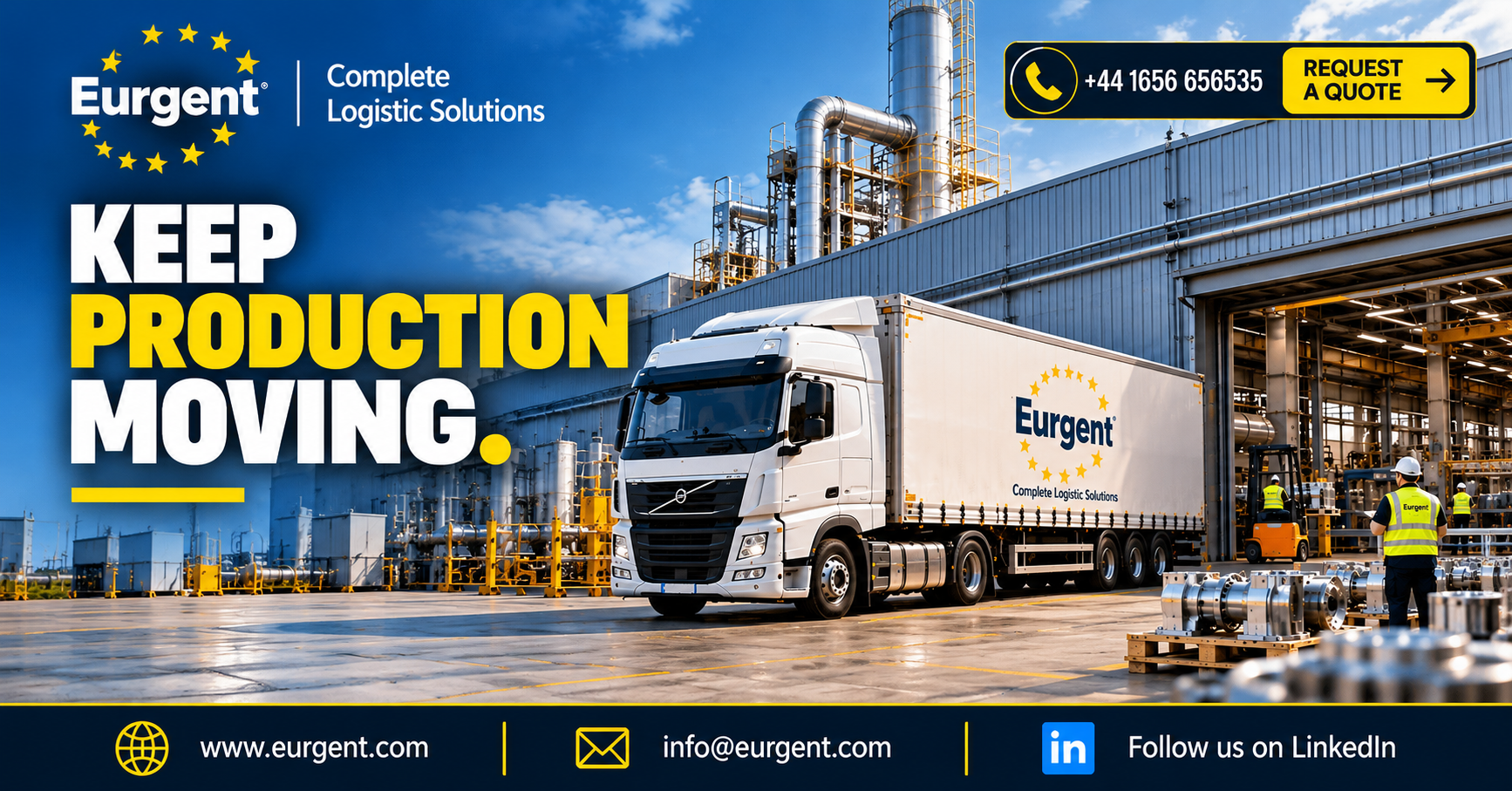
In manufacturing, every component, delivery and production schedule matters. A delayed shipment of essential materials can disrupt an entire production line, affecting operational efficiency, customer commitments and business profitability.
That is why industrial logistics solutions play such an important role in modern manufacturing. From transporting raw materials to coordinating time-sensitive deliveries, effective logistics helps businesses maintain production continuity and respond to changing supply chain demands.
Manufacturers need more than a transport provider. They need a logistics strategy that connects procurement, warehousing, transport planning and delivery schedules with their operational requirements.
At Eurgent – Complete Logistic Solutions, the message is clear: Keep Production Moving.
This article explores how industrial logistics supports manufacturing operations, the challenges businesses face and the practical strategies that can help reduce disruption, improve supply chain visibility and maintain efficient production.
What Are Industrial Logistics Solutions?
Industrial logistics refers to the planning, coordination, transportation and management of materials, equipment and goods required for industrial and manufacturing operations.
Unlike conventional consumer deliveries, industrial shipments may involve specialised equipment, strict delivery schedules, heavy machinery, production components or materials that require particular handling procedures.
Industrial logistics solutions typically involve several interconnected activities:
- Inbound logistics: Transporting raw materials and components from suppliers to manufacturing facilities.
- Outbound logistics: Moving finished products from factories to warehouses, distributors or customers.
- Transport coordination: Planning vehicle capacity, collection schedules and delivery routes.
- Warehouse operations: Organising storage, stock movement and material availability.
- Inventory management: Maintaining appropriate stock levels to support production.
- Supply chain visibility: Monitoring shipments and identifying potential disruptions.
- Specialised handling: Managing goods with particular loading, securing or transport requirements.
The objective is to ensure that the right materials reach the right destination, in the required condition and within an appropriate timeframe.
Why Reliable Logistics Is Essential for Manufacturing
Manufacturing businesses depend on the continuous movement of goods.
Even highly efficient production facilities can experience difficulties when their supply chains become unreliable.
1. Preventing Production Downtime
Production downtime occurs when manufacturing activities stop or operate below their intended capacity.
One possible cause is the late arrival of essential materials.
For example, an automotive component manufacturer may require a particular metal part to complete an assembly process. If the shipment is delayed, the production schedule may be affected.
Reliable logistics planning helps businesses identify critical deliveries, establish realistic lead times and prepare contingency arrangements.
2. Supporting Production Schedules
Manufacturers often operate according to detailed production plans.
These schedules determine when materials are required, when machinery will be used and when finished products must be ready for dispatch.
Transport coordination helps align incoming deliveries with these operational requirements.
3. Reducing Unnecessary Costs
Poor logistics coordination can create additional expenses through emergency transport, excess storage, repeated handling and production delays.
An effective logistics strategy considers the overall cost of moving goods rather than focusing exclusively on the lowest transport price.
4. Improving Customer Satisfaction
Manufacturing customers depend on reliable delivery commitments.
When finished goods arrive as expected, customers can plan their own operations more confidently.
5. Strengthening Business Resilience
Supply chains face changing market conditions, supplier constraints and transport disruptions.
A well-organised logistics process helps manufacturers identify risks and respond more effectively when circumstances change.
The Connection Between Logistics and Production Continuity
Production continuity means maintaining manufacturing operations with minimal avoidable interruption.
Logistics plays an important role because materials must be available before many production activities can begin.
Inbound Material Availability
Raw materials and production components need to arrive according to manufacturing requirements.
Poor coordination between procurement and transport can result in missing materials or unnecessary stock accumulation.
Internal Material Flow
Once goods arrive at a manufacturing facility, they must be unloaded, checked, stored and moved to the appropriate production areas.
Delays during these stages can affect operations even when the external shipment arrives on time.
Outbound Product Distribution
Finished goods need to leave the factory according to customer orders and distribution schedules.
Effective outbound planning can prevent storage areas from becoming overcrowded and support timely order fulfilment.
Coordination Across Departments
Procurement, production, warehousing and logistics teams should share relevant information.
When these functions operate independently, misunderstandings can lead to inefficient scheduling and avoidable delays.
Production continuity depends on the coordination of the entire material flow, not simply the arrival of a delivery vehicle.
Common Industrial Logistics Challenges
Industrial supply chains are complex, and manufacturers may encounter several operational challenges.
Understanding these risks is an important first step towards improving logistics performance.
Unexpected Transport Delays
Traffic congestion, vehicle breakdowns, adverse weather and infrastructure disruptions can affect delivery schedules.
Businesses should consider realistic transit times and alternative arrangements for critical shipments.
Supplier Delays
A supplier may be unable to prepare goods according to the original schedule.
Early communication helps manufacturers adjust transport plans and production priorities.
Inventory Imbalances
Excessive inventory increases storage requirements and ties up working capital.
Insufficient inventory can create shortages.
Businesses need an inventory approach that reflects demand, supplier reliability and production requirements.
Limited Shipment Visibility
When businesses cannot determine where important shipments are or when they are expected to arrive, planning becomes more difficult.
Shipment updates and reliable communication can improve decision-making.
Specialised Transport Requirements
Industrial equipment and components may require appropriate lifting equipment, load securing, protective packaging or particular vehicle configurations.
Cross-Border Documentation
International industrial shipments can involve customs procedures, commodity classification, commercial documentation and regulatory requirements.
Incomplete or inaccurate information can create delays.
Changing Production Demand
Customer orders and manufacturing priorities may change unexpectedly.
Logistics planning should be sufficiently flexible to accommodate reasonable changes without creating unnecessary operational costs.
How Just-in-Time Logistics Supports Manufacturing
Just-in-time, commonly known as JIT, is an inventory and production approach in which materials are supplied close to the time they are required.
The objective is to reduce unnecessary inventory while maintaining production efficiency.
Benefits of Just-in-Time Logistics
When implemented appropriately, JIT can help manufacturers:
- Reduce warehouse storage requirements.
- Limit unnecessary stock accumulation.
- Improve inventory turnover.
- Reduce working capital tied up in materials.
- Coordinate deliveries more closely with production schedules.
Challenges of Just-in-Time Delivery
JIT systems can be sensitive to disruption.
A late delivery may affect production when there is little spare inventory available.
For this reason, successful JIT operations depend on accurate forecasting, reliable suppliers, realistic transport planning and effective communication.
Balancing Efficiency and Resilience
Not every manufacturing operation should minimise inventory to the same extent.
Businesses should consider the criticality of materials, supplier lead times and the consequences of shortages.
For particularly important components, maintaining an appropriate buffer stock may be more practical than relying entirely on last-minute deliveries.
The most effective approach balances inventory efficiency with operational resilience.
The Importance of Reliable Industrial Transport
Transport is a central component of industrial logistics.
Manufacturing businesses may need to move palletised components, packaged materials, machinery or other industrial goods.
The appropriate transport arrangement depends on shipment characteristics and operational requirements.
Choosing Suitable Vehicles
Vehicle selection should consider:
- Shipment weight and dimensions.
- Loading and unloading requirements.
- Cargo protection.
- Delivery location accessibility.
- Route restrictions.
- Relevant safety and legal requirements.
Planning Collection and Delivery Windows
Manufacturing sites may operate with scheduled loading bays or restricted delivery periods.
Accurate scheduling helps avoid congestion and unnecessary waiting.
Protecting Industrial Cargo
Industrial goods may be valuable, fragile or difficult to replace.
Appropriate packaging, handling and load securing can reduce the risk of damage during transportation.
Maintaining Clear Communication
Manufacturers benefit from timely information about collection arrangements, delivery progress and unexpected changes.
Clear communication allows production teams to adjust their plans when necessary.
How Logistics Planning Can Reduce Manufacturing Downtime
Although not every disruption can be prevented, manufacturers can take practical steps to reduce their exposure to avoidable delays.
Step 1: Identify Critical Materials
Determine which components and raw materials are essential to maintaining production.
Prioritise logistics planning for items whose absence would cause significant disruption.
Step 2: Review Supplier Lead Times
Understand how long suppliers require to prepare goods and how transport time affects availability.
Step 3: Develop Realistic Delivery Schedules
Avoid creating schedules that leave no allowance for foreseeable operational constraints.
Step 4: Improve Shipment Visibility
Use available tracking information and delivery updates to monitor critical movements.
Step 5: Establish Contingency Plans
Identify alternative suppliers, transport options or inventory arrangements where practical.
Step 6: Coordinate Logistics and Production Teams
Ensure that delivery requirements reflect current production priorities.
Step 7: Review Performance Regularly
Evaluate delivery reliability, damage incidents, transport costs and production disruptions.
These steps help businesses develop a more structured approach to industrial logistics.
Technology and Visibility in Modern Industrial Logistics
Digital technology can improve the way manufacturers plan, monitor and coordinate material movements.
The appropriate technology depends on the size and complexity of the operation.
Transport Management Systems
Transport management systems can support shipment planning, carrier coordination and freight cost analysis.
Warehouse Management Systems
Warehouse management systems help organise stock locations, inventory movements and warehouse processes.
Shipment Tracking
Tracking information can provide updates on the progress of goods during transportation.
Inventory Management Software
Inventory systems help businesses monitor stock availability, reorder points and material requirements.
Data Analytics
Operational data can reveal patterns in delivery performance, transport expenditure and supply chain disruptions.
Integration With Production Systems
Connecting logistics information with enterprise resource planning or manufacturing systems can help improve coordination.
Technology is most useful when supported by accurate data, practical processes and clear responsibilities.
Industrial Logistics and Supply Chain Resilience
Supply chain resilience describes an organisation’s ability to prepare for, respond to and recover from disruption.
Manufacturers should consider resilience alongside transport efficiency.
Supplier Diversification
Depending entirely on a single supplier for critical materials can increase exposure to disruption.
Where commercially practical, alternative sourcing arrangements may reduce risk.
Transport Flexibility
Different transport routes or delivery arrangements may provide useful alternatives when normal operations are affected.
Risk-Based Inventory Planning
Critical materials may require different inventory policies from easily replaceable items.
Proactive Communication
Early identification of problems gives manufacturers more time to respond.
Business Continuity Planning
A documented response plan can clarify responsibilities during supply chain disruptions.
Resilience does not mean eliminating every risk. It means understanding vulnerabilities and developing proportionate responses.
The Role of Logistics in Cost-Efficient Manufacturing
Manufacturing profitability depends partly on controlling operational costs without compromising reliability or product quality.
Logistics expenditure should be evaluated in the context of the wider production process.
Transport Consolidation
Combining suitable shipments may reduce unnecessary vehicle movements and improve capacity utilisation.
Route Planning
Efficient routing can reduce avoidable mileage and improve delivery coordination.
Better Inventory Management
Appropriate stock levels can help balance storage costs against the risk of shortages.
Reduced Cargo Damage
Suitable packaging and handling can reduce replacement costs and operational disruption.
Improved Scheduling
Coordinating collections and deliveries with factory operations may reduce waiting times and inefficient resource use.
Performance Monitoring
Regular reviews can identify recurring costs and opportunities for improvement.
The cheapest individual shipment is not always the most economical option when the wider consequences of delays or damage are considered.
Why Communication Matters in Industrial Logistics
Clear communication is essential when logistics activities directly affect manufacturing schedules.
A production manager may need to know whether a shipment will arrive before a scheduled manufacturing run.
A warehouse supervisor may need information about vehicle arrival times and unloading requirements.
A procurement team may need confirmation that a supplier has prepared the correct materials.
Effective communication should therefore address:
- Collection confirmation.
- Shipment details.
- Expected delivery windows.
- Changes to transport schedules.
- Documentation requirements.
- Loading and unloading arrangements.
- Delivery confirmation.
- Problems requiring immediate attention.
Accurate information helps teams make informed decisions and reduces the likelihood of avoidable misunderstandings.
How to Choose the Right Industrial Logistics Provider
Selecting a logistics provider is an important operational decision.
Manufacturers should evaluate potential partners according to their specific requirements rather than relying exclusively on price.
Understanding of Industrial Requirements
The provider should understand the shipment types, handling requirements and operational constraints involved.
Relevant Transport Capabilities
Confirm that suitable vehicles, equipment and arrangements are available for the intended goods.
Communication Standards
Establish how shipment updates, delivery changes and operational issues will be communicated.
Reliability and Planning
Discuss delivery scheduling, contingency procedures and how performance will be assessed.
Safety and Compliance
Check that relevant legal, safety and cargo-handling requirements can be met.
Commercial Transparency
Understand the pricing structure, potential additional charges and contractual responsibilities.
Ability to Support Changing Requirements
Consider whether the proposed arrangement can accommodate fluctuations in shipment volumes and delivery schedules.
A suitable logistics relationship should support the manufacturer’s operational priorities and provide clear accountability.
Measuring Industrial Logistics Performance
Manufacturers can improve logistics operations by monitoring relevant performance indicators.
On-Time Delivery Rate
Measures the proportion of deliveries completed within the agreed delivery window.
On-Time In-Full Performance
Evaluates whether orders arrive when expected and in the required quantities.
Freight Cost per Shipment
Helps businesses understand transportation expenditure.
Cargo Damage Rate
Tracks incidents involving damaged goods during handling or transportation.
Inventory Turnover
Provides insight into how frequently inventory is used or replaced.
Production Disruptions Linked to Materials
Identifies manufacturing interruptions associated with missing or delayed materials.
Delivery Lead Time
Measures the time required to complete the relevant order or shipment process.
These indicators should be interpreted together.
For example, reducing transport expenditure may not represent a genuine improvement if it leads to more frequent production interruptions.
Industrial Logistics and Sustainable Operations
Sustainability is increasingly relevant to industrial supply chain planning.
Businesses can explore practical measures that reduce unnecessary resource consumption while maintaining operational requirements.
Improving Vehicle Utilisation
Better load planning can reduce avoidable empty capacity.
Reducing Unnecessary Journeys
Coordinated collections and deliveries may help limit repeated transport movements.
Reviewing Packaging
Appropriate packaging can protect goods while reducing unnecessary material use.
Improving Warehouse Efficiency
Organised storage and handling processes can reduce unnecessary movements.
Monitoring Operational Data
Tracking fuel use, transport activity and related information can support informed improvement decisions.
Sustainable logistics requires consideration of operational practicality, cost and environmental impact rather than relying on unsupported claims.
Eurgent: Keeping Production Moving Through Logistics
The message behind Eurgent – Complete Logistic Solutions is straightforward:
Keep Production Moving.
For manufacturers, logistics is not simply about transporting goods between locations. It is about supporting the continuous flow of materials that production operations depend upon.
Industrial businesses need logistics arrangements that reflect their schedules, shipment characteristics and operational priorities.
The Eurgent campaign highlights the importance of connecting industrial transportation with manufacturing continuity.
Supporting Industrial Supply Chains
Effective logistics coordination helps connect suppliers, manufacturing facilities and distribution destinations.
Focusing on Operational Requirements
Industrial transport planning should consider delivery windows, cargo characteristics and production priorities.
Recognising the Importance of Reliability
Reliable movement of materials can help manufacturers reduce uncertainty and plan operations more effectively.
Encouraging Long-Term Logistics Planning
A structured approach to transport and supply chain management supports better decisions as business requirements evolve.
For manufacturers reviewing their logistics arrangements, the starting point is understanding how material movements influence production performance.
Conclusion: Keep Production Moving With Better Industrial Logistics
Manufacturing success depends on more than machinery, skilled employees and efficient production processes.
It also depends on the reliable availability and movement of materials.
Well-planned industrial logistics solutions can help manufacturers improve delivery coordination, reduce avoidable disruption, control transport costs and strengthen supply chain resilience.
From inbound materials to outbound distribution, every stage of the logistics process contributes to overall operational performance.
Businesses that coordinate transport planning with production requirements are better positioned to respond to changing demand and unexpected challenges.
Eurgent – Complete Logistic Solutions reinforces this essential message: Keep Production Moving.
If your business is reviewing its industrial transport requirements or looking to discuss a logistics solution, contact Eurgent to explore the options available for your shipment needs.
Request a Quote
Website: www.eurgent.com
Email: info@eurgent.com
Telephone: +44 1656 656535
Keep Production Moving with Eurgent.