


Modern supply chains operate in an environment where change is constant. Customer demand can rise unexpectedly, seasonal peaks can place pressure on storage capacity, new contracts can transform distribution requirements and disruption can force businesses to adapt their logistics plans at short notice. In these conditions, organisations need more than warehouse space. They need flexible logistics infrastructure that can respond as quickly as their business changes.
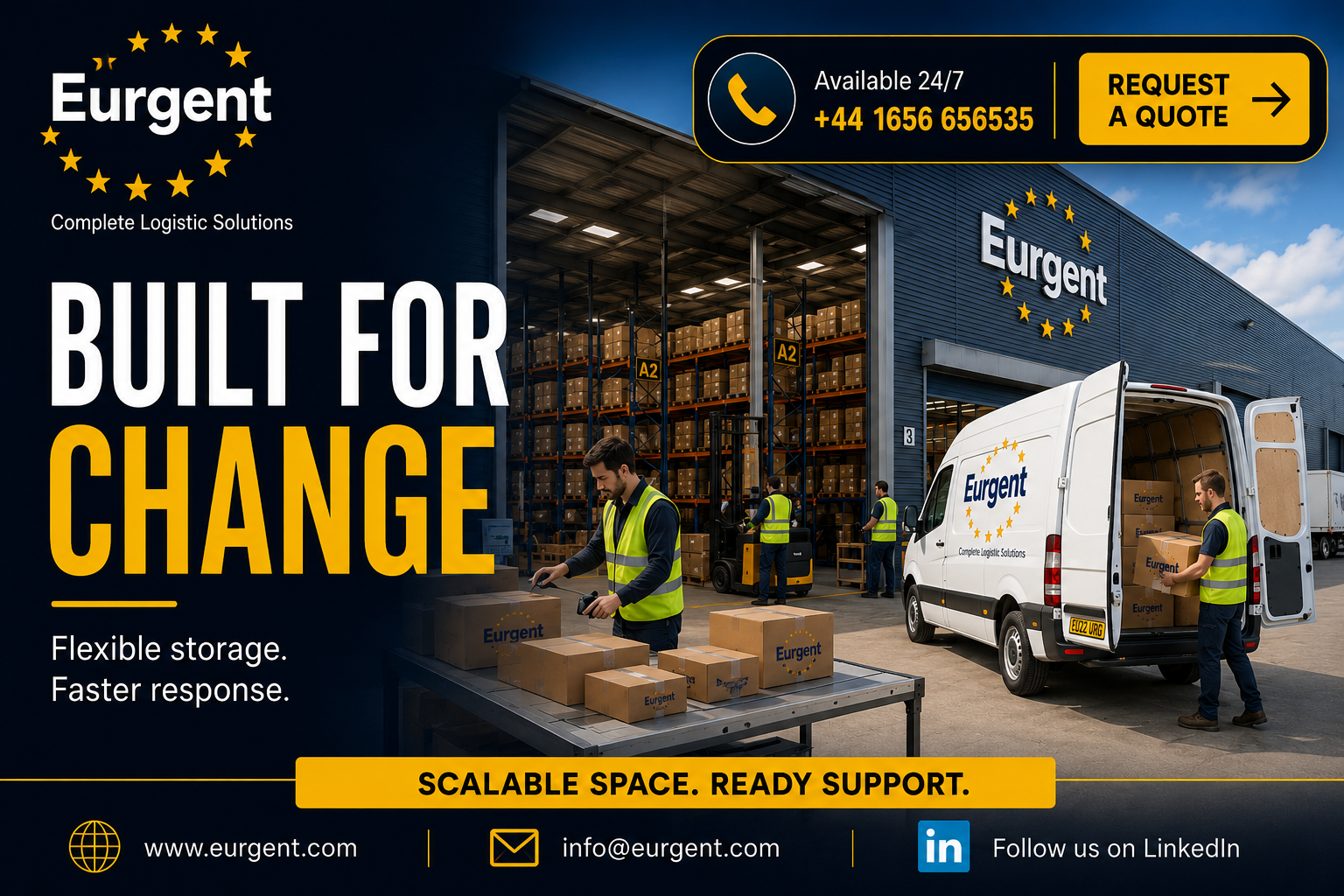
The message “Built for Change. Flexible storage. Faster response.” reflects the importance of creating logistics operations that are designed to adapt. A rigid warehousing model may work when demand is predictable, but businesses operating in dynamic markets require scalable space, responsive support and dependable transport connections that can evolve alongside their requirements.
At Eurgent, complete logistics solutions are built around the practical needs of modern businesses. By combining flexible warehousing, responsive logistics support and reliable transport services, organisations can create stronger supply chains without allowing changing storage or distribution requirements to become unnecessary barriers to growth.
Why Flexibility Matters in Modern Warehousing
Warehousing requirements rarely remain exactly the same throughout the year. Inventory levels fluctuate, customer demand changes and businesses may need additional capacity when launching new products, entering new markets or responding to unexpected opportunities.
Flexible warehousing allows organisations to adjust their logistics arrangements according to genuine operational requirements rather than remaining restricted by a fixed model that no longer reflects the needs of the business.
- Respond to changing inventory volumes.
- Manage seasonal demand more effectively.
- Support new contracts and customer growth.
- Provide additional capacity during busy periods.
- Reduce pressure on existing facilities.
- Improve overall supply-chain resilience.
- Adapt distribution plans when circumstances change.
The ability to scale storage capacity when required gives businesses greater confidence when planning for both expected growth and unexpected change.
Scalable Space Supports Sustainable Business Growth
Business growth creates exciting opportunities, but it can also place significant pressure on logistics infrastructure. Increased sales often mean additional stock, higher order volumes and more frequent deliveries. If warehousing capacity cannot keep pace, operational efficiency and customer service may suffer.
Scalable warehouse solutions help businesses manage growth more effectively by providing the flexibility to expand logistics capacity alongside commercial demand.
This can be particularly valuable when businesses are:
- Launching new products.
- Expanding into additional markets.
- Winning significant customer contracts.
- Managing seasonal inventory increases.
- Changing distribution strategies.
- Experiencing rapid business growth.
Rather than treating storage as an isolated requirement, businesses can integrate scalable warehousing into their wider logistics strategy.
Faster Response Creates a More Resilient Supply Chain
Speed matters when supply-chain conditions change. A sudden increase in customer demand, an unexpected transport delay or a temporary capacity issue can require immediate action.
Businesses with flexible logistics arrangements are generally better positioned to respond because they have access to additional options rather than depending entirely on a single fixed process.
A responsive logistics approach can help organisations:
- React quickly to changing customer requirements.
- Manage urgent inventory movements.
- Reduce the impact of operational disruption.
- Access additional storage when needed.
- Coordinate transport and warehousing more efficiently.
- Maintain continuity during periods of change.
Faster response is not simply about working quickly. It depends on preparation, communication and having the right logistics capabilities available when they are required.
Warehousing Should Connect with the Wider Logistics Network
A warehouse is not simply a building where products remain until they are needed. It is an active part of the supply chain, connecting inbound transportation, inventory management, order processing and outbound distribution.
When warehousing and transport are managed as connected activities, businesses can improve coordination and reduce unnecessary complexity.
- Coordinate inbound deliveries.
- Manage inventory movement efficiently.
- Prepare goods for onward distribution.
- Support scheduled transport requirements.
- Respond to urgent delivery requests.
- Improve communication across logistics operations.
An integrated approach creates better visibility and helps ensure that storage decisions support wider operational objectives.
Managing Seasonal Demand with Greater Confidence
Many industries experience significant fluctuations in demand throughout the year. Retail peaks, promotional campaigns, manufacturing schedules and customer buying patterns can all influence inventory requirements.
Without sufficient preparation, seasonal increases can create overcrowded facilities, inefficient stock management and pressure on transport operations.
Flexible storage can provide additional capacity during these periods while allowing businesses to adjust arrangements as demand returns to normal.
- Plan for predictable seasonal peaks.
- Create additional capacity before demand increases.
- Reduce pressure on permanent facilities.
- Coordinate stock movement with distribution schedules.
- Maintain operational efficiency during busy periods.
- Protect customer service standards.
Early planning remains essential. Understanding historical demand and upcoming commercial activity helps businesses prepare suitable logistics arrangements before capacity becomes a problem.
Supporting Business Continuity During Unexpected Change
Not every logistics challenge can be predicted. Equipment problems, supplier disruption, changes in customer requirements or unexpected inventory movements may create an immediate need for alternative storage or transport support.
A resilient supply chain includes contingency options that allow the business to continue operating when normal arrangements are disrupted.
Organisations should consider:
- Alternative storage capacity.
- Backup transport arrangements.
- Clear escalation procedures.
- Reliable logistics contacts.
- Flexible inventory planning.
- Rapid decision-making processes.
Having access to responsive support can make a significant difference when circumstances change quickly.
Efficient Warehouse Operations Protect Service Quality
Storage capacity alone does not create an effective warehousing solution. Goods must be organised, handled and prepared for movement efficiently to maintain reliable service.
Well-managed warehouse operations focus on maintaining clear processes and appropriate handling standards throughout the movement of goods.
- Organised receiving procedures.
- Appropriate stock placement.
- Efficient movement within the facility.
- Careful preparation for dispatch.
- Clear operational communication.
- Consistent handling practices.
These processes help create a reliable connection between storage and transportation, supporting smoother distribution activity.
Flexible Logistics Can Support New Market Opportunities
Businesses sometimes hesitate to pursue growth opportunities because they are uncertain whether their existing logistics infrastructure can support increased demand. Flexible storage and transport arrangements can help reduce this constraint.
When additional capacity can be accessed as requirements develop, businesses may be better positioned to test new markets, support new customers or manage temporary increases in inventory without immediately making major changes to permanent infrastructure.
- Support new customer contracts.
- Manage temporary stock increases.
- Prepare for geographic expansion.
- Test changing distribution models.
- Respond to unexpected commercial opportunities.
- Scale logistics requirements progressively.
The objective is to create logistics capabilities that support commercial ambition while remaining practical and manageable.
The Importance of Reliable Transport Connections
Flexible warehousing is most effective when supported by dependable transportation. Goods need to move efficiently into storage facilities and onwards to customers, production sites or distribution points.
Transport planning should therefore be considered alongside warehouse capacity from the beginning.
An integrated logistics approach can support:
- Scheduled collections and deliveries.
- Urgent transport requirements.
- Dedicated vehicle movements.
- Regional and national distribution.
- UK and European logistics requirements.
- Coordinated warehouse transfers.
Connecting transport and warehousing reduces unnecessary handovers and creates a more coordinated logistics process.
Why Communication Is Critical During Change
Flexible logistics requires effective communication. When inventory requirements or delivery schedules change, information must move quickly between customers, warehouse teams, transport planners and drivers.
Clear communication allows logistics providers to understand priorities and respond appropriately.
- Share changing requirements promptly.
- Provide accurate inventory information.
- Confirm collection and delivery priorities.
- Communicate urgent requirements clearly.
- Maintain visibility across operational teams.
- Escalate potential issues early.
Responsive service depends on having both operational capability and reliable communication processes working together.
Planning for Change Before It Happens
The most effective logistics strategies do not simply react to problems. They anticipate where change is likely to occur and create practical options in advance.
Businesses can improve preparedness by regularly reviewing their storage and distribution requirements.
- Analyse historical inventory patterns.
- Review expected seasonal demand.
- Consider upcoming customer contracts.
- Assess current warehouse capacity.
- Identify critical operational dependencies.
- Review transport requirements.
- Develop contingency options.
Regular planning helps organisations identify potential capacity challenges before they begin affecting daily operations.
Balancing Flexibility with Cost Efficiency
Businesses naturally need to manage logistics costs carefully. However, focusing only on the lowest immediate cost can sometimes create additional operational problems.
Insufficient storage capacity may result in inefficient stock placement, unnecessary handling or urgent transport requirements. Equally, maintaining significantly more permanent capacity than the business normally requires may not always be practical.
A flexible approach allows organisations to consider:
- Current storage requirements.
- Expected future demand.
- Seasonal fluctuations.
- Transport costs.
- Operational flexibility.
- Customer service requirements.
- Business continuity risks.
The most appropriate solution should balance commercial efficiency with the operational resilience required to serve customers reliably.
Ready Support for Time-Critical Requirements
Some logistics requirements cannot wait for standard planning cycles. Urgent orders, production requirements or unexpected customer requests may require immediate transport and storage support.
Access to responsive logistics assistance can help businesses manage these situations without allowing temporary challenges to become larger operational disruptions.
At Eurgent, availability and responsiveness form an important part of supporting customers with changing logistics requirements. Having access to assistance when it is needed helps businesses make decisions quickly and maintain momentum.
How Eurgent Supports Flexible Logistics Requirements
At Eurgent, we understand that logistics requirements can change quickly. Our approach focuses on providing complete logistics solutions that combine practical support, flexible capacity and dependable transportation.
Depending on customer requirements, logistics support may include:
- Flexible warehousing solutions.
- Scalable storage capacity.
- Dedicated transport services.
- Scheduled delivery support.
- Time-critical logistics solutions.
- UK and European transport.
- Operational coordination.
- Responsive customer communication.
By bringing storage and transportation together within a coordinated logistics approach, businesses can create supply chains that are better prepared for growth, seasonal demand and unexpected change.
Creating a Logistics Strategy That Is Built for Change
A future-ready logistics strategy should provide enough structure to maintain consistent performance while remaining flexible enough to respond when circumstances evolve.
Businesses can strengthen their approach by focusing on several practical priorities:
- Understand current storage capacity.
- Identify where future growth could create pressure.
- Plan for seasonal inventory changes.
- Connect warehousing with transport strategy.
- Maintain reliable logistics partnerships.
- Prepare contingency arrangements.
- Review requirements regularly.
- Communicate changes as early as possible.
These steps create greater operational confidence and reduce the risk that logistics capacity becomes an obstacle when new opportunities emerge.
Conclusion
Modern businesses need logistics solutions that can evolve alongside changing commercial requirements. Fixed systems may struggle when demand increases, markets shift or unexpected challenges arise. Flexible warehousing and responsive transport support provide organisations with greater freedom to adapt while maintaining reliable operations.
Being built for change means preparing for uncertainty rather than assuming tomorrow will look exactly like today. Scalable space allows storage capacity to respond to changing inventory requirements, while ready logistics support helps businesses move quickly when opportunities or challenges emerge.
At Eurgent, we provide complete logistics solutions designed to support businesses with flexible storage, dependable transport and responsive operational assistance. Whether your organisation is managing seasonal demand, preparing for growth or responding to an urgent logistics requirement, our team is available to help you find a practical solution.
To discuss your logistics requirements or request a quote, visit www.eurgent.com, email info@eurgent.com or call our 24/7 contact line on +44 1656 656535. Follow Eurgent on LinkedIn for further logistics updates and business insights.