


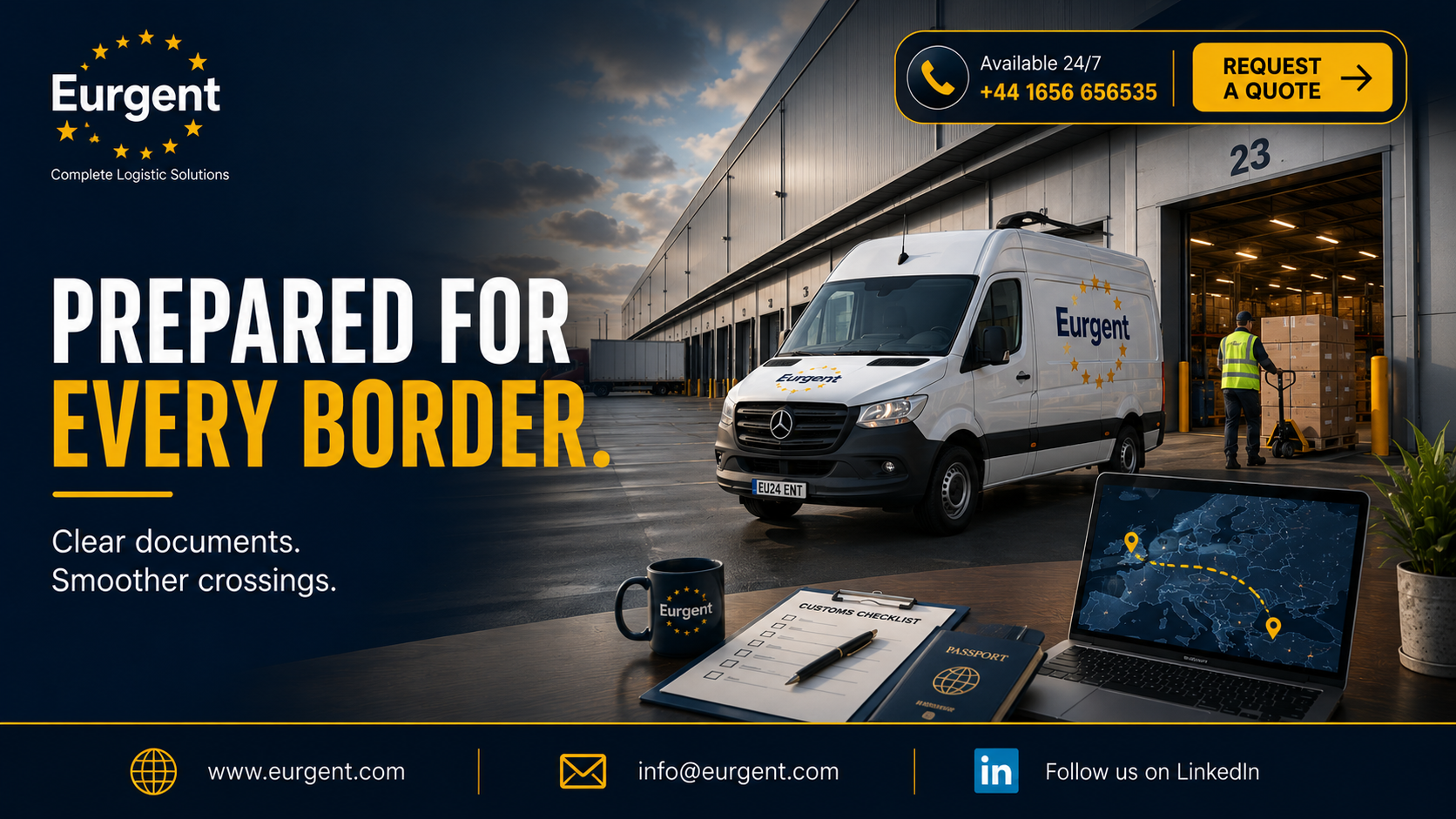
Cross-border logistics involves more than moving freight from one country to another. Every shipment must meet customs, documentation, security, tax, and regulatory requirements before it can continue its journey.
Missing information, inaccurate classifications, or incomplete paperwork can cause delays, additional costs, inspections, and disruption for both the sender and receiver. Preparation is therefore one of the most important elements of successful international freight.
At Eurgent, we support cross-border transport through careful planning, clear documentation, proactive communication, and reliable UK and European logistics coordination.
Why Cross-Border Preparation Matters
International freight crosses different legal and operational systems. Even a small documentation mistake can prevent goods from clearing customs on schedule.
Strong preparation helps businesses:
- Reduce customs delays.
- Avoid rejected declarations.
- Improve delivery predictability.
- Limit unnecessary storage charges.
- Protect customer commitments.
- Maintain regulatory compliance.
- Improve communication with receiving teams.
Understand the Shipment Before Booking Transport
Accurate cross-border planning begins with a clear understanding of the goods being transported.
Important shipment information includes:
- Product description.
- Commodity or tariff classification.
- Country of origin.
- Quantity and value.
- Weight and dimensions.
- Packaging type.
- Delivery destination.
- Special handling requirements.
- Whether the goods are restricted or hazardous.
Providing complete information early allows transport and customs processes to be planned correctly.
Prepare Accurate Commercial Documentation
Commercial paperwork provides customs authorities with the information required to assess and clear the shipment.
Common documents may include:
- Commercial invoice.
- Packing list.
- Transport documentation.
- Export declaration.
- Import declaration.
- Certificates of origin.
- Licences or permits.
- Preference documentation.
- Dangerous goods documentation.
The exact requirements depend on the route, product, value, and applicable regulations.
Use Clear and Accurate Product Descriptions
Vague descriptions can create questions and delays. Terms such as “parts,” “samples,” or “equipment” may not provide enough information.
A useful product description should explain:
- What the product is.
- What it is made from.
- What it is used for.
- How many units are included.
- The correct commercial value.
Clear descriptions help support accurate customs classification.
Confirm Commodity Codes
Commodity codes determine how goods are classified for customs purposes. They may affect duty, tax, restrictions, and reporting requirements.
Incorrect classification can lead to:
- Underpayment or overpayment of duty.
- Customs queries.
- Delayed clearance.
- Financial penalties.
- Incorrect licence requirements.
Businesses should confirm classifications using appropriate customs guidance or qualified professional support.
Understand the Incoterms
Incoterms clarify the responsibilities of the seller and buyer during an international transaction.
They can define:
- Who arranges transport.
- Who pays freight charges.
- Who handles customs formalities.
- When risk transfers.
- Who pays duties and taxes.
- Which party arranges insurance.
Using the correct Incoterm helps prevent confusion and unexpected costs.
Identify Restricted and Controlled Goods
Some products require additional approvals, licences, or specialist handling.
These may include:
- Hazardous goods.
- Controlled technology.
- Pharmaceutical products.
- Food and agricultural goods.
- Military or dual-use equipment.
- Animals or animal products.
- Chemicals.
- High-value secure freight.
Requirements should be confirmed before transport is scheduled.
Plan the Route and Border Crossing
The most direct route is not always the most reliable. Border congestion, operating hours, ferry schedules, road restrictions, and customs facilities can affect the journey.
Route planning should consider:
- Border opening times.
- Expected congestion.
- Customs availability.
- Driver hours.
- Ferry or tunnel bookings.
- Alternative routes.
- Delivery time windows.
- Vehicle restrictions.
Verify Documents Before Dispatch
A pre-departure check can identify mistakes before they become border delays.
The verification process should confirm:
- Names and addresses are correct.
- Product descriptions are complete.
- Values and currencies match.
- Weights and quantities are consistent.
- Commodity codes are present.
- Required references have been included.
- Licences and certificates are available.
- Transport and customs documents agree.
Maintain Proactive Communication
Cross-border freight involves multiple parties. Clear communication helps ensure that exporters, importers, drivers, customs agents, and receiving teams remain aligned.
Useful updates include:
- Collection confirmation.
- Customs status.
- Border arrival.
- Clearance confirmation.
- Expected delivery time.
- Notification of any issue.
- Proof of delivery.
Prepare for Possible Inspections
Customs authorities may select shipments for documentary or physical inspection. Although not every inspection can be prevented, organised documentation and correctly prepared freight can support a faster process.
Businesses should ensure:
- Packages are clearly labelled.
- Goods match the documentation.
- Relevant documents are accessible.
- Restricted products are declared correctly.
- Packaging supports safe inspection.
Protect Delivery Commitments
Customers often judge international logistics by the final delivery time. They may not see the documentation and border processes behind the shipment.
Preparation helps protect:
- Production schedules.
- Customer delivery windows.
- Retail availability.
- Project deadlines.
- Supply-chain continuity.
- Brand reputation.
How Eurgent Supports Cross-Border Freight
Eurgent provides carefully coordinated freight solutions designed to help businesses move goods reliably across the UK and Europe.
Our logistics support includes:
- Cross-border route planning.
- Time-critical transport.
- Dedicated freight solutions.
- Document coordination.
- Shipment visibility.
- Proactive operational communication.
- Secure freight handling.
- Specialist transport support.
- 24/7 operational availability.
Smart Preparation Creates Faster Clearance
Smoother border crossings begin before the vehicle arrives at the checkpoint. Accurate information, complete documentation, and clear responsibility reduce uncertainty and support more predictable freight movement.
Final Thoughts
Cross-border logistics can be complex, but strong preparation makes that complexity easier to manage. Every correct document, verified detail, and proactive update contributes to a smoother journey.
Eurgent helps businesses prepare for every border through reliable planning, coordinated documentation, clear communication, and dependable UK and European freight solutions.