


No two businesses operate in exactly the same way. Different industries have different supply chains, delivery schedules, storage requirements, destinations, budgets, and operational challenges. That is why effective logistics should never be based on a rigid, one-size-fits-all approach.
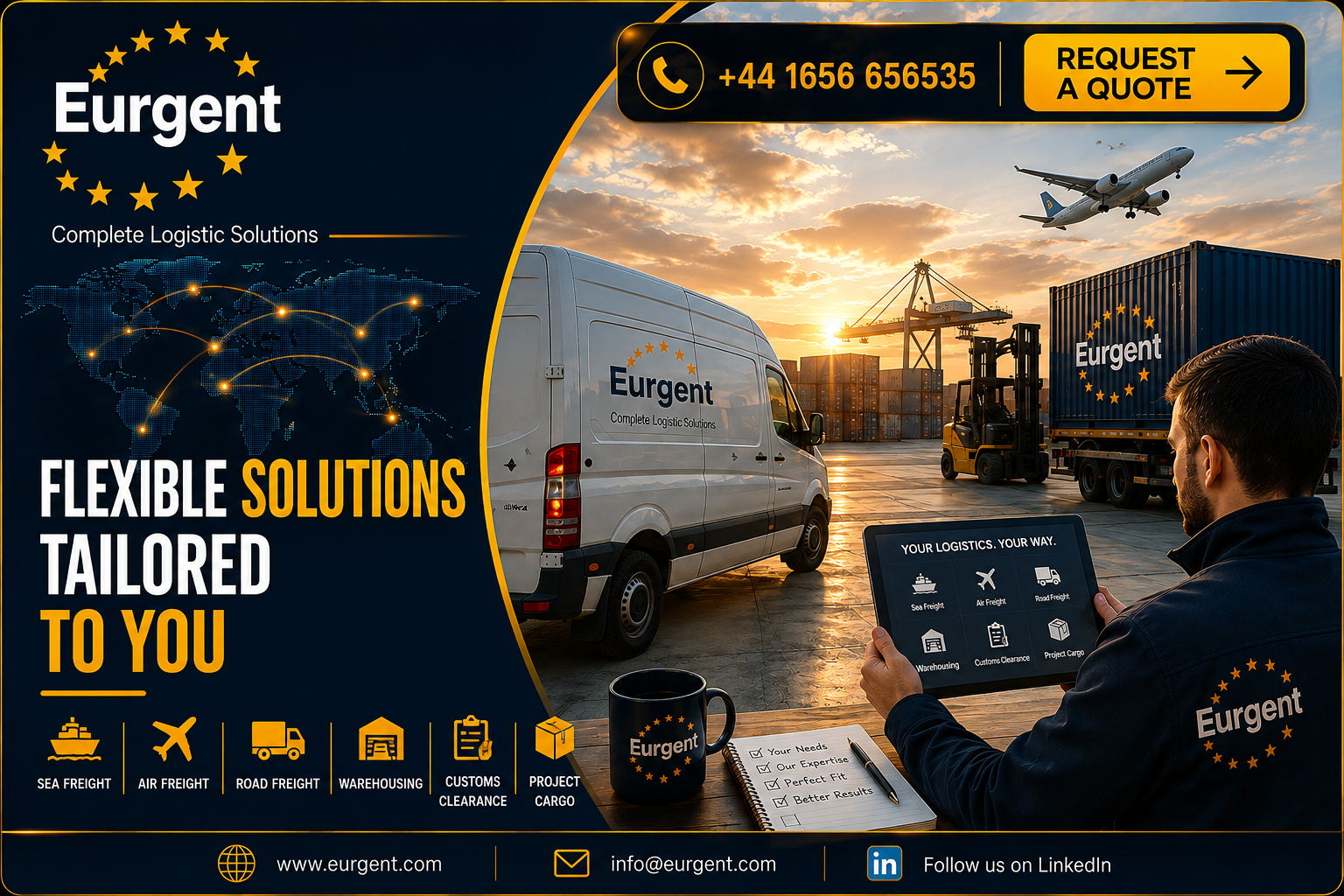
At Eurgent, we believe logistics works best when the solution is designed around the customer. From road, air, and sea freight to warehousing, customs clearance, and project cargo, flexible logistics gives businesses the freedom to choose the services that match their requirements while maintaining reliability, visibility, and control.
Why Flexibility Matters in Modern Logistics
Supply chains are constantly changing. Demand can increase unexpectedly, delivery priorities can shift, new markets can open, and businesses may suddenly need alternative transport or storage options.
A flexible logistics strategy allows organisations to respond to these changes without disrupting their wider operations.
Rather than forcing every shipment through the same process, the right logistics partner considers the nature of the cargo, destination, timeframe, cost requirements, storage needs, and potential risks before recommending the most suitable solution.
Logistics Built Around Your Requirements
Tailored logistics begins with understanding what the customer actually needs. A time-sensitive shipment may require a completely different strategy from regular inventory replenishment, oversized project cargo, or goods moving internationally through several transport networks.
Important considerations can include:
- Type, size, weight, and value of the cargo.
- Collection and final delivery locations.
- Required delivery timeframe.
- Budget and cost priorities.
- Warehousing and storage requirements.
- Customs and documentation requirements.
- Special handling or project requirements.
By considering these factors together, businesses can create a logistics process that is practical, efficient, and better aligned with their commercial objectives.
Road Freight for Flexible Distribution
Road freight remains an essential part of many supply chains because of the flexibility it provides for regional and cross-border transportation.
It can support everything from scheduled deliveries and regular distribution to more urgent movements where businesses require greater control over collection and delivery arrangements.
Road transport can also connect warehouses, airports, ports, suppliers, distribution centres, and final destinations, making it an important component of integrated logistics operations.
Air Freight When Time Matters
When delivery speed becomes a priority, air freight can provide an effective solution for moving goods over longer distances.
Businesses may use air freight for urgent components, high-priority commercial goods, time-sensitive inventory, or shipments where delays could create wider operational problems.
The best solution, however, is not simply choosing the fastest transport method. It is about balancing urgency, cost, routing, documentation, and final delivery requirements to create an efficient end-to-end movement.
Sea Freight for International Cargo
Sea freight plays an important role in global trade and can provide a practical option for businesses moving larger quantities of goods internationally.
Planning a successful sea freight movement requires more than booking space on a vessel. Businesses may need coordination across collection, container movements, port operations, documentation, customs procedures, storage, and onward transportation.
Bringing these elements together under a coordinated logistics strategy can simplify international movements and provide greater visibility throughout the process.
Warehousing That Supports Your Supply Chain
Transportation is only one part of logistics. Businesses also need the ability to store, organise, manage, and release goods efficiently.
Flexible warehousing solutions can help companies manage changing inventory levels, seasonal demand, temporary storage requirements, distribution schedules, and wider supply-chain operations.
A well-managed warehousing strategy can help businesses:
- Maintain organised inventory.
- Improve the flow of goods.
- Support changing demand levels.
- Coordinate incoming and outgoing shipments.
- Reduce unnecessary operational disruption.
Customs Clearance and International Movement
Cross-border logistics introduces another important consideration: customs.
Documentation requirements, declarations, classification, and other procedures can affect how efficiently goods move between markets. Errors or missing information can potentially contribute to unnecessary delays.
Including customs planning within the wider logistics process helps create a more coordinated approach to international freight.
Solutions for Project and Specialist Cargo
Some shipments simply do not fit into standard logistics processes.
Project cargo may involve unusual dimensions, specialist handling requirements, multiple transport stages, complex scheduling, or coordination between several parties.
These movements benefit from careful planning and a logistics strategy developed specifically around the cargo rather than trying to fit the shipment into a predefined process.
Combining Multiple Logistics Services
One of the greatest advantages of flexible logistics is the ability to combine different services into one coordinated solution.
For example, goods may arrive internationally by sea, move through customs, enter temporary warehousing, and then continue by road to their final destinations. Another shipment may require air freight followed by urgent road transportation.
When these stages are planned together, businesses can reduce unnecessary complexity and create a smoother movement from origin to destination.
Better Planning Creates Better Results
Strong logistics begins before the shipment starts moving.
Understanding timelines, routes, potential delays, cargo requirements, documentation, and alternative options allows businesses to make informed decisions before problems develop.
A practical logistics process can follow four simple principles:
- Understand the requirement – identify what needs to move, where it needs to go, and when it needs to arrive.
- Choose the right solution – select the appropriate combination of transport, storage, and support services.
- Coordinate the movement – keep each stage connected and organised.
- Adapt when necessary – respond quickly when circumstances or requirements change.
A Logistics Partner That Adapts with Your Business
Businesses grow, markets change, and supply-chain requirements evolve. The logistics solution that works today may need to change tomorrow.
Working with a flexible logistics partner means having access to different options rather than being restricted to a single method of transportation or a fixed process.
Whether the priority is speed, international reach, secure storage, specialist cargo support, or coordinated distribution, the objective remains the same: finding the solution that best fits the requirement.
Flexible Solutions. Tailored to You.
Effective logistics is not about offering every customer the same service. It is about understanding the shipment, identifying the challenges, and building the right solution around them.
With support across road freight, air freight, sea freight, warehousing, customs clearance, and project cargo, Eurgent provides businesses with flexible logistics options designed around real operational needs.
Your requirements. The right expertise. A logistics solution built to fit.
Frequently Asked Questions
What is a flexible logistics solution?
A flexible logistics solution is designed around the specific requirements of a shipment or business rather than relying on one fixed transportation or distribution method.
Which freight options can be included?
Depending on the requirement, a logistics strategy may involve road freight, air freight, sea freight, or a combination of different transport methods.
Can logistics services include warehousing?
Yes. Warehousing can form part of a wider logistics strategy, helping businesses store, organise, and manage goods before onward distribution.
Why is customs clearance important?
Customs procedures and documentation are an important part of international freight. Proper planning can help create a smoother and more coordinated cross-border movement.
What is project cargo?
Project cargo generally involves shipments requiring additional planning because of factors such as size, complexity, handling requirements, routing, or multiple transportation stages.
How do I choose the right logistics solution?
The right approach depends on your cargo, destination, required delivery time, budget, storage needs, and any specialist requirements. Evaluating these factors together helps determine the most suitable solution.