


Modern logistics moves quickly. Goods can travel across multiple countries, ports, warehouses and transport networks before reaching their final destination. When businesses cannot clearly see what is happening across that journey, delays and unexpected costs become much harder to manage.
This is why real-time logistics visibility has become such an important part of modern supply chain management. Instead of relying on occasional updates, businesses can use accurate shipment information to understand where goods are, identify potential disruptions and make faster operational decisions.
At Eurgent – Complete Logistic Solutions, effective logistics is about more than moving freight from one location to another. It is about creating visibility, communication and control throughout the entire logistics process.
What Is Real-Time Logistics Visibility?
Real-time logistics visibility is the ability to monitor the movement and status of shipments throughout the supply chain using current operational information.
Depending on the transport mode, technology and logistics network involved, this can provide businesses with information relating to:
- Current shipment status
- Transport milestones
- Estimated arrival times
- Departure and transit updates
- Delivery progress
- Potential delays or disruptions
- Shipment documentation
- Movement across international routes
The objective is simple: replace uncertainty with useful information.
Better visibility creates better decisions.
When businesses understand what is happening across their logistics network, they are better positioned to respond before small problems become larger disruptions.
Why Shipment Visibility Matters
Traditional logistics processes often depended heavily on manual communication. Businesses might need to contact different carriers, freight partners or warehouses simply to understand the status of a shipment.
That approach can create unnecessary uncertainty, particularly when businesses are managing multiple shipments across different locations.
Improved visibility provides a clearer operational picture. Instead of asking where a shipment might be, logistics teams can focus on what needs to happen next.
1. Track Shipments More Effectively
One of the clearest benefits of logistics visibility is improved shipment tracking.
Knowing the progress of freight across its journey allows businesses to coordinate activities around expected arrival and delivery times.
This can be particularly valuable for companies managing international freight, where a shipment may involve several stages including collection, export handling, international transportation, customs procedures, warehousing and final delivery.
Greater visibility across these stages creates a more connected logistics process.
2. Identify Delays Earlier
Delays cannot always be avoided. Weather, congestion, customs procedures, operational disruptions and transport capacity can all influence freight movement.
The important difference is how quickly a business becomes aware of a problem.
Early visibility gives logistics teams more time to assess the situation, communicate with relevant stakeholders and consider alternative arrangements where appropriate.
Without visibility
A delay may only become obvious when a delivery fails to arrive as expected.
With stronger visibility
Potential disruption can be identified earlier, giving businesses more time to respond and communicate.
3. Improve Planning Across the Supply Chain
Shipment information does not only benefit the logistics department. It can support decisions throughout the organisation.
Warehouses can prepare for incoming freight. Production teams can plan around expected materials. Customer service teams can communicate more accurately. Purchasing teams can monitor supplier movements.
When these teams have access to better information, the wider organisation can operate with greater coordination.
4. Strengthen Customer Communication
Customers increasingly expect clear information about their deliveries.
When businesses have limited shipment visibility, providing accurate updates becomes difficult. Teams may have to contact several parties before responding to a simple customer question.
Better logistics visibility allows businesses to communicate with greater confidence.
Even when a delay occurs, proactive communication can create a much better customer experience than leaving the customer uncertain about what is happening.
5. Reduce Time Spent Chasing Updates
Manual shipment monitoring can consume significant administrative time.
Emails, telephone calls and repeated status requests can quickly become inefficient when a company is managing numerous shipments.
Centralised shipment information can reduce the amount of time teams spend chasing basic updates, allowing them to focus on exceptions, customer requirements and operational priorities.
6. Support Better Cost Control
Poor logistics visibility can contribute to unnecessary costs.
Unexpected delays may affect warehousing, production schedules, staffing, customer commitments or onward transportation.
Although visibility cannot eliminate every logistics cost, earlier information can help businesses make better-informed decisions before disruption becomes more expensive.
Over time, this can contribute to a more efficient and predictable logistics operation.
From Shipment Tracking to Supply Chain Control
Shipment tracking is valuable, but the real benefit comes when tracking information supports decision-making.
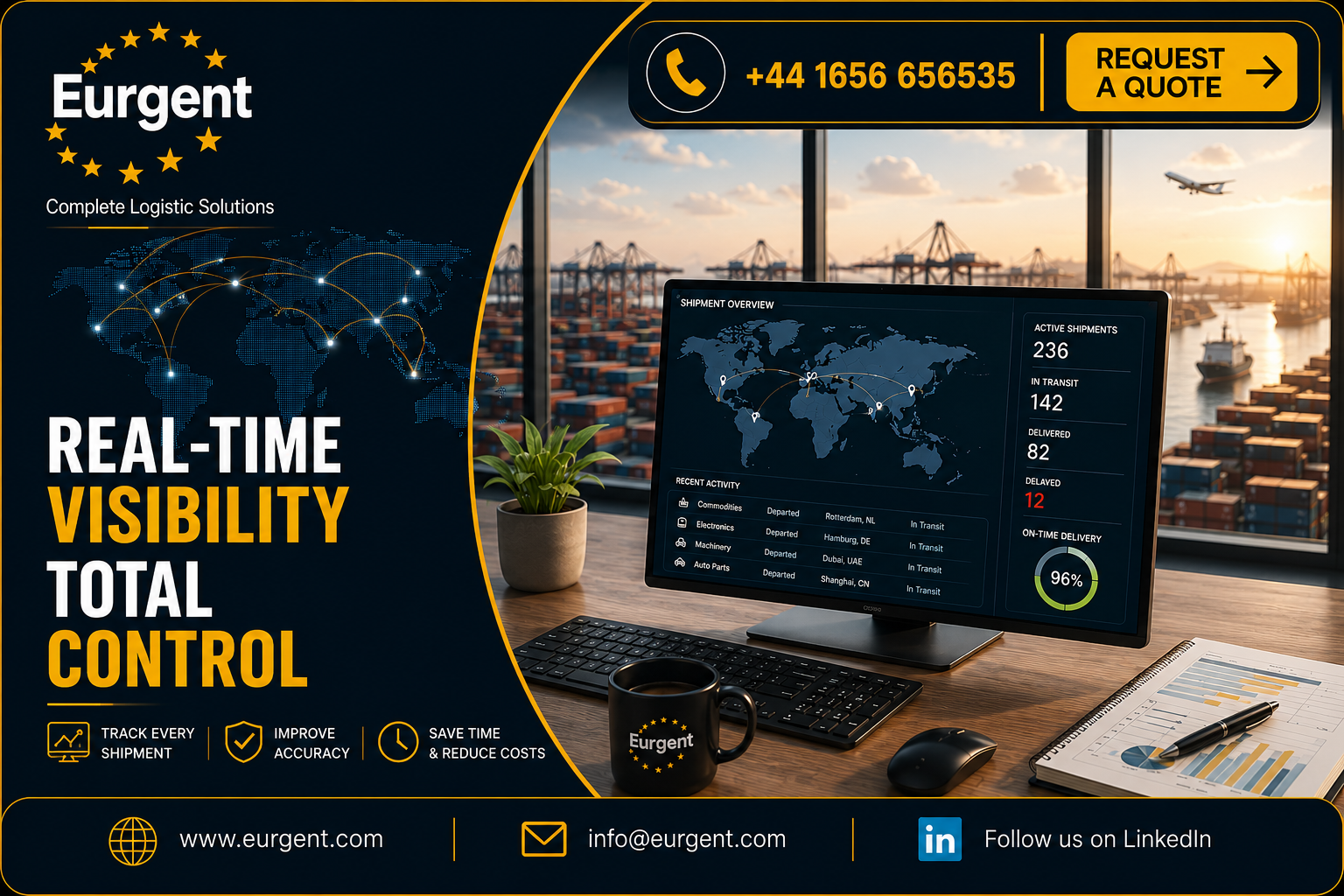
A modern logistics dashboard may bring together information about active shipments, freight currently in transit, completed deliveries, exceptions and performance trends.
This creates a broader view of logistics activity rather than treating every shipment as an isolated movement.
Businesses can begin asking more valuable questions:
- Which routes experience repeated delays?
- Where are operational bottlenecks occurring?
- Which shipments require immediate attention?
- Are deliveries meeting expected timelines?
- Where could logistics planning be improved?
- How effectively is the overall network performing?
This is where logistics data becomes operational intelligence.
The Role of Technology in Modern Logistics
Technology has transformed how logistics networks are managed.
Digital platforms can help consolidate information that previously existed across separate emails, spreadsheets, systems and communications.
Depending on the logistics operation, technology can support areas such as:
- Shipment monitoring
- Route visibility
- Documentation management
- Performance reporting
- Exception management
- Inventory coordination
- Customer communication
- Operational analytics
However, technology is most valuable when combined with experienced logistics management.
A dashboard can highlight an issue. Experienced logistics professionals still need to understand what that information means and determine the most appropriate response.
Visibility Across Global Logistics Networks
International supply chains can involve road transport, air freight, sea freight, warehousing and multiple logistics partners.
Each additional stage can create another potential point of uncertainty.
This makes connected visibility especially important for businesses operating internationally.
Rather than viewing each stage separately, businesses benefit from understanding how individual movements contribute to the complete shipment journey.
Air Freight Visibility
Air freight is frequently used when speed and delivery timing are particularly important.
Accurate information can help businesses monitor key stages of the movement and coordinate activities around expected arrival times.
When time-sensitive cargo is involved, earlier awareness of changes can be particularly valuable.
Sea Freight Visibility
Ocean freight can involve longer transit times and complex international routes.
Businesses may need visibility across departure schedules, port movements, vessel progress, customs processes and onward delivery arrangements.
A clearer view of these stages supports better inventory planning and helps businesses prepare for changes in expected arrival times.
Road Freight Visibility
Road transportation often represents a critical part of both domestic and international supply chains.
Visibility into collection, transit and delivery progress can help coordinate warehouses, customers and onward transportation more effectively.
This becomes particularly important when road freight forms one stage of a wider multimodal logistics movement.
Better Data Creates Better Logistics Decisions
Collecting information alone is not enough.
Businesses need information that is understandable, relevant and available at the right time.
Useful logistics reporting can help organisations evaluate performance over longer periods and identify recurring patterns.
For example, analysing delivery performance may reveal routes that frequently experience disruption or stages where unnecessary delays occur.
These insights can then inform future planning.
Visibility → Insight → Action → Improvement
Real-time information helps businesses understand current operations, while historical data helps identify how logistics performance can be improved over time.
Moving From Reactive to Proactive Logistics
Without sufficient visibility, logistics management can become reactive.
Teams spend their time responding to problems after they occur.
Greater visibility supports a more proactive approach.
Potential problems can be identified earlier. Relevant teams can be informed sooner. Alternative plans can be considered before disruption becomes critical.
This does not mean every delay can be prevented. It means businesses can manage uncertainty more effectively.
What Should Businesses Look for in a Logistics Partner?
Technology is important, but logistics remains a service-driven industry. Businesses should therefore consider both operational capability and communication when selecting logistics partners.
Important factors can include:
- Clear communication
- Reliable shipment information
- Experience across relevant transport modes
- International logistics capabilities
- Responsive operational support
- Problem-solving expertise
- Transparent processes
- Ability to coordinate complex movements
The strongest logistics relationships combine information, experience and accountability.
How Eurgent Supports Smarter Logistics
At Eurgent, we understand that businesses need more than transportation. They need confidence that their logistics operations are being managed carefully and that relevant information is available when decisions need to be made.
Our approach to complete logistic solutions focuses on connecting transportation, communication and operational support to help businesses manage freight more effectively.
Whether goods are moving through road, air or sea networks, stronger coordination helps create a more controlled logistics process from collection through to final delivery.
Real-Time Visibility. Total Control.
Global logistics will always involve variables. Ports become congested. Transport schedules change. Weather creates disruption. International supply chains evolve.
Businesses cannot control every external event, but they can improve how quickly they understand and respond to those events.
That is the real value of logistics visibility.
Better information enables stronger planning. Stronger planning supports better decisions. Better decisions create more resilient supply chains.
For businesses moving goods across increasingly complex logistics networks, visibility is no longer simply a useful feature. It is becoming a fundamental part of maintaining control.
Take Greater Control of Your Logistics
Looking for reliable support with your freight and supply chain requirements? Speak with Eurgent about complete logistics solutions designed around your business.
Request a Quote
Eurgent – Complete Logistic Solutions
Phone: +44 1656 656535
Website: www.eurgent.com
Email: info@eurgent.com
Frequently Asked Questions
What is real-time visibility in logistics?
Real-time logistics visibility refers to having timely information about the location, status and progress of shipments as they move through the supply chain.
Why is shipment visibility important?
Shipment visibility helps businesses plan more effectively, identify potential delays earlier, improve communication and coordinate supply chain activities with greater confidence.
Can logistics visibility prevent delays?
It cannot prevent every disruption, but earlier information can give businesses more time to understand a problem, communicate with stakeholders and consider appropriate alternatives.
How does tracking help reduce logistics costs?
Better information can reduce unnecessary administration and help businesses respond earlier to disruptions that might otherwise create additional warehousing, transport or operational costs.
Does visibility matter for international freight?
Yes. International freight often involves multiple transport stages, locations and logistics partners, making clear shipment information particularly valuable for planning and coordination.
What transport solutions can be part of a complete logistics strategy?
Depending on business requirements, a logistics strategy may combine road transport, air freight, sea freight, warehousing and other supporting services to create an efficient end-to-end movement.