


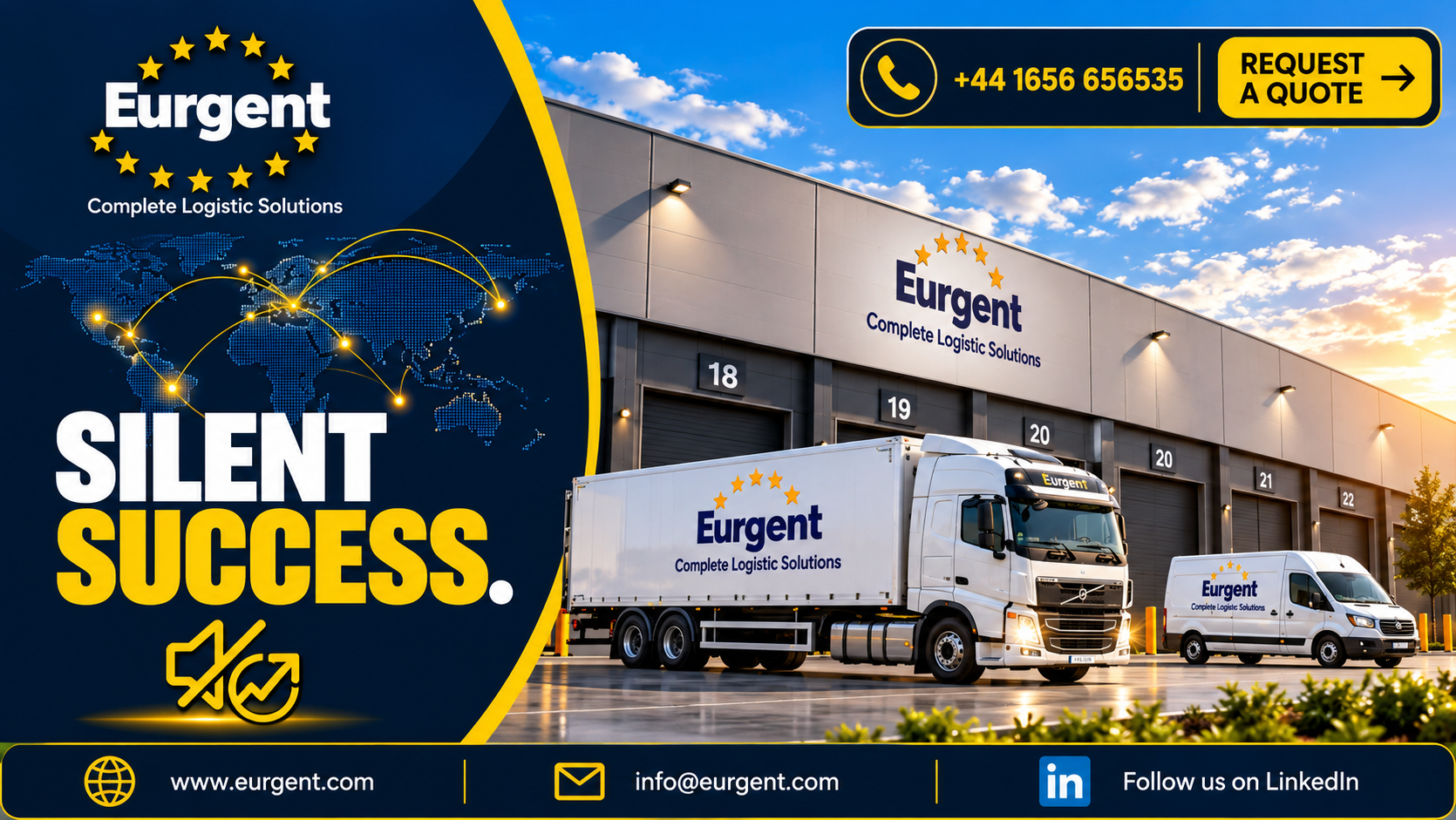
Some of the most important work in business happens quietly. A shipment leaves on schedule, reaches the right destination, arrives in good condition and allows the next stage of an operation to continue without disruption. When logistics works as it should, it can almost become invisible.
That is the idea behind silent success in logistics. Reliable logistics is not necessarily about making noise; it is about creating consistency, control and confidence behind the scenes. For businesses that depend on the movement of goods, dependable logistics can support customer satisfaction, operational continuity and long-term growth.
At Eurgent, complete logistic solutions are focused on helping businesses move goods efficiently while maintaining the visibility, flexibility and dependable service modern supply chains require.
What Does “Silent Success” Mean in Logistics?
Successful logistics is often noticed most when something goes wrong. A delayed collection, missed delivery, lack of communication or unexpected disruption can quickly affect several parts of a business.
By contrast, a well-managed logistics operation can run quietly in the background. Collections happen when expected. Freight moves through the appropriate routes. Customers receive clear information. Delivery schedules remain coordinated with wider business operations.
This type of reliability creates what could be called silent success: logistics that supports the business without becoming another problem that management teams need to solve.
Why Reliable Logistics Matters to Business Performance
Logistics is much more than transporting goods from one location to another. It connects suppliers, warehouses, production facilities, distribution networks and customers.
A reliable logistics operation can help businesses:
- Maintain consistent delivery schedules
- Reduce unnecessary supply-chain disruption
- Improve customer service and communication
- Coordinate inventory and distribution more effectively
- Respond more effectively to urgent requirements
- Support growth into new markets and locations
- Build stronger relationships with customers and suppliers
When these elements work together, logistics becomes part of the infrastructure supporting wider business performance.
Reliability Starts Before the Vehicle Leaves
A successful delivery begins long before a truck or van starts its journey. Effective logistics requires careful planning, coordination and communication.
Before freight moves, important questions need to be addressed. What is being transported? Where does it need to go? When must it arrive? Are there specific handling requirements? Which transport option is appropriate? Are there time-sensitive or operational constraints?
Clear answers allow logistics providers to build a more suitable movement plan rather than simply reacting after problems occur.
Accurate Planning
Good planning considers collection requirements, destination, timing, freight characteristics and potential operational constraints. This creates a stronger foundation for dependable transport.
Clear Communication
Businesses need useful information about their shipments. Clear communication helps teams coordinate warehouse activity, staffing, customer expectations and onward distribution.
Operational Flexibility
Supply chains do not always follow the original plan. Demand changes, schedules move and urgent requirements appear. A logistics partner therefore needs the flexibility to respond when circumstances change.
Road Freight as the Backbone of Flexible Distribution
Road freight remains an important part of many supply chains because it can connect warehouses, manufacturing sites, ports, airports, distribution centres and final destinations.
Depending on the requirement, road transport can support scheduled distribution as well as more urgent movements. This flexibility makes it particularly valuable for businesses whose delivery requirements vary from one shipment to the next.
Reliable road logistics depends on more than having vehicles available. Route planning, scheduling, communication and appropriate vehicle selection all contribute to successful delivery performance.
Visibility Creates Greater Control
Businesses increasingly expect to know what is happening with their freight. Shipment visibility can help logistics teams move from uncertainty towards informed decision-making.
Knowing the status of a shipment can help businesses coordinate:
- Warehouse receiving schedules
- Production planning
- Inventory availability
- Customer communication
- Staffing requirements
- Onward transport arrangements
Visibility is therefore not simply a convenience. It can contribute to greater operational control across the wider supply chain.
The Cost of Unreliable Logistics
A logistics failure rarely affects only the shipment itself. One late or poorly coordinated movement can create a chain reaction throughout an organisation.
For example, delayed freight may result in missed production schedules, unavailable inventory, rescheduled warehouse operations or disappointed customers. Teams may then spend additional time making calls, reorganising resources and resolving problems that could otherwise have been avoided.
Over time, repeated disruption can also affect customer confidence. Businesses therefore benefit from logistics relationships built around consistency and communication rather than simply selecting transport based on an individual shipment.
Reliable Logistics Helps Protect Customer Relationships
From the customer’s perspective, delivery is often one of the most visible parts of the purchasing experience. A company may have an excellent product and a strong sales process, but a poor delivery experience can still influence the customer’s overall perception.
Reliable logistics helps businesses fulfil the promises they make to customers. Consistent delivery performance, useful communication and professional handling can all contribute to stronger customer relationships.
In this way, the logistics provider operating behind the scenes can directly influence the experience delivered by the customer-facing brand.
From Local Deliveries to Wider Supply Chains
Modern businesses rarely operate in complete isolation. Their supply chains may connect multiple warehouses, suppliers, ports, airports, production sites and customer locations.
As these networks expand, coordination becomes increasingly important. Businesses need logistics solutions capable of supporting individual deliveries while also fitting into a wider supply-chain strategy.
A complete logistics approach can help connect different stages of that journey, giving businesses a more coordinated way to manage freight requirements.
Supporting Business Growth Through Better Logistics
Growth can create new logistics challenges. Higher order volumes may require additional transport capacity. New customers can introduce different delivery locations. Expansion into new territories may make supply chains more complex.
A logistics operation that worked for a smaller organisation may not necessarily remain suitable as the business develops.
Businesses preparing for growth should therefore consider whether their logistics arrangements can scale with them. Important considerations include capacity, communication, geographical coverage, responsiveness and the ability to handle changing requirements.
When logistics can adapt alongside the organisation, it becomes an enabler of growth rather than a constraint.
What Should Businesses Look for in a Logistics Partner?
Choosing a logistics provider should involve more than comparing individual transport prices. The quality of the working relationship can be equally important.
Businesses may want to consider factors such as:
- Reliability: Can the provider consistently support agreed collection and delivery requirements?
- Communication: Will relevant shipment information be available when it is needed?
- Flexibility: Can the provider respond when requirements change?
- Coverage: Can the logistics network support the destinations the business needs to reach?
- Experience: Does the provider understand practical freight and supply-chain challenges?
- Service: Is there a responsive team available to help resolve questions and changing requirements?
- Long-term capability: Can the relationship continue to support the organisation as it grows?
Partnership Is More Valuable Than Transactional Transport
There is an important difference between booking transportation and developing a logistics partnership.
A transactional relationship may focus mainly on moving one shipment from A to B. A stronger logistics partnership develops an understanding of the customer’s wider operation, priorities and recurring challenges.
That understanding can make planning more effective. Instead of starting from zero with every movement, both parties develop knowledge of typical routes, delivery expectations, operational constraints and communication requirements.
The result can be a more consistent logistics process and a relationship capable of supporting the business over the longer term.
How Technology Supports Reliable Logistics
Technology has become increasingly important to modern logistics operations. Digital systems can help teams coordinate shipments, share information and monitor activity across complex transport networks.
However, technology works best when combined with knowledgeable people and effective processes. A tracking system alone cannot resolve every operational challenge. Businesses still need logistics professionals capable of interpreting information, communicating clearly and responding appropriately when circumstances change.
The strongest approach combines technology, operational expertise and responsive service.
Building a More Resilient Supply Chain
Reliability does not mean that disruptions will never happen. Weather, congestion, changes in demand, infrastructure issues and other external factors can affect transport networks.
Supply-chain resilience is therefore partly about how effectively organisations prepare for and respond to changing circumstances.
Useful measures can include maintaining clear communication, improving shipment visibility, identifying critical deliveries, planning realistic lead times and working with logistics partners capable of adapting when required.
The goal is not simply to create a supply chain that works when everything goes according to plan. It is to develop one that can continue operating effectively when conditions change.
Eurgent: Complete Logistic Solutions
Eurgent supports businesses with logistics solutions designed around the practical requirements of moving freight efficiently and reliably.
Whether a business needs support with regular freight movements, changing distribution requirements or time-sensitive logistics, a coordinated approach can help keep goods moving while giving teams greater confidence in their supply chain.
For Eurgent, successful logistics is about more than completing a journey. It is about supporting the businesses that depend on every shipment.
Reliable Logistics. Stronger Businesses.
When logistics works quietly, consistently and effectively, businesses can spend less time worrying about transport and more time focusing on customers, operations and growth.
Need support with your logistics requirements? Request a quote from Eurgent and discuss the right solution for your business.
Call: +44 1656 656535
Email: info@eurgent.com
Website: www.eurgent.com
Frequently Asked Questions About Reliable Logistics
What is reliable logistics?
Reliable logistics is the consistent and well-coordinated movement of goods according to agreed requirements. It involves planning, communication, appropriate transportation and effective management throughout the delivery process.
Why is logistics reliability important for businesses?
Reliable logistics helps businesses maintain inventory flow, coordinate operations, meet customer expectations and reduce the disruption caused by missed or poorly managed deliveries.
How can better logistics support business growth?
As businesses grow, their transport requirements often become more complex. Scalable logistics support can help organisations manage increased volumes, additional destinations and changing delivery requirements without allowing transport limitations to restrict expansion.
Why is shipment visibility important?
Visibility gives businesses useful information about freight movements. This can support warehouse planning, customer communication, inventory management and better operational decision-making.
What makes a good logistics partner?
A strong logistics partner combines reliable service with clear communication, practical expertise, flexibility and an understanding of the customer’s wider operational requirements.
Can logistics providers help with urgent freight requirements?
Logistics providers may offer solutions for time-sensitive freight depending on the shipment, route, timing and available capacity. Clear information about the requirement helps determine an appropriate transport solution.
How does logistics affect customer satisfaction?
Delivery is an important part of the customer experience. Consistent, professional and well-communicated deliveries can help businesses maintain customer confidence and fulfil service expectations.
Make Reliable Logistics Part of Your Business Strategy
The best logistics operations often attract the least attention because they simply work. Goods move, teams stay informed and customers receive what they expect.
That is the value of silent success: dependable logistics operating behind the scenes while the business moves forward.
With thoughtful planning, clear communication, greater visibility and the right logistics partnership, businesses can build stronger and more resilient supply chains.
Ready to discuss your next shipment? Contact Eurgent on +44 1656 656535, email info@eurgent.com or visit www.eurgent.com to request a quote.