


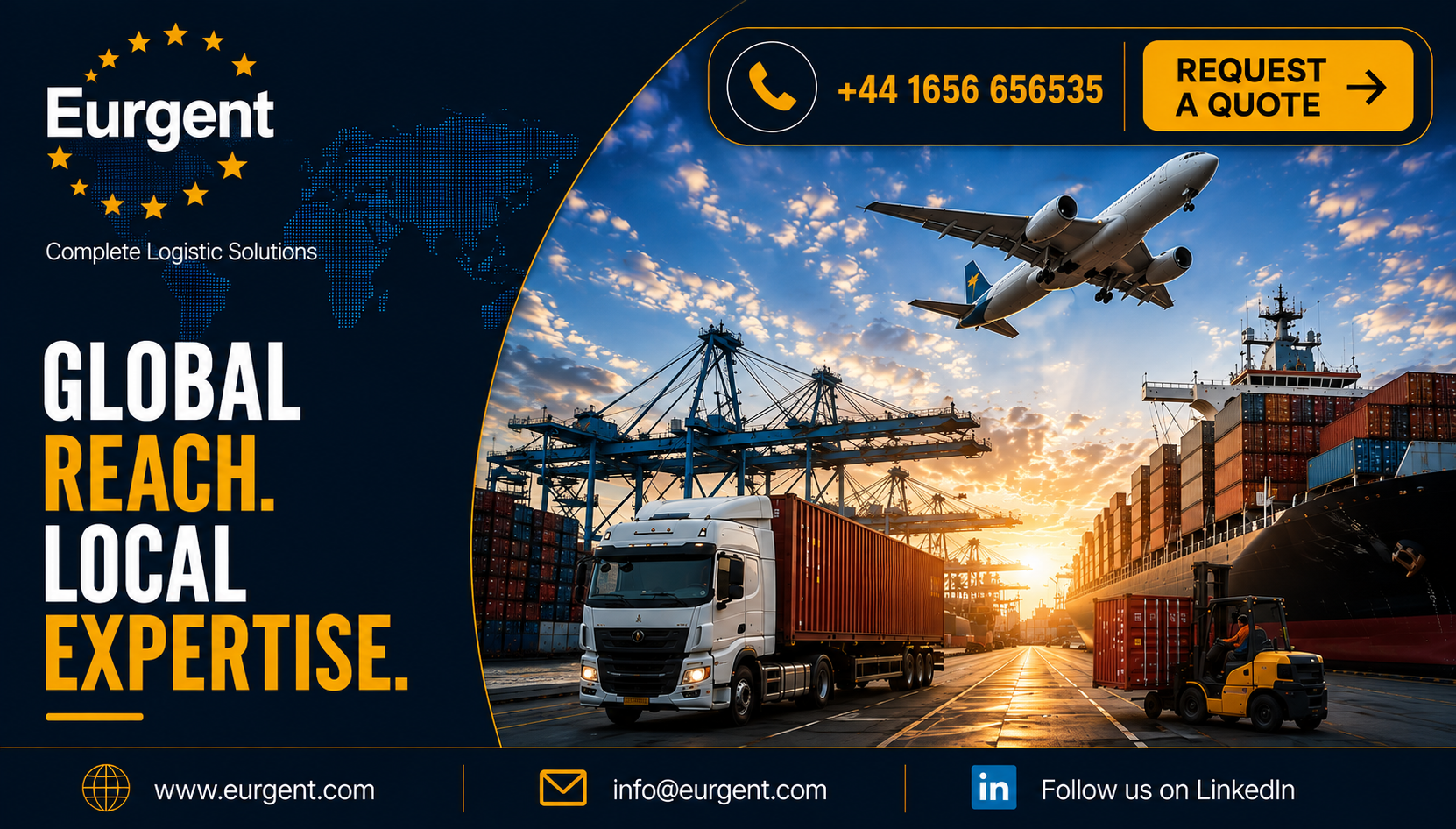
Global logistics works best when international reach is supported by strong local knowledge. Eurgent combines connected transport solutions with practical expertise to help businesses move goods efficiently, reliably and with greater confidence.
Why Global Logistics Needs Local Expertise
Moving goods from one country to another involves far more than simply selecting a transport method. Every shipment can involve different routes, documentation requirements, customs processes, delivery schedules and operational challenges.
A strong logistics strategy therefore needs two things: the ability to operate across international networks and the local expertise required to manage individual markets effectively.
This combination helps businesses create supply chains that are not only wider in reach, but also more dependable in day-to-day operation.
Connecting Businesses Across Borders
International trade creates opportunities to reach new customers, work with new suppliers and expand into new markets. However, growth can also make logistics increasingly complex.
Businesses need logistics partners capable of coordinating different transport modes while maintaining visibility throughout the journey.
- Air freight for urgent and time-sensitive consignments.
- Road freight for flexible regional and European transportation.
- Sea freight for efficient movement of larger international shipments.
- Integrated logistics for shipments requiring multiple transport stages.
- Supply chain coordination to keep goods moving between suppliers, hubs and final destinations.
The objective is not simply to move cargo. It is to create a practical logistics process that supports the wider needs of the business.
The Value of Local Knowledge
International reach provides access to markets, but local expertise helps businesses navigate them.
Different destinations can introduce different regulations, infrastructure limitations, documentation requirements and delivery expectations. Understanding these differences can help prevent unnecessary disruption.
Global capability gets your cargo across borders. Local expertise helps it move smoothly once it gets there.
Working with experienced logistics professionals gives businesses access to knowledge that can support better route planning, more accurate documentation and faster responses when circumstances change.
Choosing the Right Transport Solution
There is no single transport method that is right for every shipment. Cost, speed, cargo type, destination and delivery deadlines all influence the decision.
| Transport Mode | Best Suited For | Key Advantage |
|---|---|---|
| Air Freight | Urgent and high-priority shipments | Speed |
| Road Freight | Regional and flexible deliveries | Door-to-door flexibility |
| Sea Freight | Large-volume international cargo | Cost efficiency |
| Multimodal | Complex international movements | Balanced speed and efficiency |
A smarter logistics strategy evaluates these options based on the actual requirements of each shipment rather than automatically using the same solution every time.
Creating More Resilient Supply Chains
Modern supply chains operate in an environment where disruption can happen quickly. Port congestion, capacity shortages, changing demand, weather conditions and transportation delays can all affect delivery performance.
Resilience comes from planning for these possibilities before they become major problems.
A resilient logistics strategy should focus on:
- Reliable transport networks.
- Alternative routing options.
- Clear communication between stakeholders.
- Realistic delivery schedules.
- Accurate shipping documentation.
- Visibility throughout the shipment journey.
- Fast responses when unexpected problems occur.
These elements help businesses reduce dependency on a single route or process and create greater flexibility throughout their supply chains.
Better Visibility Creates Better Decisions
Logistics visibility has become increasingly important as supply chains grow more complex. Businesses need to know where their goods are, whether shipments are progressing as planned and whether action needs to be taken.
Better information allows teams to make decisions earlier instead of reacting after a problem has already affected customers or operations.
Greater visibility can support:
- More accurate delivery planning.
- Improved inventory management.
- Faster identification of potential delays.
- Better communication with customers.
- Stronger coordination between suppliers and internal teams.
- More informed supply chain decisions.
From Individual Shipments to Complete Logistics Solutions
Businesses often begin by looking for support with a single shipment. As operations expand, however, logistics requirements become more interconnected.
Freight forwarding, transportation planning, documentation, customs requirements and final delivery all influence one another. Managing these areas separately can create unnecessary complexity.
A more integrated approach connects each stage into one coordinated logistics strategy.
Think Beyond Transportation
Effective logistics is about connecting suppliers, transport networks, information and delivery requirements into one reliable process that supports the business from origin to destination.
Supporting Business Growth Through Logistics
Logistics has a direct influence on business performance. When goods arrive reliably and efficiently, businesses can maintain stock levels, meet customer expectations and pursue new opportunities with greater confidence.
Poor logistics, on the other hand, can increase costs, create delays and place additional pressure on teams.
This means logistics should be considered part of business strategy rather than simply an operational expense.
Strong logistics can help businesses:
- Enter new domestic and international markets.
- Improve customer service and delivery reliability.
- Manage transportation costs more effectively.
- Build stronger supplier relationships.
- Respond more quickly to changing demand.
- Scale operations without losing control of the supply chain.
Why the Right Logistics Partner Matters
Businesses should not have to navigate complex transportation requirements alone. The right logistics partner provides expertise, coordination and practical support throughout the shipping process.
Rather than focusing only on moving a shipment from A to B, a strong logistics partner looks at the wider objective: delivering the right goods, through the right route, at the right time and with the right level of communication.
For companies operating across multiple markets, that relationship becomes even more valuable. A partner with global capability and local understanding can help simplify complexity while maintaining the flexibility required for international trade.
Global Reach. Local Expertise.
Successful international logistics is built on balance. Businesses need the reach to connect with global markets and the local knowledge to manage the details that make each shipment successful.
At Eurgent, the focus is on providing complete logistics solutions designed around real business requirements. By combining international transport capabilities with practical expertise, businesses can create supply chains that are more connected, resilient and ready for growth.
Whether the requirement involves air, road, sea or a combination of transport modes, the goal remains the same: make logistics simpler, more reliable and better aligned with the needs of the business.
Need a Smarter Logistics Solution?
Talk to Eurgent about a logistics solution built around your cargo, destination and business requirements.
Call: +44 1656 656535
Email: info@eurgent.com
Website: www.eurgent.com
Frequently Asked Questions
What does a complete logistics solution include?
A complete logistics solution can combine transport planning, freight movement, shipment coordination and other supporting processes required to move goods efficiently from origin to destination.
Which freight option should my business use?
The best option depends on factors such as destination, cargo type, shipment size, budget and delivery deadline. Air, road and sea freight each provide different advantages.
Why is local logistics expertise important?
Local knowledge can help businesses understand destination-specific requirements, infrastructure, documentation and operational challenges, reducing unnecessary delays and complexity.
Can different freight methods be combined?
Yes. Multimodal logistics combines different transport methods when this provides a better balance between speed, cost, capacity and destination requirements.
How can better logistics support business growth?
Reliable logistics can help businesses improve delivery performance, manage costs, serve customers more effectively and expand into new markets with greater confidence.