


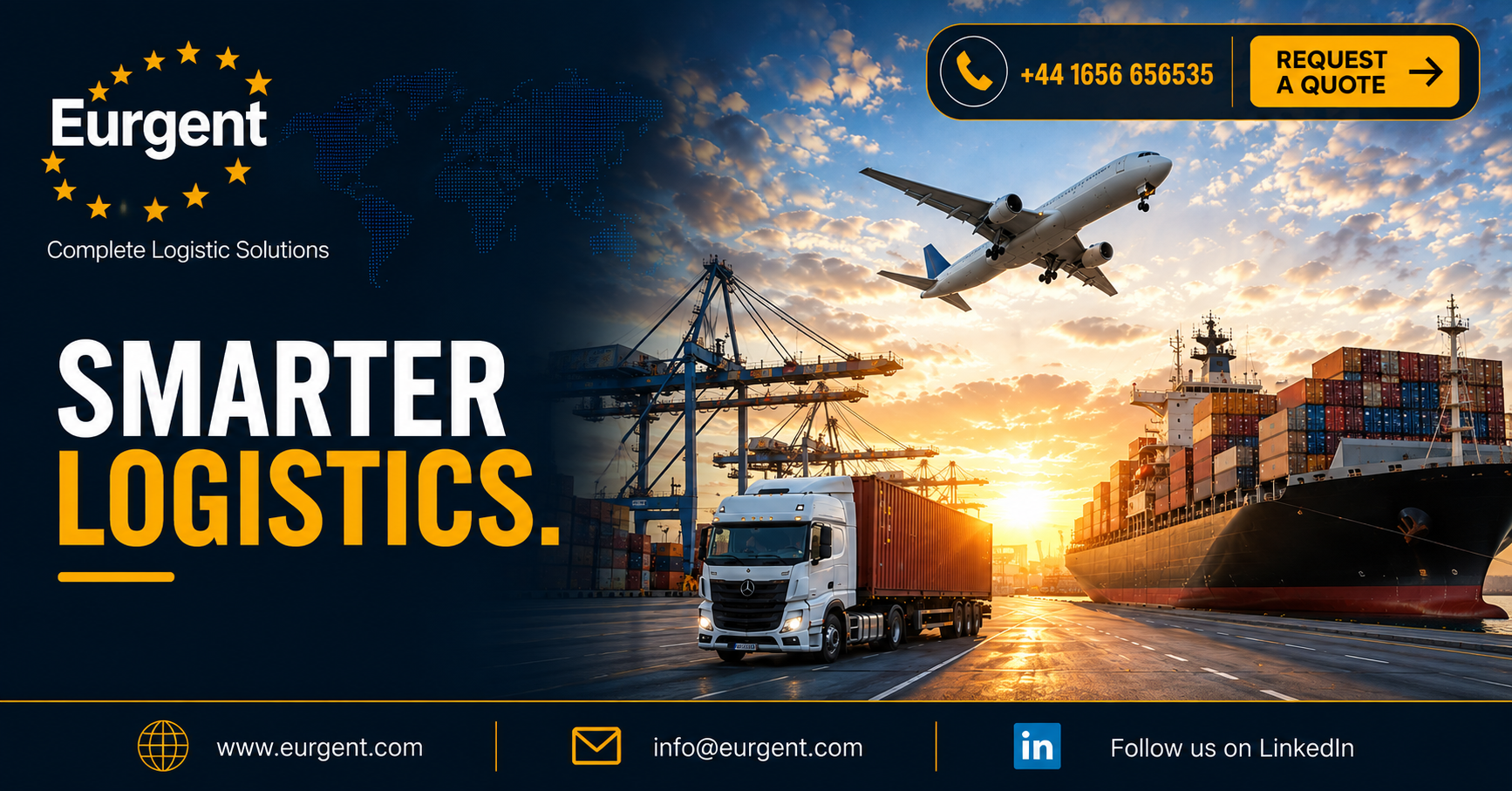
In an increasingly connected global economy, businesses depend on efficient logistics to keep products, materials and opportunities moving. Whether goods travel by road, air or sea, successful logistics is about far more than transportation. It is about connecting markets, coordinating complex supply chains and delivering reliable solutions that support long-term business growth.
As supply chains become more international and customer expectations continue to rise, businesses need logistics strategies that combine flexibility, visibility and dependable execution. Smarter logistics can help organisations reduce unnecessary delays, respond to changing requirements and create stronger connections between suppliers, operations and customers.
For businesses moving goods across the UK, Europe and international markets, the right logistics approach can become a genuine competitive advantage.
Logistics Is More Than Moving Goods
At its simplest, logistics may appear to be the process of transporting cargo from one location to another. In practice, modern logistics involves a much wider network of decisions, processes and relationships.
Every successful shipment may involve route planning, transport selection, scheduling, documentation, coordination between multiple parties and continuous communication. International movements can add further complexity through borders, ports, airports and different regulatory environments.
This is why effective logistics should be viewed as a strategic business function rather than simply a transport requirement.
- Connect suppliers with businesses across different locations and markets.
- Move products efficiently through national and international supply chains.
- Support customer satisfaction through dependable delivery.
- Improve operational continuity by reducing avoidable disruption.
- Enable business expansion into new geographic markets.
- Create greater supply chain visibility for better planning and decision-making.
Connecting Markets Through Smarter Logistics
Businesses rarely operate within a single isolated market. Manufacturers may source components internationally, retailers may serve customers across multiple regions, and distributors may need products moved between warehouses, ports and commercial centres.
Logistics provides the connection between these different points.
A well-coordinated logistics network helps businesses reach suppliers, customers and commercial opportunities that would otherwise be difficult to access. This becomes particularly important as organisations expand beyond their domestic markets.
Connecting Markets. Delivering Solutions. Creating Value.
Effective logistics connects every stage of the supply chain, helping businesses move goods with greater reliability while creating stronger foundations for growth.
The Three Core Modes of Global Freight
There is no single transport solution that works for every shipment. The most effective option depends on factors including destination, cargo type, urgency, volume and budget.
Road, air and sea freight each provide different advantages. Understanding these differences allows businesses to select the most appropriate solution for each movement.
1. Road Freight
Road freight provides flexibility for domestic and European transportation and is an important part of many end-to-end logistics networks.
It can support direct collection and delivery while also connecting warehouses, airports, ports and distribution centres.
- Flexible routing options
- Suitable for regional and cross-border movements
- Useful for door-to-door transportation
- Effective connection between logistics hubs
- Suitable for a wide range of shipment requirements
2. Air Freight
When speed is a major priority, air freight can provide an effective solution for international cargo movements. It is particularly useful when delivery windows are tight or when businesses need to move time-sensitive goods over significant distances.
- Fast international transportation
- Suitable for urgent shipments
- Strong connectivity between major global markets
- Useful for time-sensitive or higher-value cargo
- Can support demanding supply chain schedules
3. Sea Freight
Sea freight remains a fundamental part of global commerce. It can provide an efficient solution for larger volumes and international movements where transit time allows for ocean transportation.
- Suitable for high-volume international shipments
- Supports global import and export activity
- Effective for containerised cargo
- Connects businesses with major international ports
- Can provide an economical solution for appropriate shipments
Road vs Air vs Sea Freight
| Freight Method | Best Suited For | Key Advantage | Typical Consideration |
|---|---|---|---|
| Road Freight | UK and European movements | Flexibility | Distance, routing and delivery schedule |
| Air Freight | Urgent international shipments | Speed | Cost, cargo requirements and airport connectivity |
| Sea Freight | Large-volume global cargo | Scalability | Longer transit times and port schedules |
Why Multimodal Logistics Matters
Some supply chains cannot be managed effectively using one mode of transport alone. A shipment may travel by truck to a port, move internationally by sea and then continue by road to its final destination. Another shipment might combine road and air freight when delivery speed is particularly important.
This combination of transport methods is often referred to as multimodal logistics.
The value of multimodal logistics comes from selecting the right method for each stage rather than forcing an entire shipment into a single transport model.
- Greater flexibility across complex routes
- Better balance between speed and cost
- Access to wider international markets
- More options when disruptions occur
- Improved coordination across the complete shipment journey
Building a Stronger Supply Chain
A strong supply chain is not simply one that operates efficiently when everything goes according to plan. It should also be capable of responding when circumstances change.
Delays, changes in demand, transport availability and unexpected disruption can affect logistics operations. Businesses therefore benefit from supply chains designed around flexibility, communication and informed planning.
Clear Planning
Good logistics begins before goods start moving. Understanding the cargo, destination, required timeframe and potential challenges makes it easier to choose an appropriate transportation strategy.
Reliable Communication
Logistics involves multiple stakeholders. Clear communication helps everyone understand responsibilities, schedules and potential changes throughout the shipment journey.
Flexible Solutions
Supply chains need the ability to adapt. Access to different routes and transport options can help businesses respond when original plans are no longer suitable.
Consistent Execution
A logistics strategy only creates value when it is implemented effectively. Reliable execution helps businesses maintain operational continuity and provide a stronger customer experience.
Visibility Creates Better Decisions
Businesses cannot manage their supply chains effectively if they lack visibility. Understanding where goods are within the logistics process helps organisations plan operations and respond to changes more confidently.
Better visibility can also improve communication with customers. When teams have access to clearer shipment information, they are better positioned to provide realistic updates and manage expectations.
- Improved shipment monitoring
- Earlier identification of potential problems
- Better operational planning
- More accurate customer communication
- Stronger decision-making
- Greater overall supply chain control
Reliability Builds Customer Confidence
Customers may never see the logistics processes behind the products they receive, but they experience the results directly.
Late deliveries, inconsistent availability and poor communication can damage trust. Reliable logistics, on the other hand, helps businesses meet expectations and strengthen long-term customer relationships.
This makes logistics an important part of the overall customer experience.
Reliable logistics creates value beyond transportation.
It supports stronger customer relationships, more predictable operations and greater confidence throughout the supply chain.
How Smarter Logistics Can Reduce Operational Inefficiency
Inefficiency within a supply chain can appear in many forms: unnecessary delays, poor route selection, limited communication, unsuitable transport methods or weak coordination between different stages.
Individually, these issues may seem manageable. Over time, however, they can increase costs and reduce the overall effectiveness of operations.
A smarter logistics strategy looks at the complete journey and asks where processes can be improved.
- Understand the requirement. Define the cargo, destination, timing and business priorities.
- Select the right transport method. Choose road, air, sea or a combination based on the shipment.
- Plan the route. Consider the complete journey rather than individual transport stages.
- Coordinate stakeholders. Ensure relevant parties have the information they require.
- Maintain visibility. Monitor progress and identify potential disruption.
- Respond when necessary. Adapt plans when circumstances change.
- Review performance. Use completed shipments to identify opportunities for future improvement.
Logistics as a Driver of Business Growth
Logistics is sometimes treated purely as an operational cost. However, effective logistics can also support revenue and growth.
When a business has confidence in its ability to move products reliably, it may be better positioned to serve new customers, enter additional regions and develop international relationships.
Logistics infrastructure can therefore become an important part of business scalability.
- New market access: Reach customers across wider geographic areas.
- Improved service: Create more dependable delivery experiences.
- Greater scalability: Support increasing shipment volumes as the business grows.
- Operational confidence: Plan commercial activity around more reliable logistics.
- Stronger partnerships: Build dependable relationships with suppliers and customers.
Choosing a Logistics Partner
The quality of a logistics network depends heavily on the people responsible for coordinating it. Choosing the right logistics partner should therefore involve more than comparing transport prices.
Businesses should consider whether a provider understands their operational requirements and can offer solutions suited to different types of shipments.
| What to Look For | Why It Matters |
|---|---|
| Industry Experience | Helps identify practical solutions for different logistics challenges. |
| Transport Options | Provides flexibility when different shipments require different approaches. |
| Communication | Keeps businesses informed throughout the logistics process. |
| Reliability | Supports consistent supply chain performance and customer confidence. |
| Flexibility | Allows logistics plans to adapt as requirements change. |
From Transportation to Complete Logistics Solutions
The difference between basic transportation and a complete logistics solution is coordination.
Moving a shipment from one location to another is only one part of the process. Businesses also need to consider how that movement fits within procurement, inventory, production, distribution and customer commitments.
A complete logistics approach considers these wider requirements and helps ensure that transportation supports the business rather than operating independently from it.
Creating Long-Term Value Through Logistics
The strongest logistics strategies focus not only on completing today’s shipment but also on improving tomorrow’s supply chain.
Every successful movement provides useful information. Businesses can review transit times, transport choices, recurring challenges and delivery performance to identify opportunities for improvement.
Over time, these improvements can create a logistics network that is more efficient, resilient and aligned with commercial goals.
That is where logistics begins to create long-term business value.
Frequently Asked Questions
What is a complete logistics solution?
A complete logistics solution coordinates the different activities required to move goods effectively, which may include transport planning, road, air or sea freight, shipment coordination and communication across the supply chain.
What is the difference between logistics and transportation?
Transportation specifically refers to moving goods between locations. Logistics is broader and includes planning, coordination and management of the processes surrounding that movement.
Which is better: road, air or sea freight?
No single method is best for every shipment. Road freight offers flexibility, air freight prioritises speed, and sea freight is commonly suited to larger international volumes. The right option depends on the individual requirement.
Can different freight methods be combined?
Yes. Many international supply chains combine road, air and sea transportation. Using multiple transport modes can provide greater flexibility and help create an efficient end-to-end route.
Why is logistics visibility important?
Better visibility helps businesses understand shipment progress, identify potential problems earlier, improve internal planning and communicate more effectively with customers.
How can logistics support business growth?
Reliable logistics can help businesses serve wider markets, improve customer experiences, support larger shipment volumes and build stronger international supply chains.
Connect Markets with Eurgent
Modern businesses need logistics solutions capable of connecting people, products and markets efficiently. Whether requirements involve road, air, sea or a combination of transport methods, the objective remains the same: move goods reliably while supporting the wider goals of the business.
Eurgent focuses on complete logistics solutions designed around practical business requirements. By bringing together transport options, coordination and a commitment to reliable service, Eurgent helps businesses keep goods moving across increasingly connected markets.
Because smarter logistics is not simply about delivering cargo. It is about creating stronger supply chains, connecting opportunities and delivering greater value.
Ready to Move Your Business Forward?
Whether you need support with road, air or sea freight, Eurgent can help you identify a logistics solution suited to your requirements.
Connect markets. Deliver solutions. Create value. Request a quote from Eurgent today.