


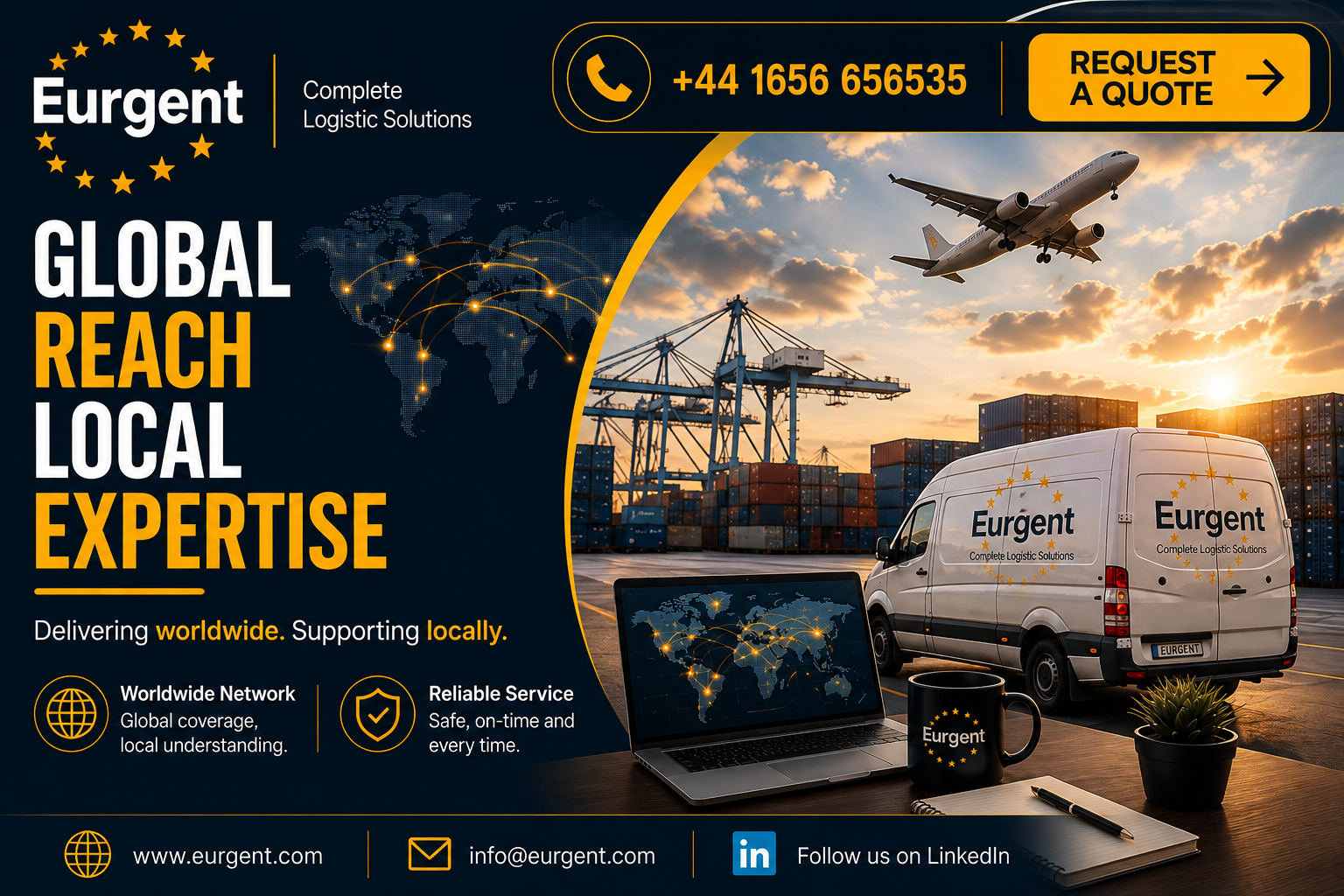
Modern businesses are no longer limited by borders. Suppliers, customers, manufacturers and distribution partners can be located across different cities, countries and continents. While this creates enormous opportunities for growth, it also makes logistics more complex.
Successful logistics is therefore about much more than simply moving goods from one location to another. Businesses need a logistics partner capable of combining global reach with local expertise to create reliable, efficient and flexible supply chains.
At Eurgent, our approach to complete logistic solutions is built around connecting businesses with dependable transportation, practical support and a network designed to keep goods moving efficiently.
Why Global Logistics Matters More Than Ever
Businesses increasingly operate across interconnected markets. A product may be manufactured in one country, stored in another and ultimately delivered to customers hundreds or thousands of miles away.
Every stage introduces important decisions involving routes, transport methods, schedules, documentation and coordination. When these elements are managed effectively, logistics can become a competitive advantage rather than simply an operational expense.
A strong logistics network can help businesses:
- Reach customers and markets across wider geographical areas.
- Coordinate shipments between suppliers, warehouses and destinations.
- Improve reliability throughout the supply chain.
- Reduce unnecessary delays and operational disruption.
- Respond more effectively when requirements change.
- Build stronger and more scalable distribution operations.
Global Reach Is Only Part of the Solution
An international network is important, but network size alone does not guarantee effective logistics.
Every destination has different infrastructure, processes and operational requirements. A logistics strategy that works perfectly in one market may need to be adapted significantly for another.
This is why local expertise is such an important part of international logistics.
Understanding the realities of individual markets helps businesses make better decisions about how goods should move, which routes are appropriate and where potential challenges may arise.
Combining Global Connections With Local Knowledge
The strongest logistics strategies combine two capabilities: the ability to operate across a broad network and the knowledge required to manage individual movements effectively.
Global connectivity creates reach. Local understanding helps turn that reach into practical results.
Together, they support a logistics operation that is better prepared to handle changing destinations, customer expectations and supply chain requirements.
A Connected Approach to Complete Logistic Solutions
Logistics works best when individual movements are treated as parts of one connected process.
Road transportation, air freight, sea freight, distribution and final delivery should not operate as completely separate activities. They should work together as part of a coordinated supply chain.
This connected approach can provide businesses with greater visibility and control while helping reduce unnecessary complexity.
Road Transport
Road transportation provides flexibility across local, regional and international routes. It can support direct deliveries, distribution networks and connections between larger transport hubs.
Effective road logistics depends on sensible route planning, dependable scheduling and communication throughout the journey.
Air Freight
When speed is a priority, air transportation can provide an important option for moving goods over longer distances.
However, successful air freight requires more than booking space on an aircraft. Collection, airport handling, onward transport and final delivery must all work together to maintain efficiency.
Sea Freight
Sea freight remains an important part of global trade, particularly for larger shipments and international supply chains.
Planning around ports, containers, onward transportation and delivery schedules helps businesses create more predictable freight movements.
Integrated Logistics
Many supply chains require more than one transport method. A shipment may move by road to a port, continue internationally by sea or air and then return to road transportation for the final stage.
Coordinating these stages helps create a smoother journey from origin to destination.
Reliability Across Every Stage
Businesses depend on logistics to keep operations running. A delayed shipment can affect inventory, production schedules, customer commitments and ultimately revenue.
Reliability therefore needs to be built into every stage of the logistics process.
That means considering routes, schedules, transport requirements and possible disruptions before they become serious problems.
Good logistics planning does not assume that everything will always go perfectly. It creates enough visibility and flexibility to respond effectively when circumstances change.
The Importance of Local Support
International logistics can feel complicated when businesses are dealing with multiple destinations and different stages of transportation.
Accessible support makes that process easier.
Businesses should know who they can speak to when they need information about a shipment, a route or a changing requirement. Clear communication can prevent small issues from becoming larger operational problems.
This human element is particularly valuable when managing logistics across multiple markets.
Technology and Visibility in Modern Logistics
Modern logistics increasingly relies on data and digital tools to support better planning and communication.
Greater visibility can help logistics teams understand where shipments are within the supply chain and make more informed decisions when schedules or requirements change.
Technology can support:
- Shipment visibility and tracking.
- Route and delivery planning.
- Communication between different stages of transportation.
- Performance monitoring.
- Faster identification of potential disruptions.
- More informed operational decisions.
Technology is most valuable when it supports strong logistics expertise rather than replacing it. Data provides information, while experienced people turn that information into practical decisions.
Creating More Efficient Supply Chains
Efficiency is not simply about choosing the fastest route. A genuinely efficient logistics strategy considers the complete journey.
That includes the origin, destination, shipment requirements, transport method, timing and connections between different stages.
Sometimes the fastest option may be appropriate. In other situations, a more balanced solution may provide better reliability or operational value.
The goal is to identify the logistics solution that best supports the business requirement.
Supporting Business Growth Through Logistics
As businesses grow, their logistics requirements often become more demanding.
A company that initially manages a limited number of local deliveries may eventually need regional distribution, international freight or more complex supply chain coordination.
Working with a logistics partner capable of supporting both current requirements and future expansion can make growth easier to manage.
Instead of rebuilding logistics processes every time the business enters a new market, companies can develop a more scalable foundation from the beginning.
Global Reach With a Local Mindset
The best logistics networks combine international capability with attention to individual shipments and customers.
Global reach provides businesses with opportunities to expand beyond their immediate market. Local expertise ensures that those opportunities can be supported with practical knowledge and dependable service.
For businesses operating across multiple regions, this combination can provide greater confidence when entering new markets or expanding existing supply chains.
Why Businesses Need the Right Logistics Partner
Choosing a logistics provider should not simply come down to who can move a shipment from one point to another.
A strong logistics partner should understand the wider business requirement.
That includes asking the right questions: Where does the shipment need to go? When does it need to arrive? Which transportation method makes sense? What challenges could affect the journey? How can different stages be coordinated effectively?
By looking at logistics strategically, businesses can create transportation processes that support wider operational and commercial goals.
The Eurgent Approach
At Eurgent, we believe effective logistics requires connectivity, reliability and practical support.
Our focus is on helping businesses navigate their logistics requirements through solutions designed around the movement itself rather than forcing every shipment into the same approach.
Whether goods are moving locally or across international networks, the objective remains the same: create a clear, dependable and efficient journey from origin to destination.
Global Reach. Local Expertise.
The future of logistics is connected. Businesses need access to wider markets while still receiving the responsiveness and understanding associated with local service.
Combining these strengths creates supply chains capable of supporting businesses today while preparing them for tomorrow’s opportunities.
Eurgent – Complete Logistic Solutions.
From local transportation to wider international logistics requirements, Eurgent helps businesses keep their goods moving with dependable support every step of the way.
Frequently Asked Questions
What does global logistics mean?
Global logistics refers to the planning and coordination involved in moving goods across international markets, often using different transportation methods and logistics partners throughout the journey.
Why is local expertise important in international logistics?
Local expertise helps businesses understand regional infrastructure, transportation requirements and practical challenges that may affect individual shipments.
What are complete logistic solutions?
Complete logistic solutions take a broader approach to transportation by coordinating different parts of the supply chain rather than treating each movement as an isolated activity.
Can different transport methods be combined?
Yes. Many supply chains combine road, air and sea transportation depending on the shipment, destination, timeframe and wider operational requirements.
How can better logistics support business growth?
A reliable and scalable logistics network can help businesses reach new markets, improve distribution, maintain customer service and manage increasing shipment volumes more effectively.
Ready to Strengthen Your Logistics Network?
If your business needs dependable logistics support with the ability to connect local requirements to wider markets, Eurgent is ready to help.
Website: www.eurgent.com
Email: info@eurgent.com
Phone: +44 1656 656535
Global reach. Local expertise. Complete logistic solutions.