


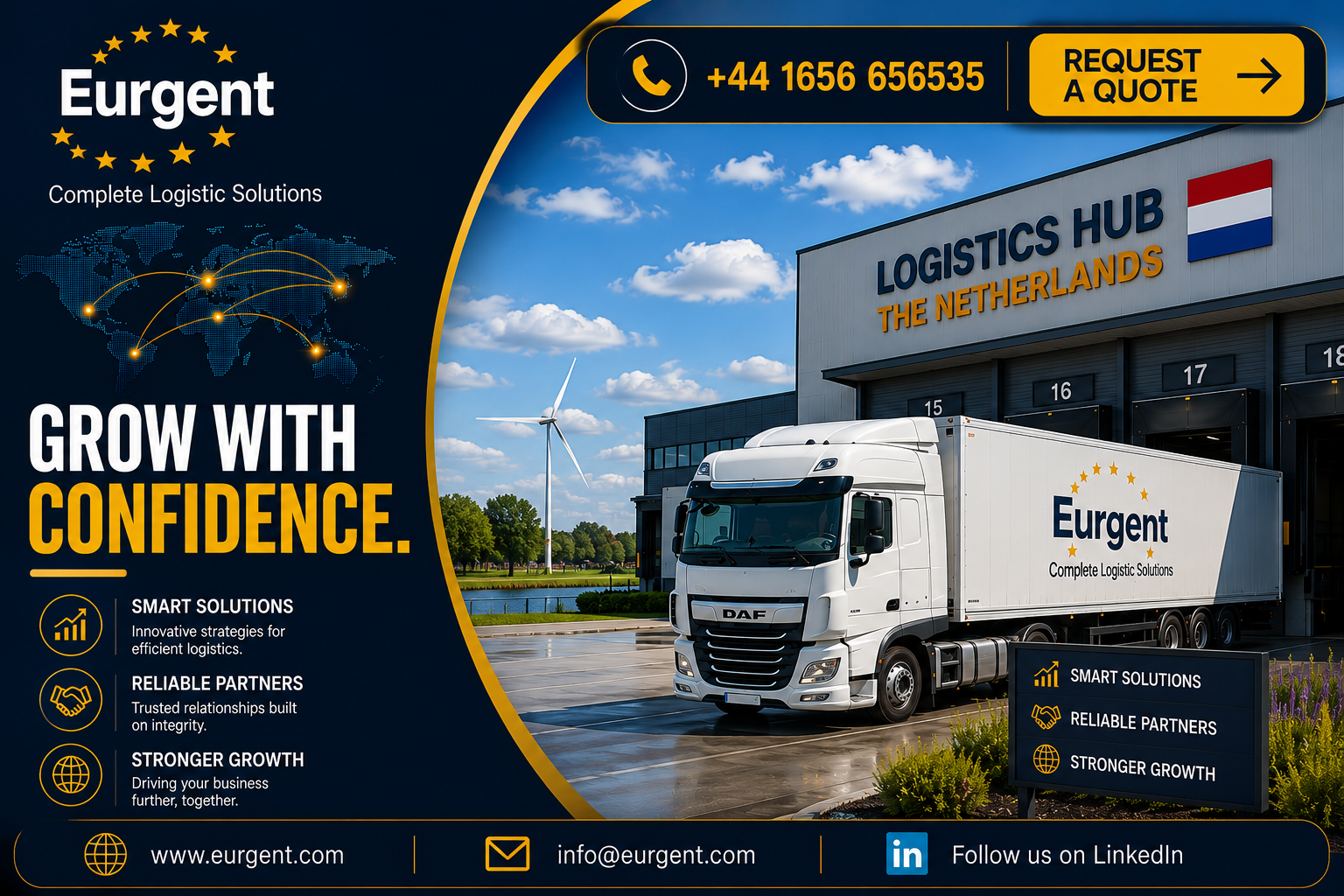
Business growth depends on more than sales, demand and ambition. Behind every successful expansion is a logistics network capable of moving goods reliably, adapting to changing requirements and supporting customers across different markets.
At Eurgent, growth with confidence means having logistics support that is flexible, responsive and built around real operational needs. From road freight and international transport to warehousing and supply-chain coordination, the right logistics structure can help businesses expand without losing control.
Why Logistics Matters for Business Growth
As companies grow, their logistics requirements usually become more complex. Shipment volumes increase, new destinations appear, delivery expectations become tighter and supply chains involve more partners.
Without the right planning, this complexity can create delays, higher costs and inconsistent service. A stronger logistics strategy helps businesses manage growth in a structured way while maintaining visibility and reliability.
Growth is easier when your logistics can grow with you.
The right combination of transport, communication and operational support gives businesses greater confidence when entering new markets or increasing shipment volumes.
Smart Solutions for Changing Requirements
There is no single logistics solution that works for every business. Different shipments may require different transport methods, delivery timescales and levels of coordination.
Smart logistics begins by understanding the requirement first and then selecting the most practical solution.
- Road freight for flexible regional and European movements
- Air freight for urgent or time-sensitive shipments
- Sea freight for larger international volumes
- Warehousing and storage support
- Multimodal transport coordination
- Customs and documentation support where required
By combining the right services, businesses can create logistics solutions that support both everyday operations and future expansion.
Reliable Partners Create Stronger Supply Chains
Logistics involves many moving parts. Carriers, warehouse teams, customs processes, suppliers and delivery partners may all contribute to a single shipment.
Strong partnerships help keep these stages connected.
A reliable logistics partner should communicate clearly, respond quickly and understand the wider commercial importance of each movement. When trust and accountability are built into the relationship, businesses can spend less time chasing updates and more time focusing on growth.
The Importance of European Logistics Hubs
Strategically located logistics hubs can play an important role in European supply chains. Countries such as the Netherlands offer strong transport infrastructure, access to major ports and road networks, and connections to key European markets.
Using well-connected logistics locations can help businesses coordinate freight movements more efficiently and create stronger distribution networks across Europe.
The value is not simply the warehouse or terminal itself. It is the connectivity that allows goods to move between road, sea, air and distribution networks with fewer unnecessary delays.
Road Freight That Supports Expansion
Road freight remains one of the most important transport options for businesses operating across the UK and Europe.
It offers flexibility for collections, deliveries and connections between warehouses, ports, airports and customers.
As businesses expand geographically, dependable road freight becomes increasingly important for maintaining consistent service across different regions.
Visibility Builds Confidence
Growth becomes difficult to manage when businesses do not know what is happening across their supply chain.
Clear shipment communication and logistics visibility allow teams to coordinate inventory, customer expectations and internal operations more effectively.
Better visibility also helps businesses respond faster when delays or operational changes occur.
Confidence Comes From Control
When businesses understand where goods are, what stage a shipment has reached and what needs to happen next, logistics becomes easier to manage and future planning becomes more accurate.
Build Logistics That Can Scale
A logistics solution that works for ten shipments a month may not remain effective when that number becomes fifty or one hundred.
Growing businesses should therefore consider scalability when building their supply chains.
This can involve creating clearer processes, improving shipment planning, strengthening warehouse coordination and working with partners capable of supporting increased volumes.
Scalable logistics allows businesses to expand without repeatedly rebuilding the entire transport process.
Stronger Growth Through Better Planning
Logistics should not only respond to immediate requirements. It should also support future plans.
If a business expects to enter new markets, increase sales volumes or add new product lines, those changes should be considered within the logistics strategy early.
Planning ahead helps businesses identify where additional capacity, warehousing, transport routes or operational support may be required before growth creates unnecessary pressure.
Smart Logistics Is More Than Transportation
Moving freight is only one part of the overall process.
A complete logistics solution may involve collection, storage, handling, documentation, transport planning, route coordination and final delivery.
When these elements are managed together, businesses gain a clearer and more consistent logistics structure.
This can help reduce unnecessary complexity and create a more dependable customer experience.
Why the Right Partner Matters
A strong logistics partner does more than arrange transport. They help businesses understand options, coordinate requirements and respond when circumstances change.
The right relationship should be built around communication, reliability and problem-solving.
This becomes increasingly valuable as businesses grow because larger operations often involve more destinations, more shipments and more opportunities for disruption.
Grow With Confidence
Business growth always involves change. New customers, new destinations and increased volumes can all create exciting opportunities, but they also place greater demands on logistics operations.
The businesses best positioned to grow are those that build supply chains capable of adapting alongside them.
With smart logistics solutions, reliable partnerships and strong operational planning, companies can move into new opportunities with greater confidence.
Ready to Grow With Confidence?
Talk to Eurgent about logistics solutions designed to support your business today and adapt to your requirements tomorrow.
Request a Quote
+44 1656 656535
www.eurgent.com
info@eurgent.com
Frequently Asked Questions
Why is logistics important for business growth?
As businesses grow, shipment volumes, destinations and supply-chain complexity often increase. Strong logistics planning helps companies manage this growth while maintaining reliability and service quality.
What makes a logistics solution flexible?
A flexible logistics solution can adapt transport modes, routes, capacity and supporting services according to changing shipment and business requirements.
Why are logistics hubs important?
Well-connected logistics hubs can provide access to major road, port, air and warehousing networks, helping businesses coordinate freight movements across wider markets.
How does better visibility support growth?
Visibility helps businesses monitor shipment progress, coordinate inventory and customers, and respond more quickly to delays or changes.
Can logistics solutions scale with a growing business?
Yes. A well-planned logistics structure can be designed to support increasing volumes, new destinations and changing operational requirements over time.