


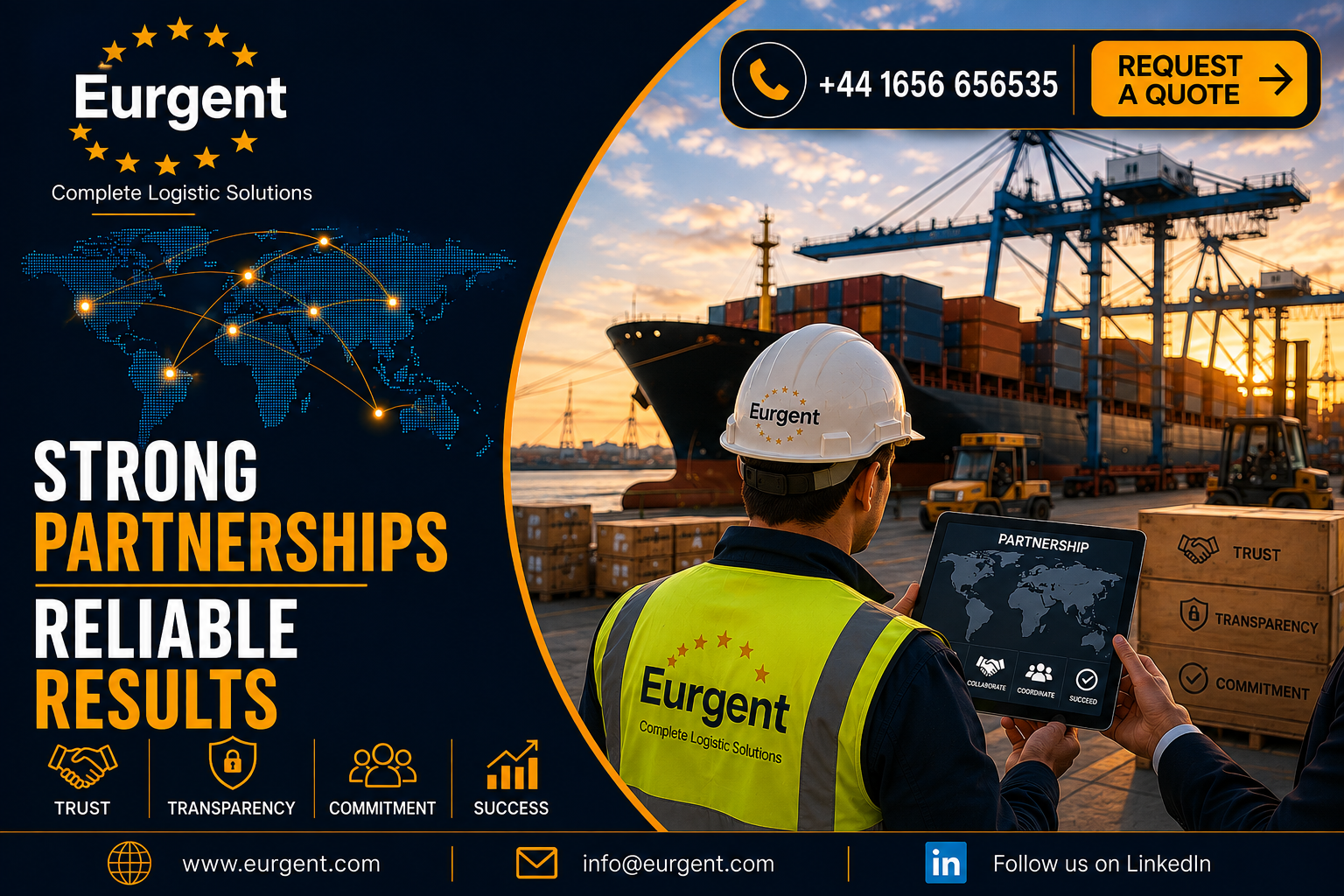
In modern logistics, reliable results are rarely achieved by one company working alone. Strong partnerships, clear communication and dependable execution are what keep supply chains moving efficiently.
Logistics connects businesses, suppliers, warehouses, ports, carriers and customers across increasingly complex supply chains. Every shipment depends on multiple moving parts working together at the right time. When those relationships are built on trust and transparency, businesses gain more than a transport provider—they gain a logistics partner capable of supporting their wider operational goals.
At Eurgent, we believe successful logistics begins with understanding what each customer actually needs. Different businesses face different pressures, timelines and supply-chain challenges, which is why effective logistics should be built around collaboration rather than a one-size-fits-all approach.
Why Strong Logistics Partnerships Matter
A strong logistics partnership creates a foundation for consistency. Instead of treating every shipment as an isolated transaction, both parties work toward shared objectives such as improving delivery reliability, reducing unnecessary delays, maintaining visibility and responding effectively when circumstances change.
This collaborative approach is particularly valuable in supply chains where timing, coordination and communication can directly affect business performance. When logistics partners understand the wider operation, they can make better decisions and provide solutions that support long-term success.
Trust Is the Foundation
Businesses rely on logistics providers to manage important goods, schedules and commitments. That responsibility makes trust essential. Customers need confidence that their logistics partner will communicate clearly, act responsibly and remain focused on delivering the agreed outcome.
Trust is not created through promises alone. It develops through consistent performance, honest communication and the ability to respond professionally when challenges arise. A dependable logistics relationship gives businesses greater confidence when planning their own operations and serving their customers.
Transparency Creates Better Decisions
Visibility and communication are vital throughout the logistics process. Businesses need useful information about their shipments so they can coordinate internal teams, manage customer expectations and make informed decisions.
Transparency means keeping customers informed rather than leaving them to search for answers. When information is shared clearly and at the right time, potential issues can be identified earlier and decisions can be made more effectively.
Partnership Creates Performance
Trust builds confidence. Transparency improves decision-making. Commitment creates consistency. Together, these qualities help turn logistics relationships into reliable business partnerships.
Commitment Beyond a Single Shipment
The strongest logistics relationships are built with a long-term perspective. A logistics partner should not simply focus on completing today’s movement; they should understand how their service contributes to the customer’s broader objectives.
That means learning how the customer’s supply chain operates, understanding recurring requirements and identifying areas where planning or coordination can be improved. Over time, this knowledge can create a smoother working relationship and a more responsive logistics operation.
Reliable Results Require Coordination
Logistics involves numerous parties and processes. Warehouses, transport providers, ports, customs procedures, documentation and delivery schedules may all need to align before a shipment reaches its destination successfully.
Effective coordination helps ensure these individual elements work as one connected process. When communication between parties is strong, businesses are better positioned to reduce disruption, maintain momentum and respond quickly to changing circumstances.
The Business Value of the Right Logistics Partner
Choosing a logistics provider should involve more than comparing individual transport rates. Businesses should also consider reliability, responsiveness, communication, flexibility and the provider’s ability to support changing requirements.
A strong logistics partnership can help businesses:
- Improve reliability through better planning and coordination.
- Increase visibility with clearer communication throughout the logistics process.
- Respond faster when schedules, requirements or circumstances change.
- Reduce operational pressure by working with experienced logistics professionals.
- Support growth with logistics solutions capable of adapting to evolving business needs.
Partnerships Become More Important as Businesses Grow
As companies expand, their logistics requirements often become more complicated. New suppliers, customers, markets and transport routes can create additional operational demands. A logistics partner that already understands the business can provide valuable continuity during this growth.
Instead of repeatedly rebuilding processes with different providers, businesses can develop a working relationship where knowledge, communication and expectations improve over time. This creates a stronger foundation for scaling logistics operations without sacrificing service quality.
Technology Supports the Relationship—It Does Not Replace It
Modern logistics increasingly benefits from digital tools, shipment visibility and better access to operational information. Technology can make communication faster and provide businesses with greater insight into their supply chains.
However, technology delivers the greatest value when combined with experienced people and strong working relationships. Data can show what is happening, but experienced logistics professionals are still essential for interpreting situations, solving problems and coordinating the right response.
What Makes a Logistics Partnership Successful?
Successful partnerships are based on shared expectations and consistent standards. Both sides should understand priorities, communicate openly and remain focused on achieving dependable outcomes.
Four Principles That Matter
Trust: Confidence that commitments will be handled responsibly.
Transparency: Clear and timely communication throughout the process.
Commitment: A consistent focus on the customer’s requirements and objectives.
Results: Reliable execution that contributes to stronger business performance.
From Logistics Provider to Strategic Partner
There is an important difference between simply arranging transportation and becoming a trusted logistics partner. A strategic partner understands that every movement exists for a business reason. The objective may be maintaining inventory, meeting a production deadline, fulfilling a customer commitment or supporting expansion into a new market.
Understanding that wider purpose helps logistics teams make more informed decisions. Rather than focusing exclusively on moving goods from one point to another, the emphasis shifts toward delivering the outcome the customer needs.
Building Reliable Results Together
Supply chains will continue to evolve, and businesses will continue to face changing demands. Strong partnerships provide the flexibility and confidence required to navigate those changes.
At Eurgent, our approach is centred on working closely with customers, understanding their requirements and supporting their logistics with dependable solutions. By combining communication, coordination, expertise and commitment, logistics can become more than an operational necessity—it can become a valuable part of business success.
Looking for a Logistics Partner You Can Rely On?
Work with Eurgent for flexible, dependable logistics solutions built around your business requirements.
Website: www.eurgent.com | Email: info@eurgent.com | Phone: +44 1656 656535
Frequently Asked Questions
Why are partnerships important in logistics?
Strong partnerships improve communication, coordination and understanding between businesses and logistics providers, helping create more reliable and responsive supply chains.
What should businesses look for in a logistics partner?
Important qualities include reliability, transparency, flexibility, responsiveness, clear communication and the ability to understand the customer’s wider operational requirements.
How can better communication improve logistics?
Clear communication provides greater visibility, allows potential problems to be addressed earlier and helps businesses make better operational decisions.
Can a logistics partnership support business growth?
Yes. A reliable logistics partner can adapt services as requirements evolve, helping businesses manage increasing complexity while maintaining consistent service.
Final Thoughts
Strong logistics partnerships are built through trust, transparency and commitment. When businesses and logistics providers work together toward shared goals, the result is better coordination, greater confidence and more reliable performance.
Strong partnerships create reliable results—and reliable logistics creates stronger businesses.