


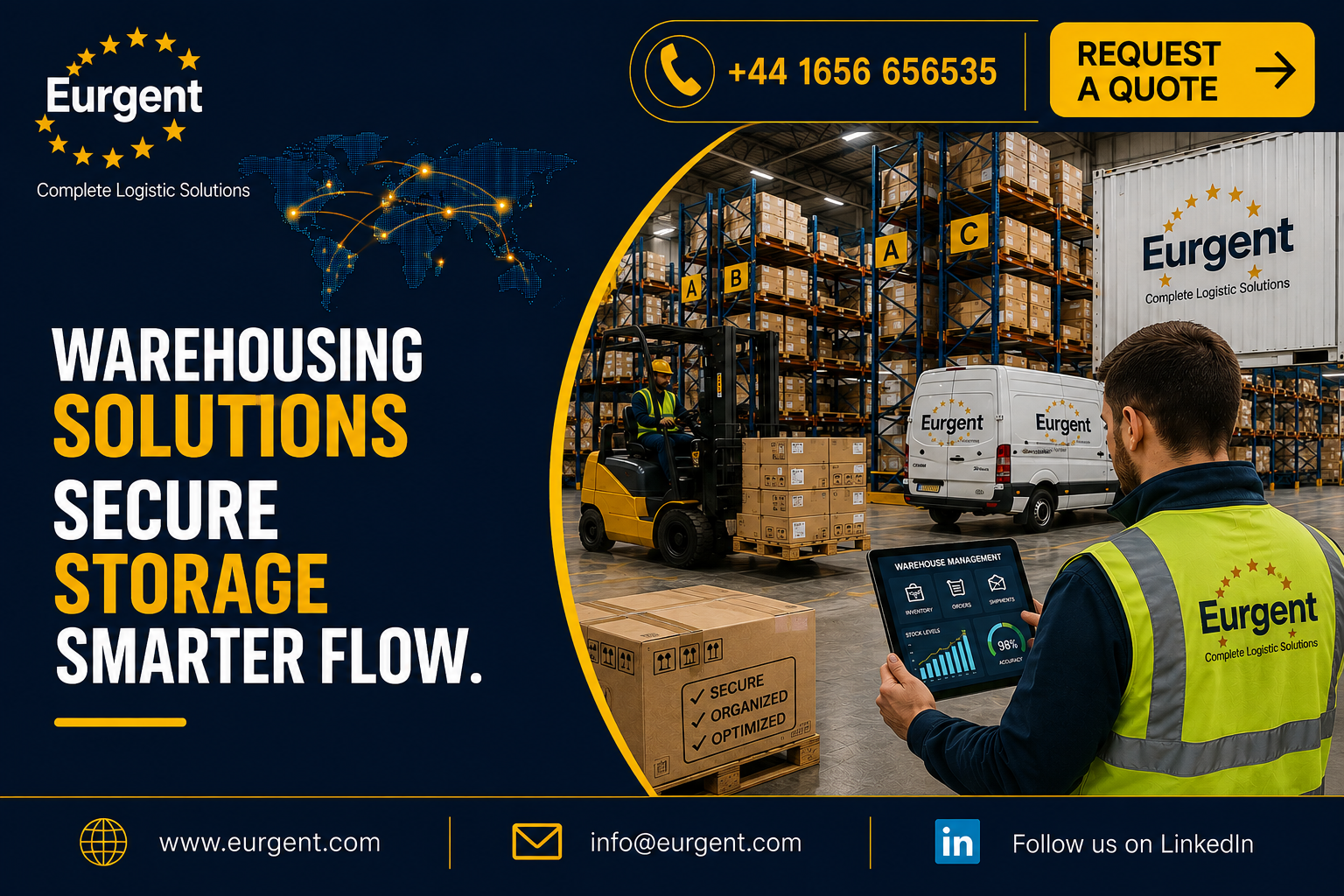
Efficient logistics is not only about moving goods from one destination to another. What happens between collection and delivery can be just as important. A well-managed warehousing operation provides businesses with the secure storage, organisation, visibility and flexibility they need to keep their supply chains moving smoothly.
At Eurgent, warehousing is approached as an integral part of a complete logistics solution. By combining secure storage with organised inventory handling and efficient distribution processes, businesses can create a stronger flow of goods from arrival through to final delivery.
Why Warehousing Matters in Modern Logistics
Warehousing has evolved far beyond simply providing a building in which products can be stored. Modern businesses require logistics operations that can respond quickly to changing demand, maintain accurate inventory information and ensure goods are ready to move when customers need them.
An effective warehousing strategy creates a controlled point within the supply chain where products can be received, organised, stored and prepared for onward transportation. This helps businesses reduce unnecessary disruption while maintaining greater control over their inventory.
When storage and transportation work together, companies can build a more coordinated logistics process rather than managing each stage independently.
Secure Storage You Can Depend On
Security is one of the most important considerations when choosing a warehousing solution. Businesses need confidence that their goods are being handled responsibly throughout the storage period.
A structured warehouse environment supports better control over incoming and outgoing stock, designated storage locations and the movement of goods throughout the facility. Proper organisation also reduces unnecessary handling and helps teams identify where inventory should be located at every stage.
Secure warehousing creates confidence.
When businesses know where their goods are, how they are being managed and when they are ready for dispatch, they can make better logistics decisions.
Organisation Creates a Smarter Flow
A warehouse can contain thousands of individual products, pallets or shipments. Without an organised system, even a large facility can quickly become inefficient.
Effective warehousing focuses on creating a logical flow from receiving through storage and finally to dispatch. Goods should move through each stage efficiently, with unnecessary handling kept to a minimum.
- Receiving: Goods enter the warehouse and are checked before being processed.
- Organisation: Inventory is assigned to appropriate storage locations.
- Storage: Products remain securely positioned until required.
- Preparation: Goods are selected and prepared for onward movement.
- Dispatch: Shipments leave the facility and continue through the logistics network.
Creating a structured process across these stages can reduce delays and make the overall logistics operation easier to manage.
Better Inventory Visibility
Knowing what inventory is available and where it is located is essential for effective supply-chain management. Poor visibility can lead to unnecessary delays, duplicated work and difficulties responding to customer requirements.
A well-managed warehousing process gives businesses a clearer understanding of their stock position. This visibility can support purchasing decisions, order planning and transportation scheduling while helping teams identify potential issues before they affect customers.
Better information also creates better coordination between warehouse teams and transport operations. When goods are ready to move, the next stage of the logistics process can be planned more efficiently.
Connecting Warehousing and Transportation
Warehousing delivers the greatest value when it is connected with the wider logistics network. Storage should not become an isolated stage that slows down the movement of goods. Instead, it should support the transition between suppliers, transportation providers and final destinations.
Integrating warehousing and transportation can help create smoother handovers. Goods can be received, stored and prepared according to future delivery requirements, allowing transport resources to be planned more effectively.
For businesses managing multiple destinations or changing delivery requirements, this flexibility can be particularly valuable.
Smarter Warehousing Supports Business Growth
As a business grows, its logistics requirements often become more complicated. Higher order volumes can mean more inventory, more deliveries and greater pressure on internal teams.
Trying to manage increasing stock without the right warehousing structure can restrict growth. A scalable warehousing solution gives businesses room to manage changing requirements without allowing logistics complexity to overwhelm their day-to-day operations.
Instead of viewing storage purely as an expense, businesses can view warehousing as infrastructure that supports their wider operations. The right solution can help create consistency as order volumes increase and supply chains expand.
The Benefits of an Integrated Warehousing Solution
When warehousing becomes part of a coordinated logistics strategy, businesses can benefit across several areas of their operations.
Secure. Organised. Optimised.
- More organised inventory management
- Improved visibility across stored goods
- More efficient preparation for dispatch
- Better coordination between storage and transportation
- Greater flexibility as business requirements change
- Reduced unnecessary handling and operational delays
- Stronger overall supply-chain control
Technology and Modern Warehouse Management
Technology is increasingly important in modern logistics. Digital warehouse management processes can help teams monitor inventory, organise orders and maintain better visibility over shipments moving through a facility.
Having accurate information available at the right time allows logistics teams to make faster decisions. It can also improve communication between warehousing and transport operations, creating a more connected supply chain.
Technology does not replace good logistics planning, but when the two work together, businesses gain greater visibility and control over their operations.
Reducing Bottlenecks Across the Supply Chain
Supply chains can lose efficiency when goods arrive before there is capacity to process them, when inventory cannot be located quickly or when transportation is arranged before orders are ready.
Warehousing provides an opportunity to create order between these different stages. With clearer processes for receiving, storing, preparing and dispatching goods, businesses can reduce bottlenecks and create a more predictable movement of inventory.
That predictability is valuable for both operational teams and customers. When logistics processes are structured effectively, businesses are better positioned to meet commitments and respond when requirements change.
Choosing the Right Warehousing Partner
Every organisation has different logistics requirements. Some businesses may need temporary storage between transport stages, while others may require ongoing warehousing support as part of a broader distribution strategy.
When considering a logistics partner, businesses should look beyond available storage space. The ability to understand the wider supply chain, coordinate transportation and adapt to changing requirements is equally important.
The goal should be to create a warehousing solution that supports the business rather than adding another layer of complexity.
A Complete Approach to Logistics
Modern supply chains work best when their individual stages are connected. Transportation, warehousing and distribution should operate as parts of one coordinated process rather than separate activities.
Eurgent’s complete logistics approach is focused on helping businesses manage these connections more effectively. Secure warehousing provides a stable foundation, while organised handling and coordinated transportation help keep goods moving toward their destination.
The result is a logistics process built around three simple priorities: secure storage, organised operations and smarter flow.
Need a Smarter Warehousing Solution?
From secure storage to coordinated logistics support, Eurgent helps businesses keep their goods organised and their supply chains moving.
Call: +44 1656 656535
Email: info@eurgent.com
Website: www.eurgent.com
Frequently Asked Questions
What is warehousing in logistics?
Warehousing is the organised storage and management of goods between different stages of the supply chain. It can include receiving inventory, storing it securely, preparing orders and coordinating goods for onward transportation.
Why is secure warehousing important?
Secure warehousing helps businesses maintain greater control over their inventory while providing an organised environment for goods before they move to their next destination.
How can warehousing improve supply-chain efficiency?
A structured warehouse can improve inventory organisation, reduce unnecessary handling, support better stock visibility and make it easier to coordinate dispatch with transportation requirements.
Can warehousing support growing businesses?
Yes. An appropriate warehousing strategy can provide businesses with greater flexibility as inventory levels, order volumes and distribution requirements increase.
Why combine warehousing with logistics services?
Combining storage and transportation helps create a more connected process. Rather than coordinating multiple disconnected stages, businesses can improve the flow of goods from storage through to onward delivery.
Suggested SEO Title: Warehousing Solutions: Secure Storage & Smarter Logistics | Eurgent
Meta Description: Discover how secure, organised warehousing solutions can improve inventory management, streamline logistics and create a smarter flow across your supply chain.